
If you’re researching the best place to see the Northern Lights, I’m going to tell you exactly where to go: Swedish Lapland. Specifically, Kiruna and Abisko. Pete and I spent eight days in northern Sweden with my friend Lola Akinmade Åkerström and local guide Corey Muntz. After everything I’d read about the aurora being elusive and people planning entire trips without seeing them, I was absolutely amazed that we saw the Northern Lights EVERY SINGLE NIGHT!
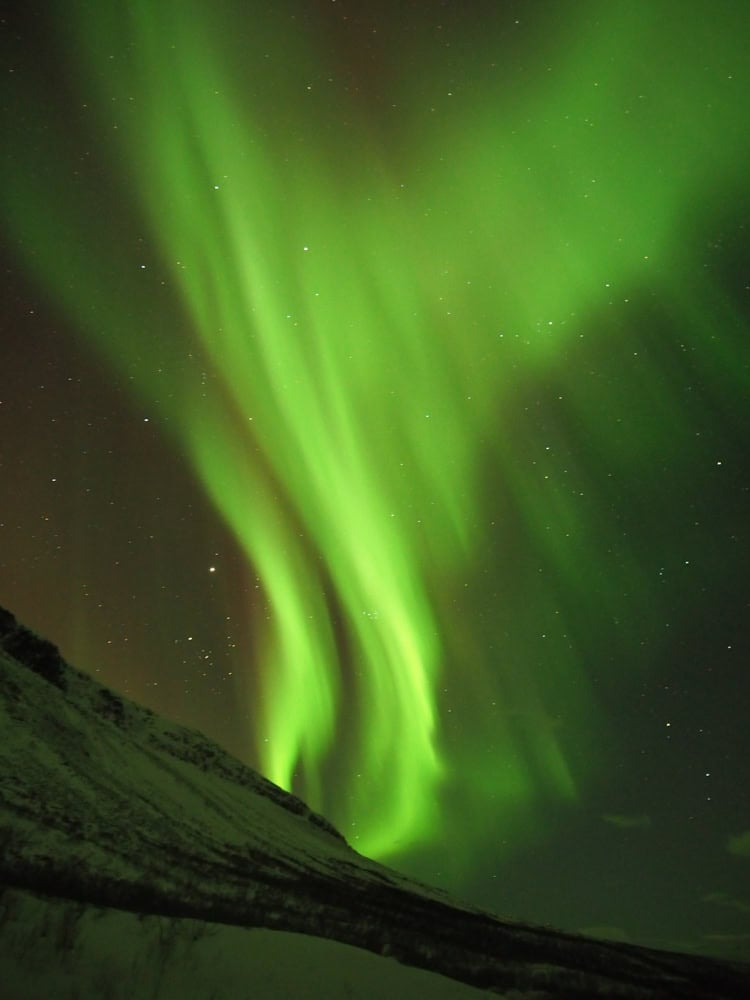
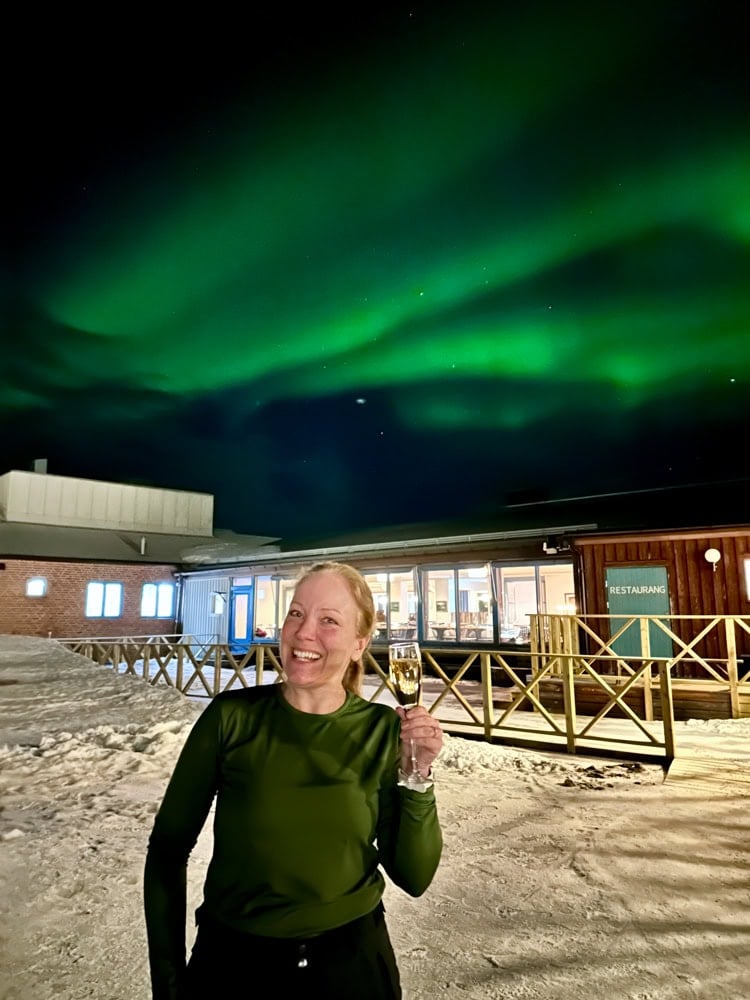
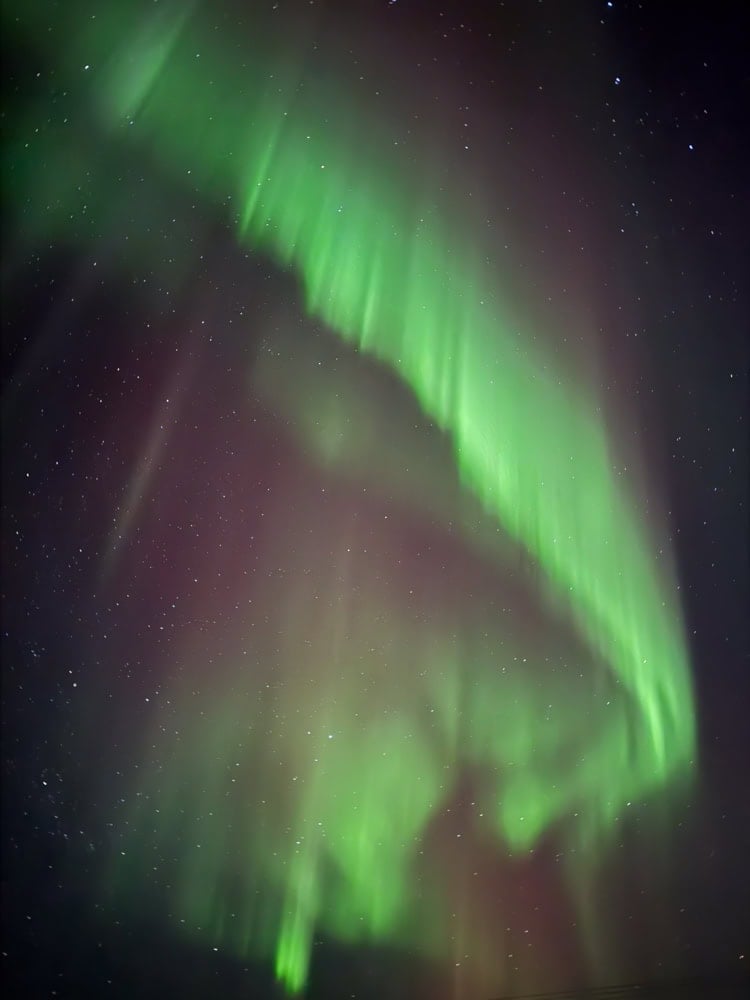
Here’s the thing about going with local guides that are also professional photographers: they know exactly where to be and when. The first two nights, we spotted them gently glowing along the horizon. It was beautiful, though I’ll admit I kept thinking “this isn’t quite like the Instagram photos yet.” But then came night three. We were standing in the cold darkness beside a snow-covered mountain when the sky suddenly exploded with these incredible green waves stretching across the entire horizon in every direction. That was the “O.M.G.” moment. The “I’m so glad we came on this trip” moment.
If you’re looking for the best place to see the Northern Lights, I’m sharing our full experience below, including what we did each day and tips for planning your trip.
Starting in Stockholm
When planning a trip to the best place to see the Northern Lights, most people want to fly directly to Kiruna. But based on our friend Lola’s suggestion we routed through Stockholm and spent a night there. Not only does the timing for morning flights to Kiruna work out much better if you overnight in Stockholm first, but purchasing your international flight and Swedish flight separately turns out to be a bit less expensive too. It also helps a little with jet lag and getting acclimated to the colder weather. We booked our international flight through Delta and our domestic flight in Sweden with Norwegian Air.
The Hilton Stockholm was our home base, comfortable and centrally located (plus I had points to use). And being able to walk everywhere let us take full advantage of our new parkas while getting acclimated to the colder weather. I recommend taking a stroll through Humlegården Park, and also visit the Nobel Prize Museum if you’re into history and science.
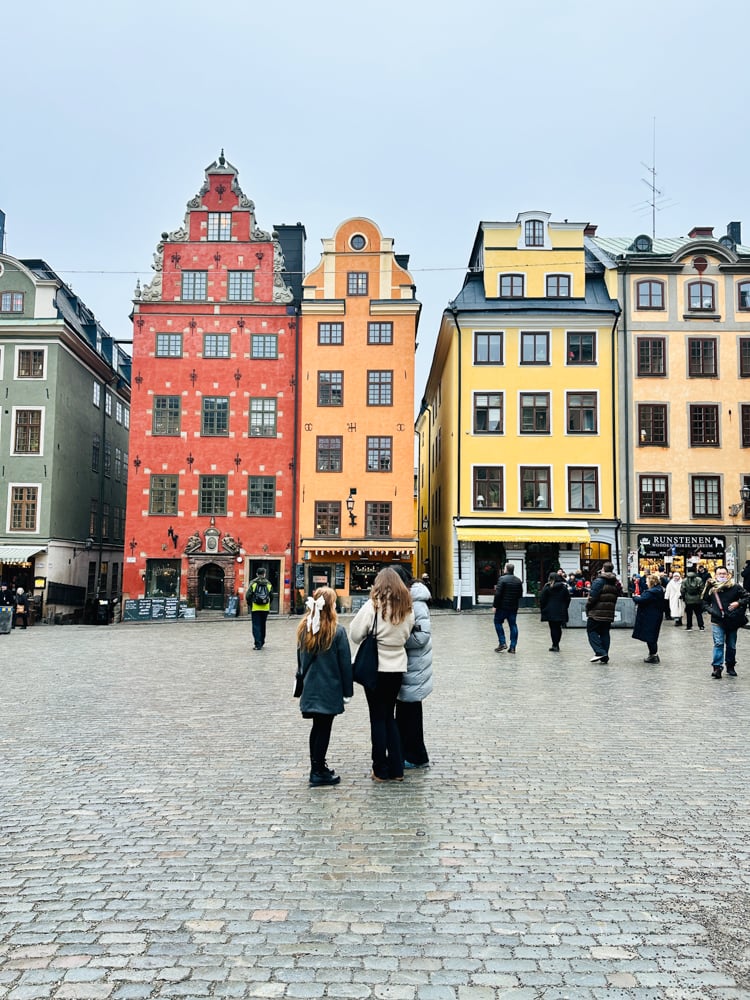
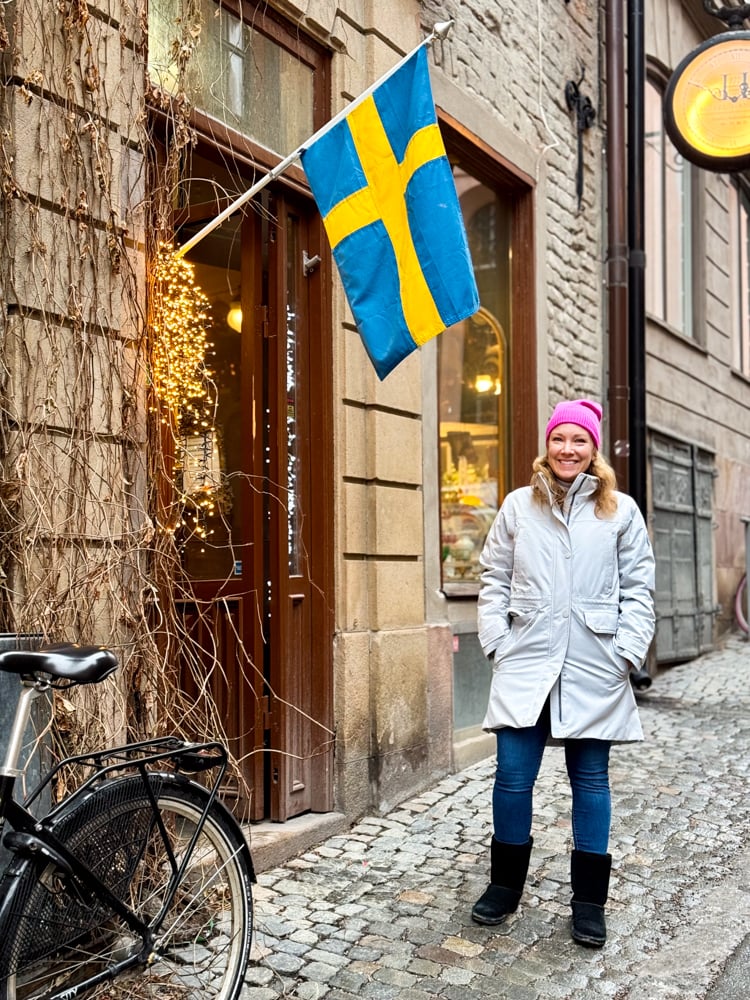
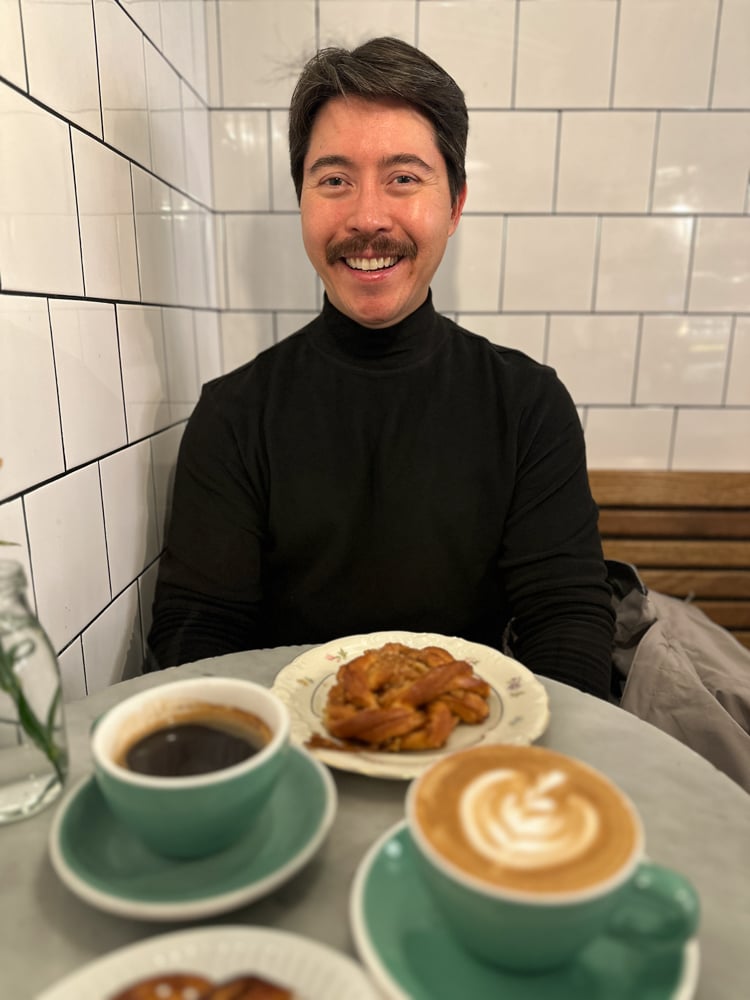
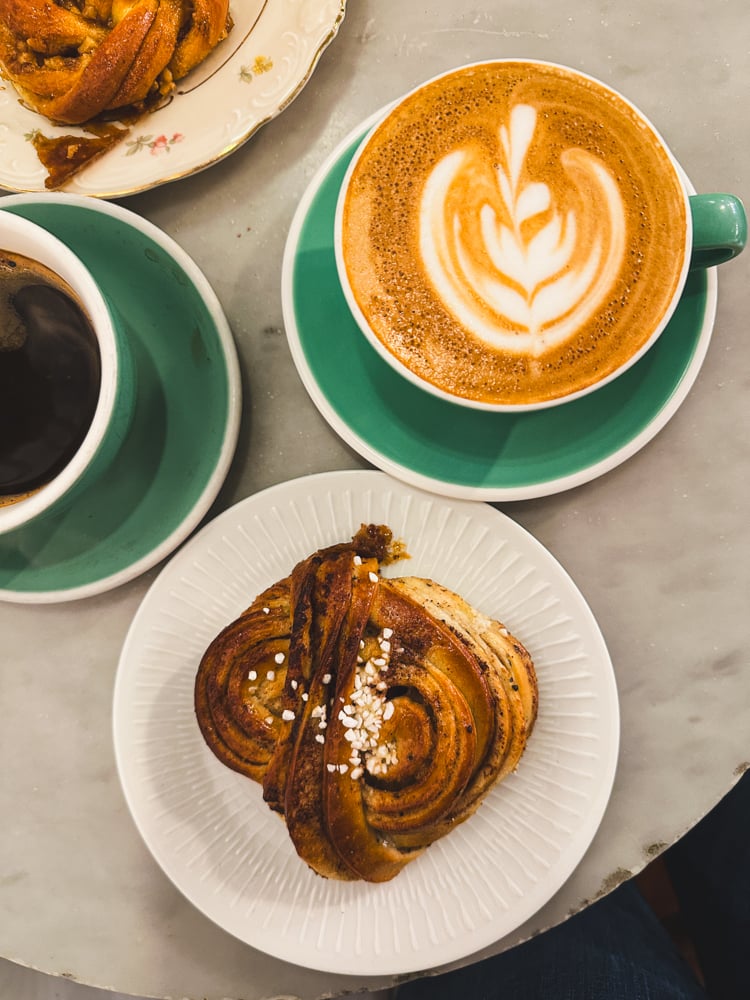
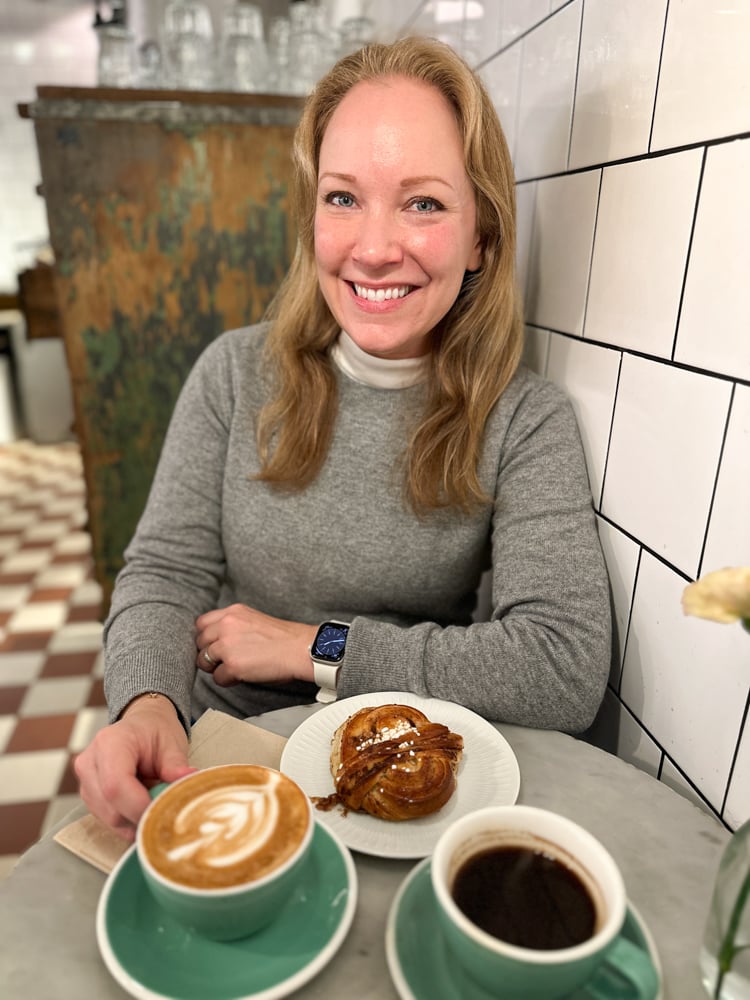
For lunch, check out Östermalms Saluhall, a beautiful food hall perfect for grabbing a bite to eat or for picking of delicious souvenirs. And in the afternoon, be sure to stop for some fika (that’s Swedish for coffee break). Head to Fabrique Stenugnsbageri for what might be the most unique cinnamon buns you’ll ever taste. Swedish cinnamon buns are different in that they’re less sweet and flavored with cardamom.
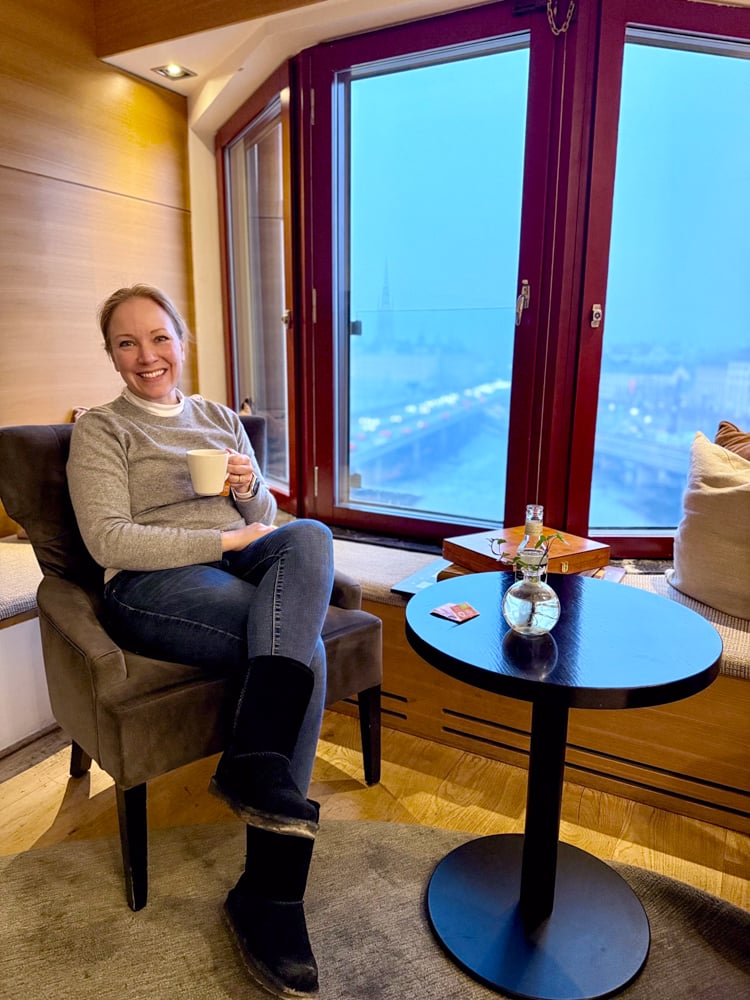
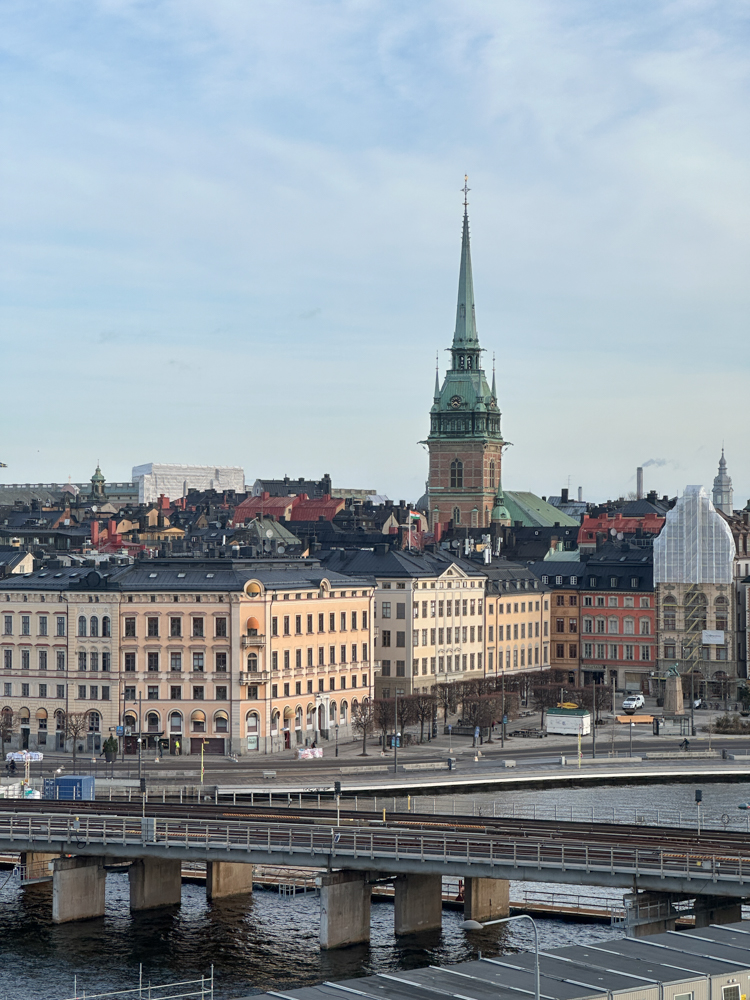
If you’re a book lover, Lola offers book tours in Stockholm. She’s an author and photographer who knows the city intimately, and her tours weave together literature, history, and hidden spots you’d never find on your own.
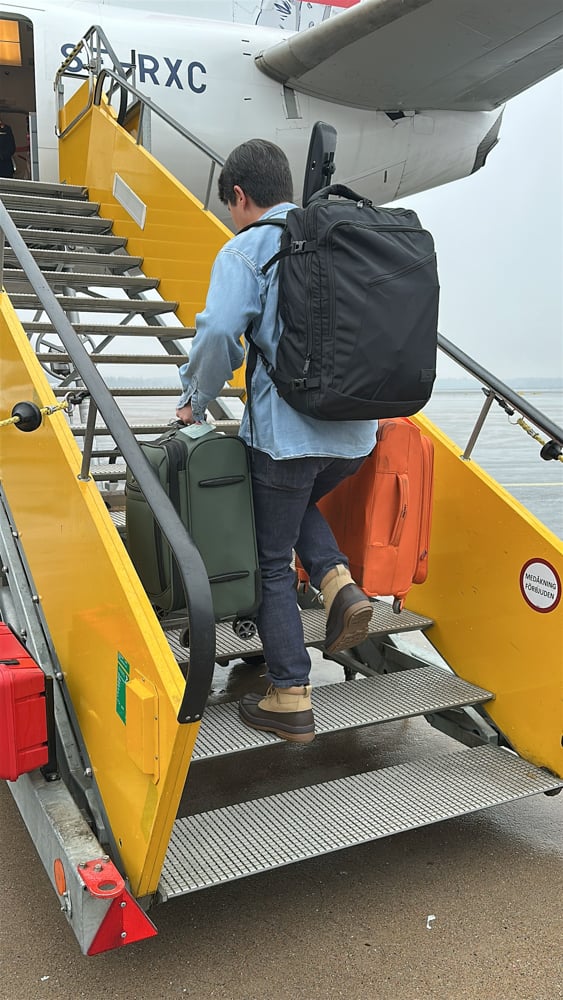
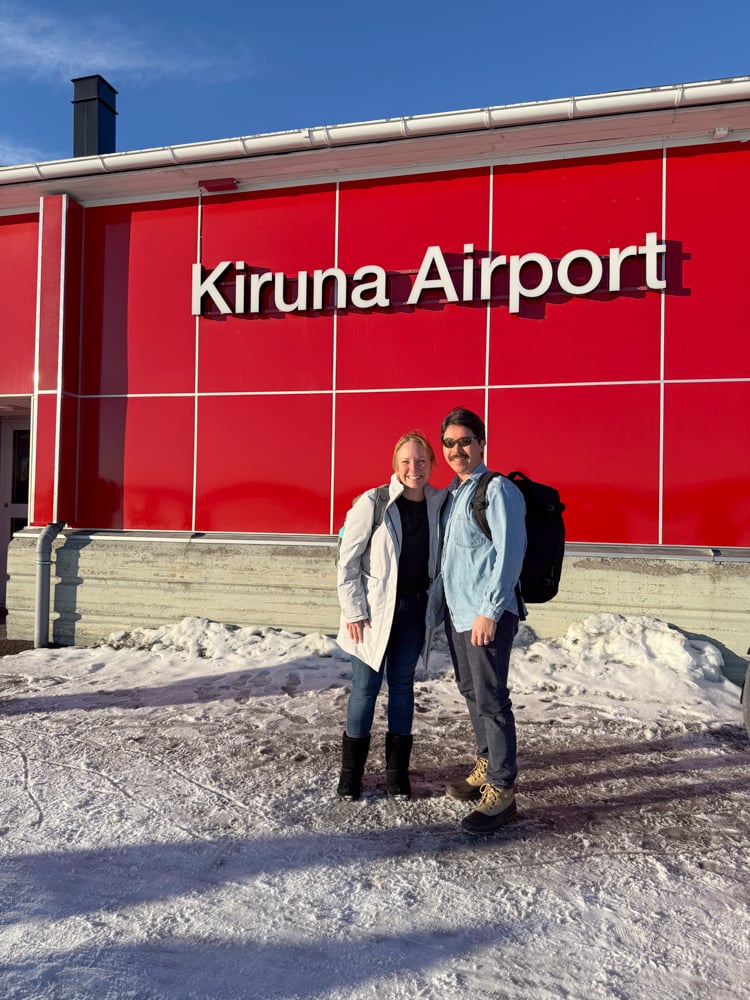
Arriving in Kiruna
After our morning flight from Stockholm, we landed at a small airport in the snowy landscape of Kiruna. It looks a bit otherworldly, a blanket of white all the way to the horizon and a darkness that settles in by mid-afternoon in February. We were able to check our big bags, and thankfully Pete carried the rest.
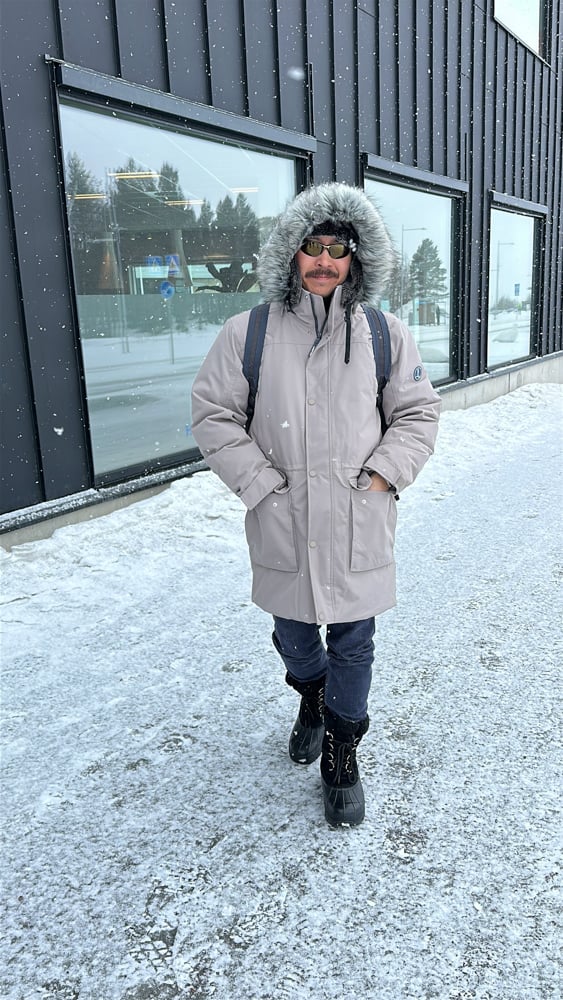
Once there, we met up with Corey Muntz, a professional photographer who lives in Kiruna and knows this landscape like the back of his hand. Along with Lola, he’d be guiding us not just to the best spots to see the aurora, but also teaching us how to photograph it. That expertise would prove invaluable!
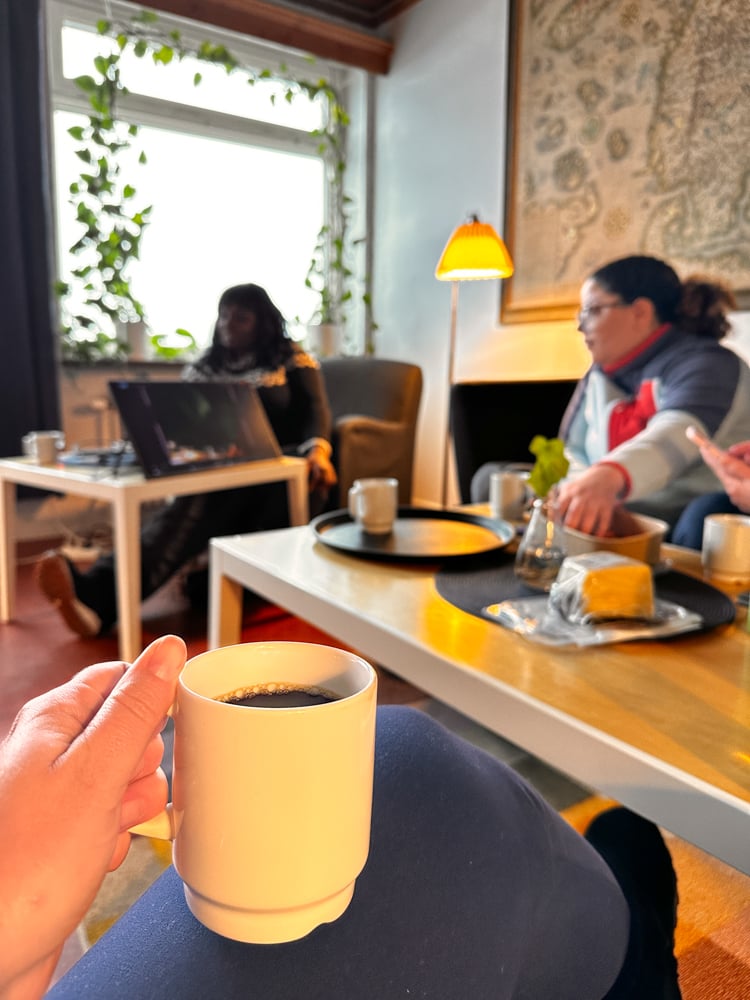
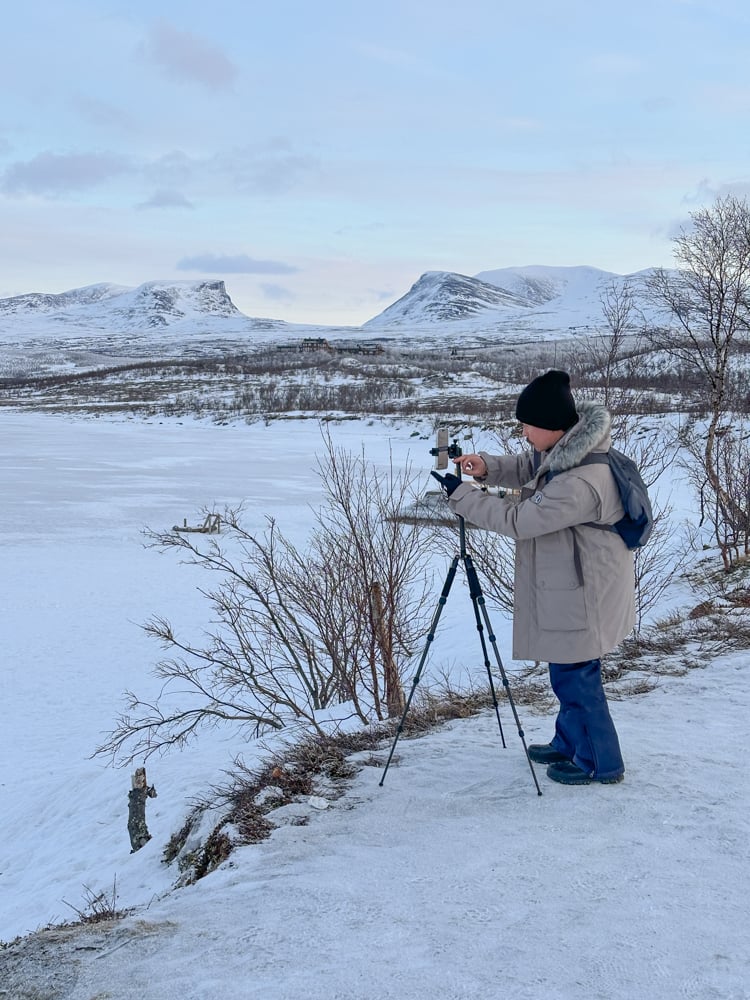
We stayed at the Scandic Kiruna, which was perfect. Clean, warm, and the breakfast spread was incredible. The hotel was also within walking distance to shops and restaurants, which made exploring easy even in Arctic weather. Kiruna’s architecture threw me off a bit at first. The buildings around town looked so utilitarian from the outside, but once you’re inside them you realize, “oh, this actually has shopping and restaurants on the first floor.”
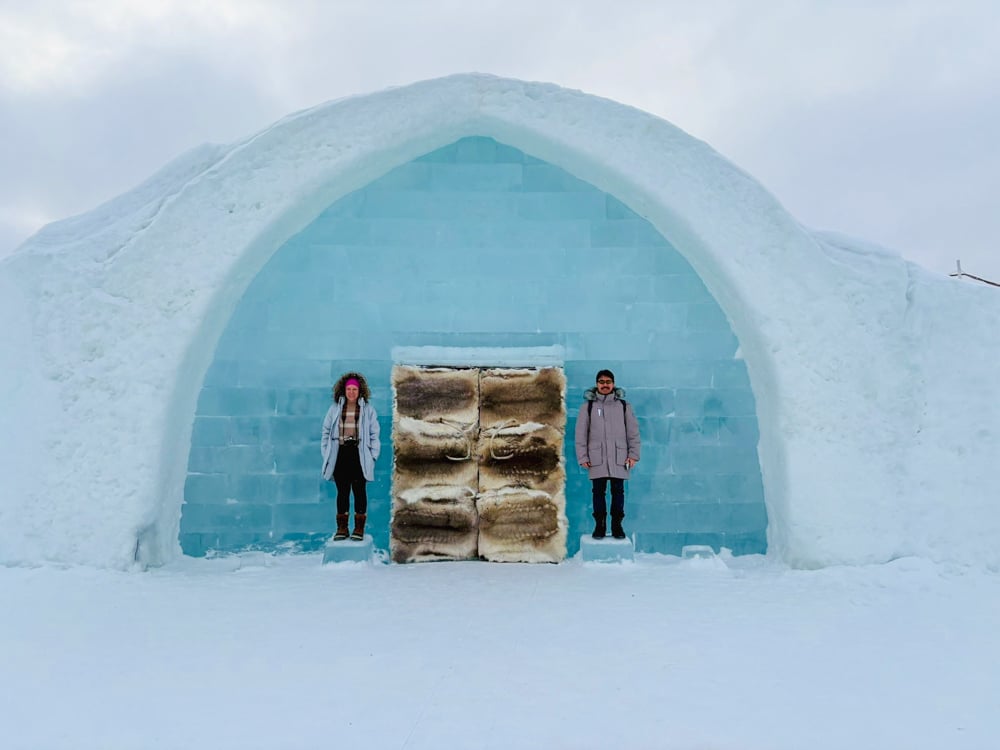
The Ice Hotel and Swedish Sauna Experience
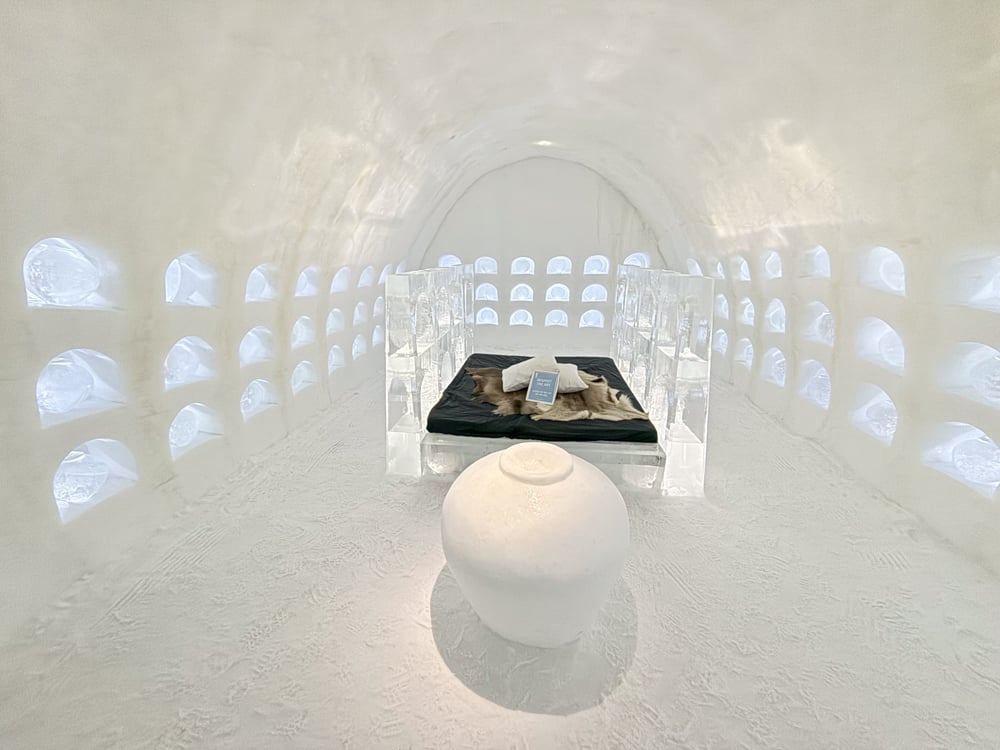
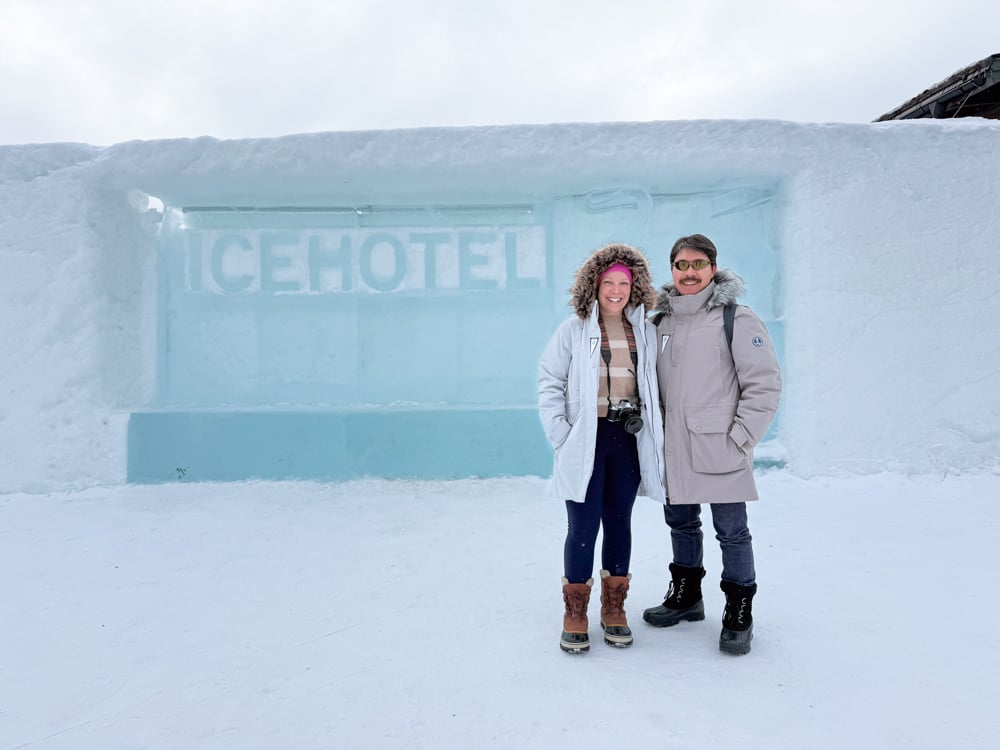
If you want to splurge and aren’t afraid of the cold, there’s the famous Ice Hotel nearby in Jukkasjärvi. Full transparency: we didn’t stay overnight there. They offer day passes to explore the hotel and the sauna experience, and honestly, that’s enough.
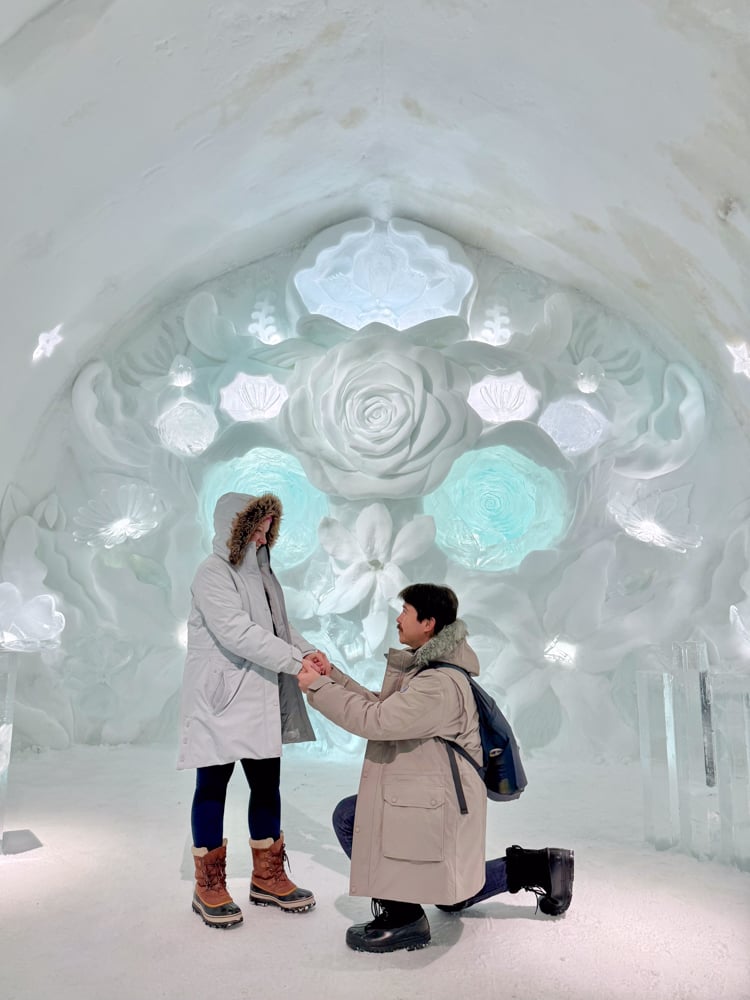
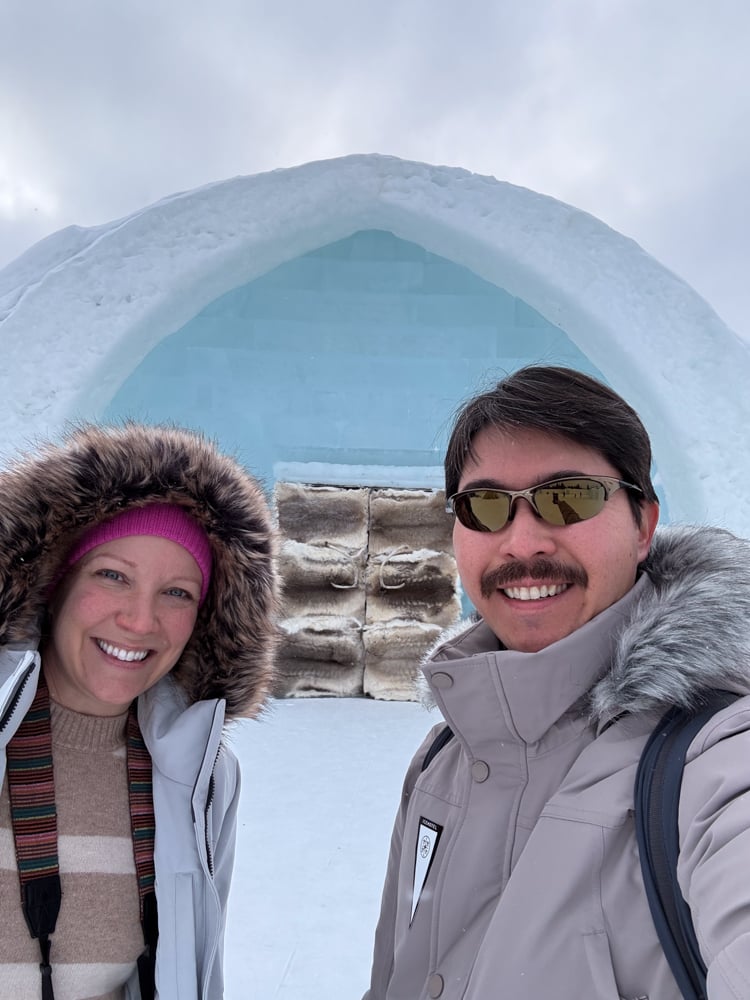
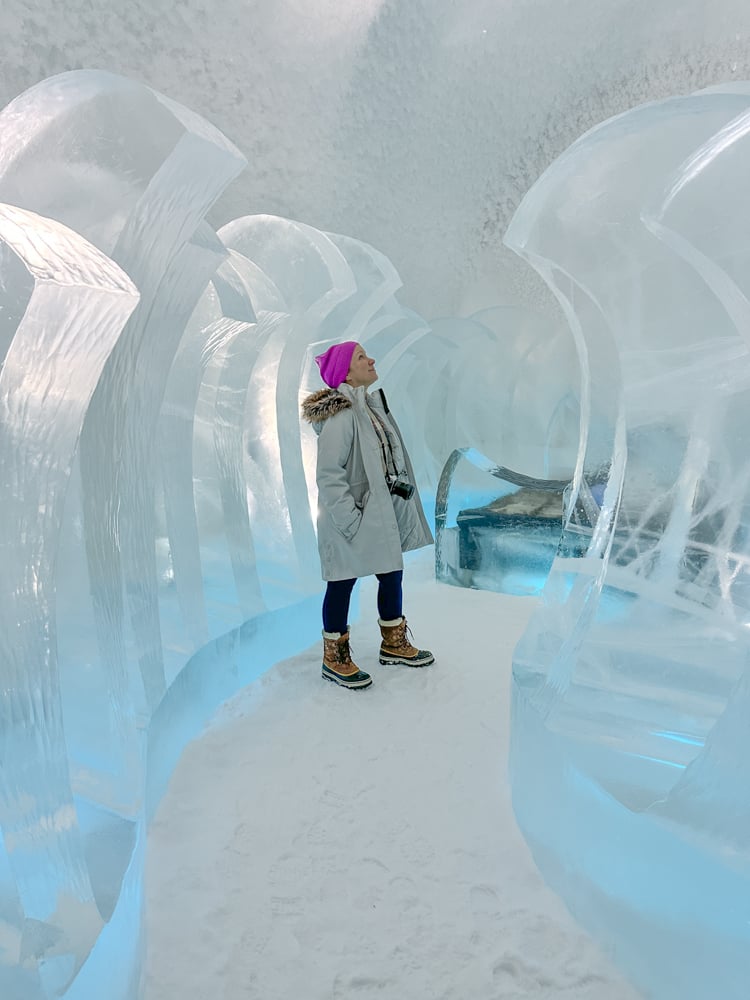
If you want to splurge and aren’t afraid of the cold, you can actually stay overnight at the famous Ice Hotel in Jukkasjärvi. But if that’s not in the budget or sounds a bit too chilly, they offer day passes to explore the hotel and do the sauna experience, which is what we did.
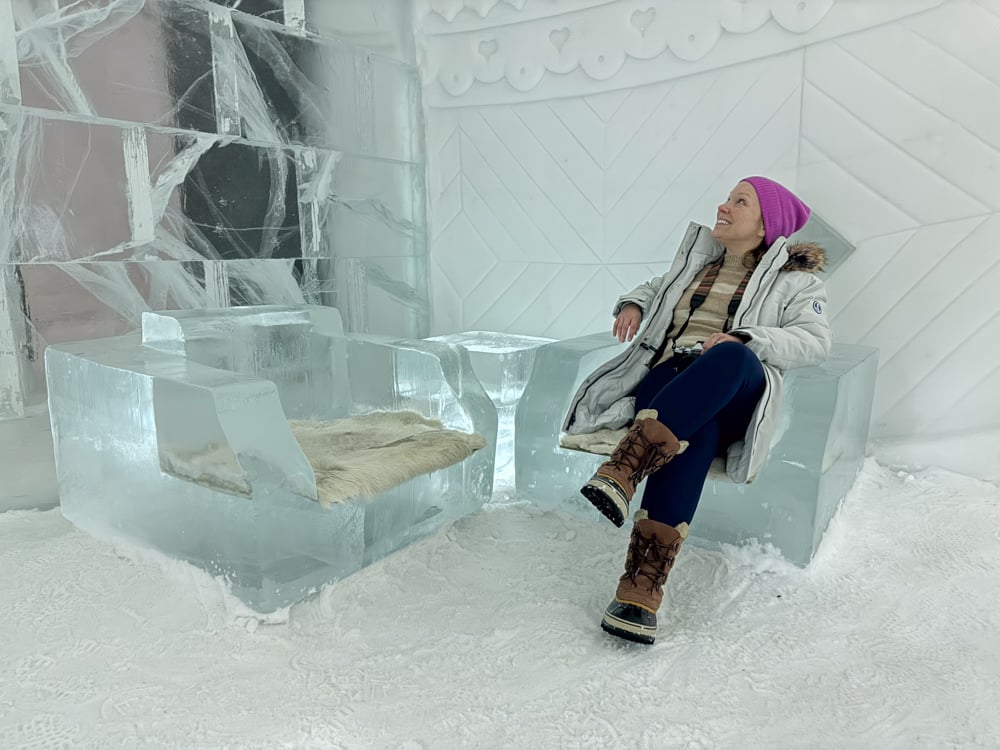
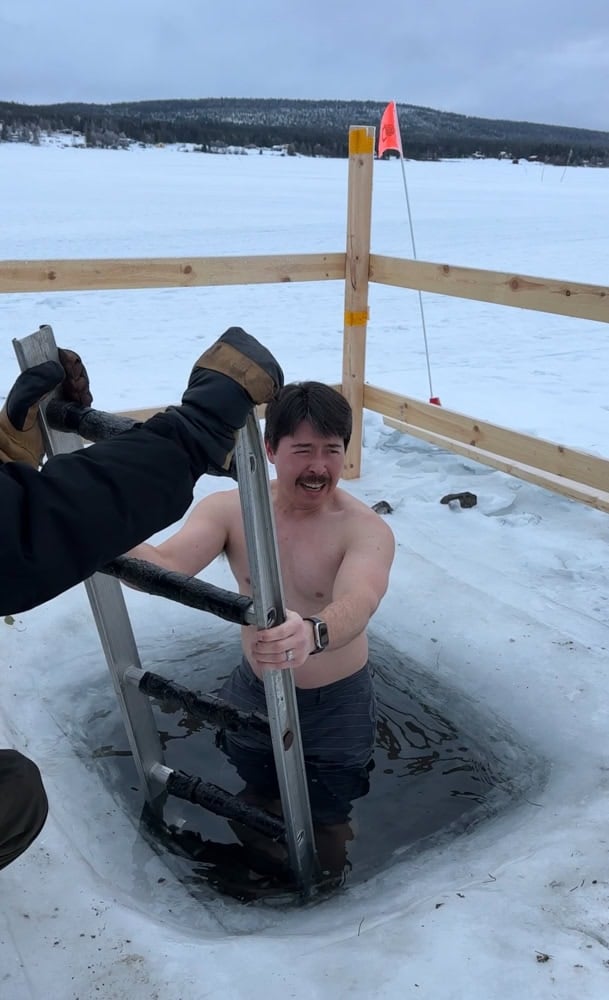
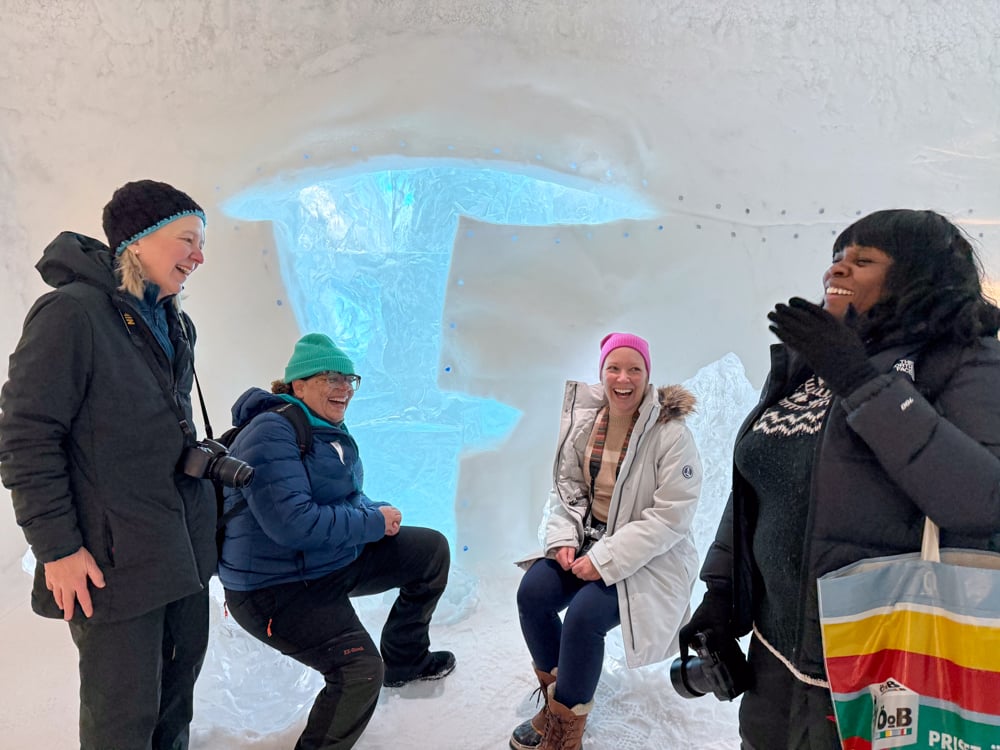
Walking through the Ice Hotel is like stepping into a giant ice sculpture museum. Each room is designed by different artists, and the craftsmanship is stunning. After spending the morning exploring, we did the Jukkasjärvi Culture Swedish Sauna experience. This wasn’t a regular type of spa visit. It’s more of a multi-step sauna ritual that involves getting into a cozy cabin and then alternating between hot and cold: the sauna, the snow, and even the frozen Torne River.
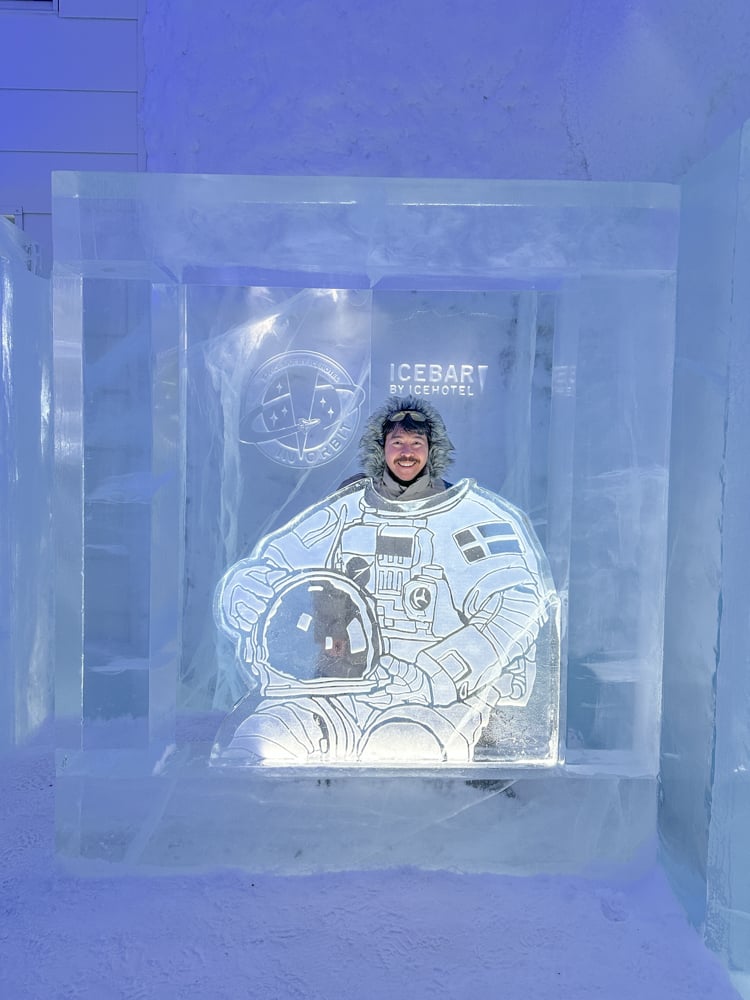
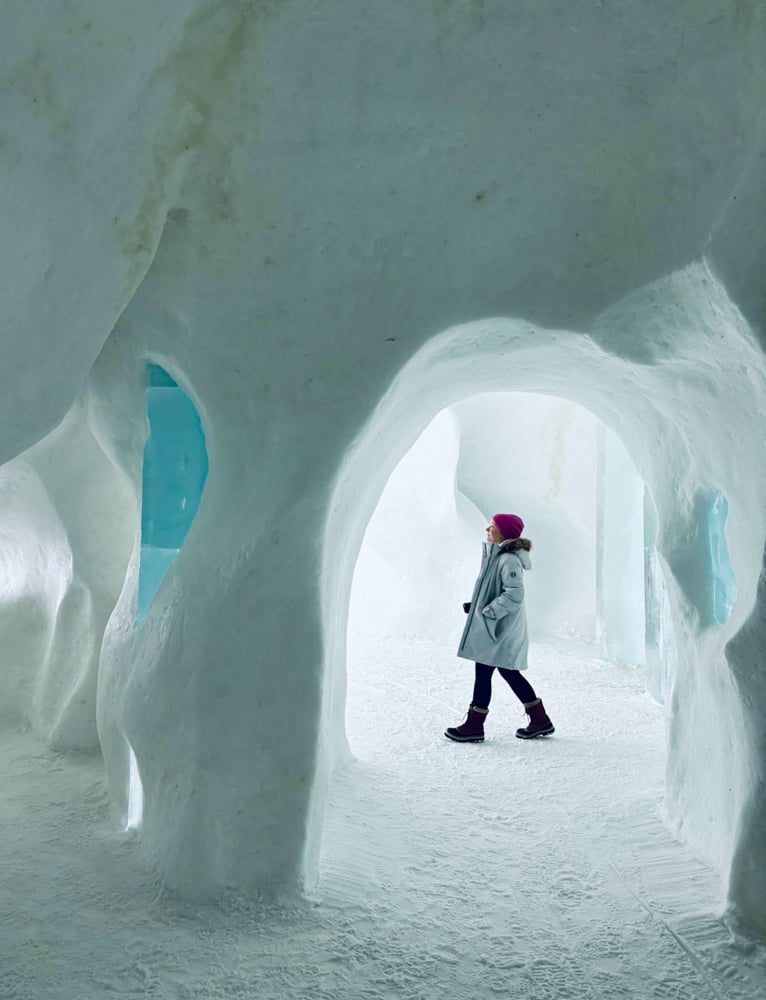
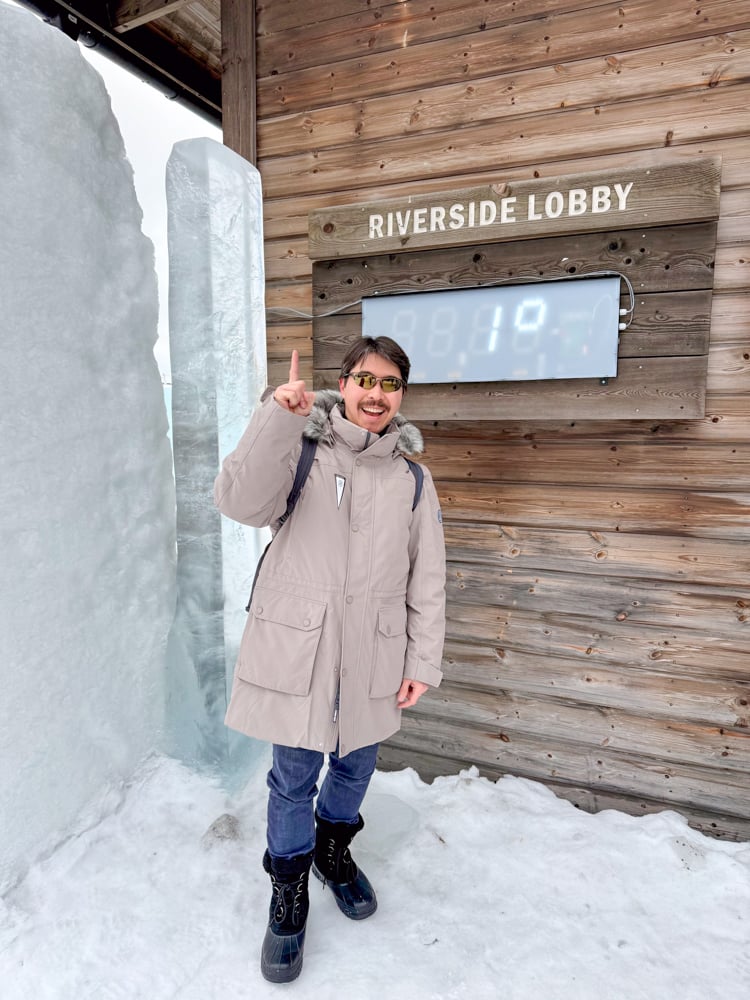
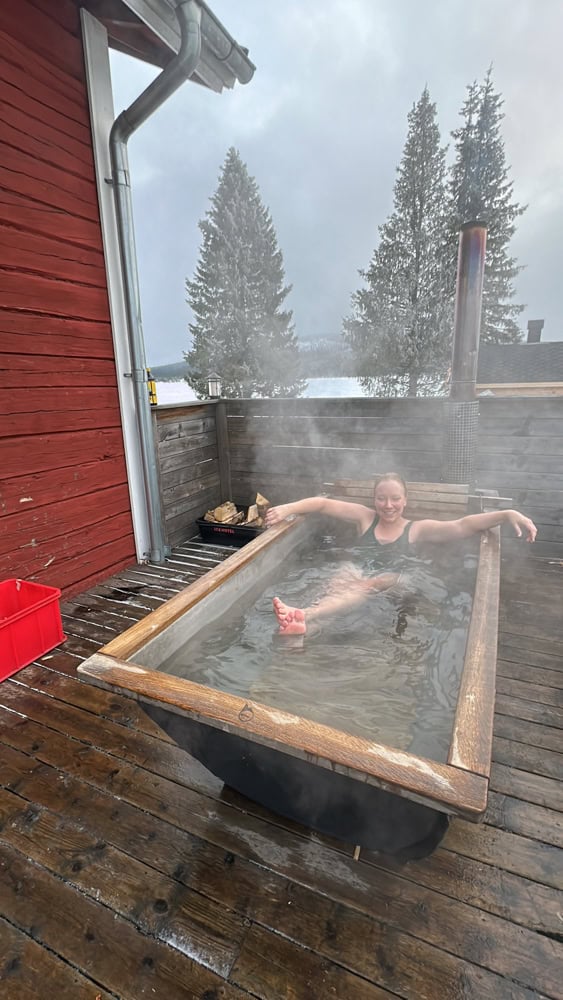
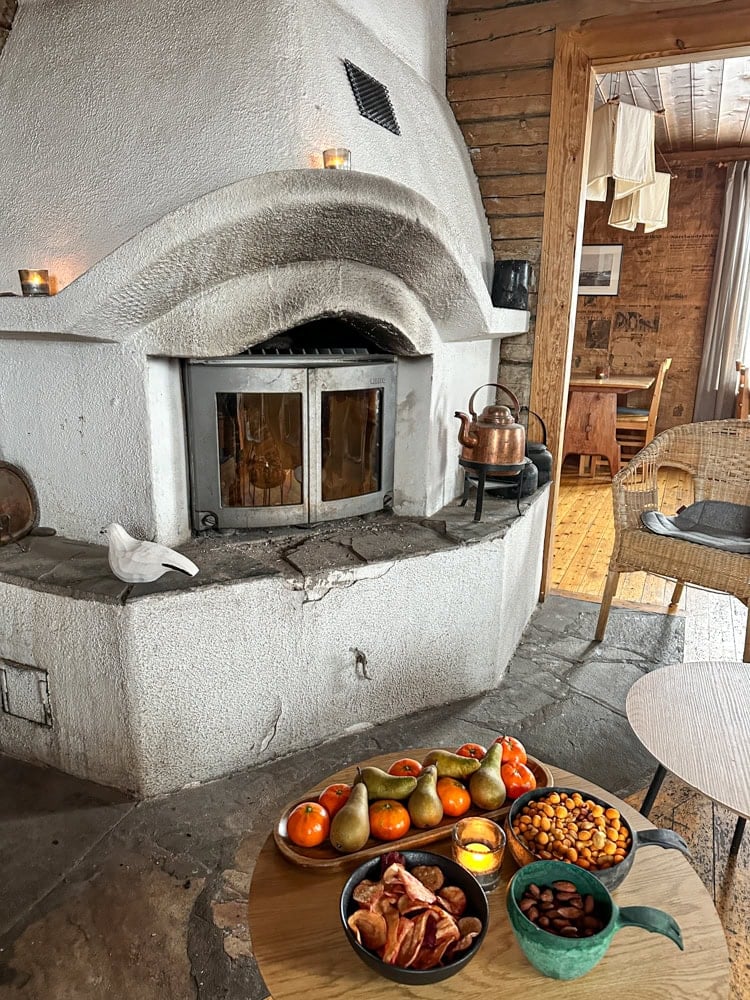
I have to confess, I didn’t “plunge” into the frozen river. I stepped down a ladder into the icy water very slowly, and only went ankle deep. While also screaming some expletives since it was so cold. Pete was more brave, going up almost to his waist! Our favorite part was relaxing in the heated outdoor tubs and the spread of Swedish charcuterie we snacked on all afternoon. 10/10 would recommend. And if we go again, I’ll try and sink lower into the frozen river next time.
Where to Eat in Kiruna
While this trip was all about chasing the aurora, we also ate really well for a trip not focused on food. The region has incredible ingredients, and the restaurants we tried really showcased what makes this area special.
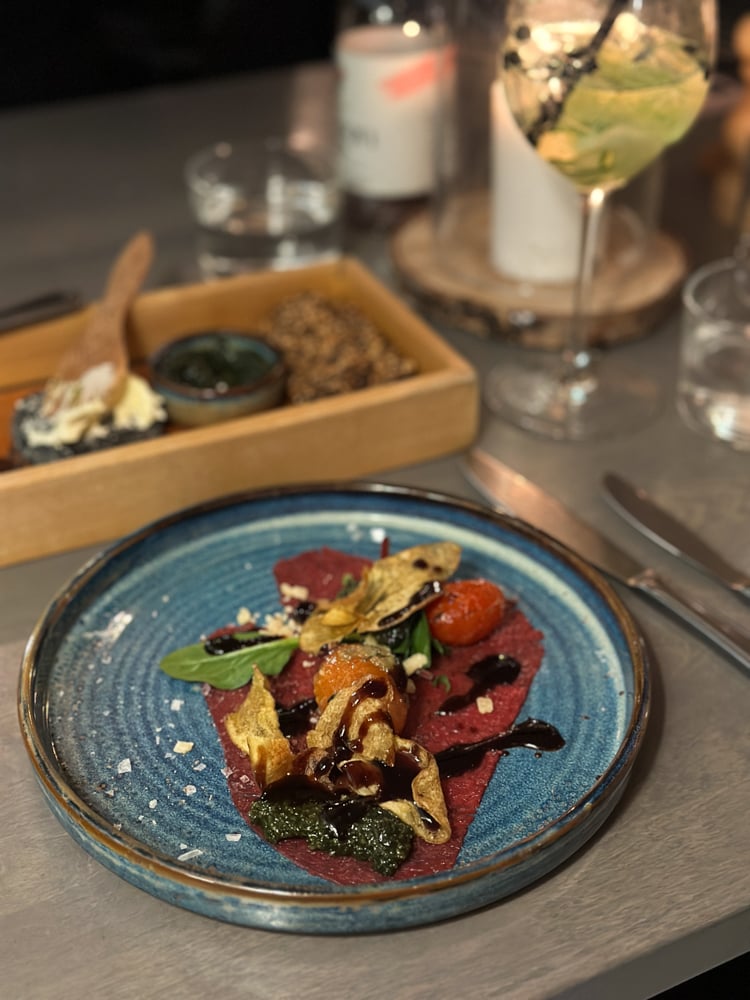
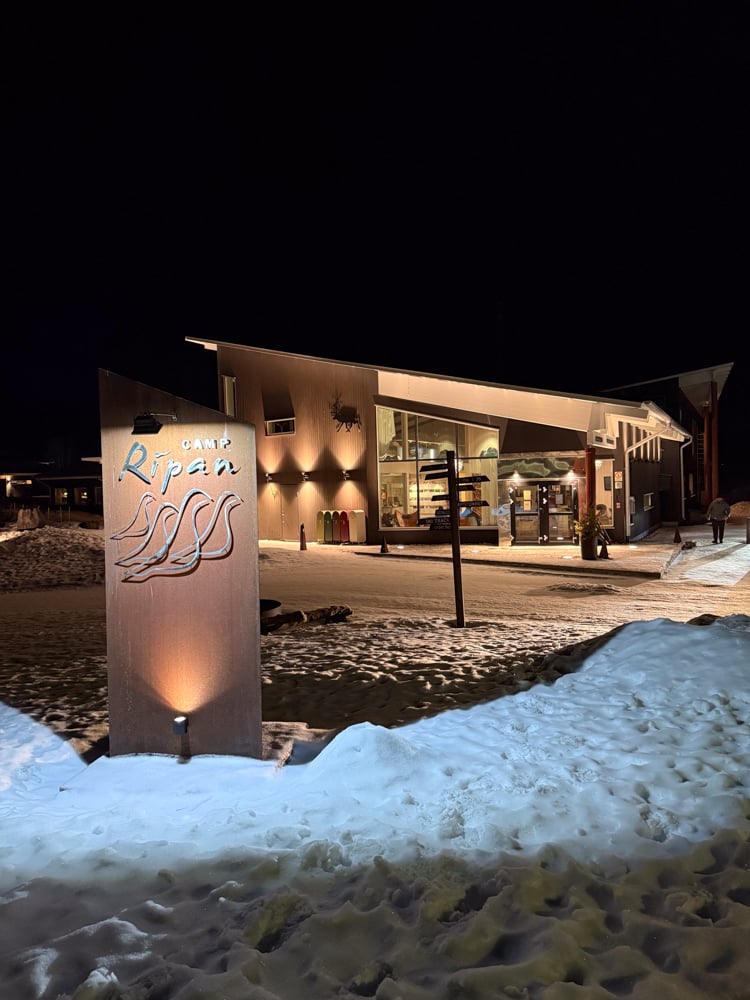
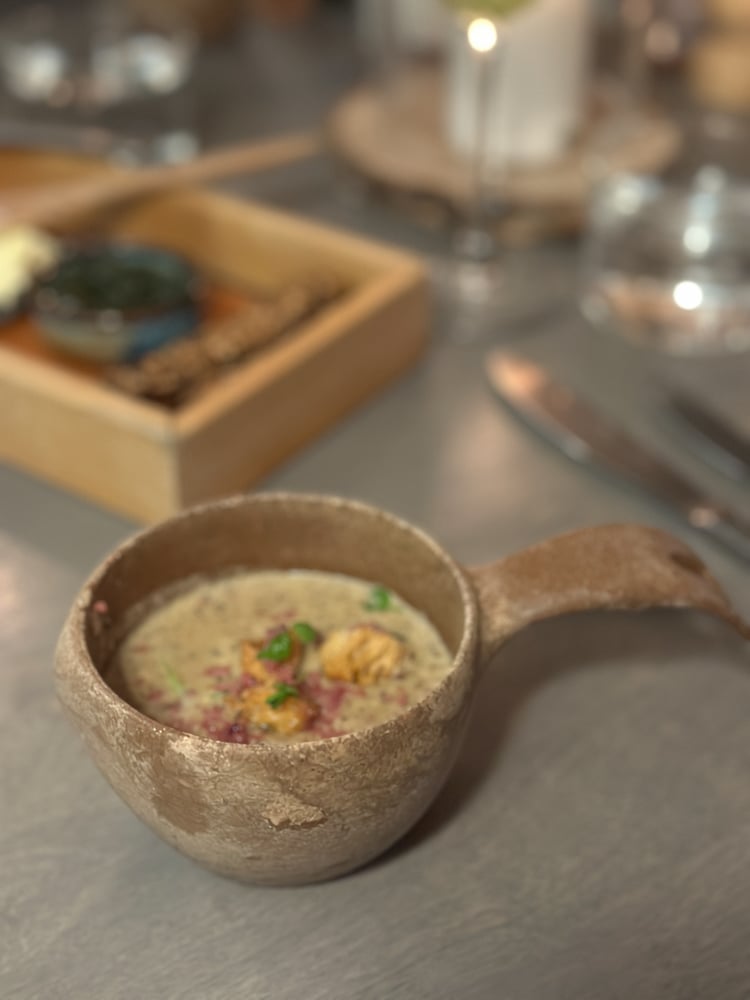
The standout meal was the tasting menu at Camp Ripan. Kiruna sits where Swedish, Sami, and Torne Valley Finnish cultures meet, and Camp Ripan celebrates this with dishes that tell a story. They’ve been awarded Slow Food Sápmi, the Sami’s own quality label for good, clean, and fair food. Every ingredient comes from the tricultural region, and they know exactly where each component came from. The tasting menu featured moose, arctic char, reindeer, and cloudberries. We even tried kaffeost (coffee cheese), a traditional Norrland cheese you drop into the bottom of your coffee cup. The genuine flavors of Lapland really came through in every bite.
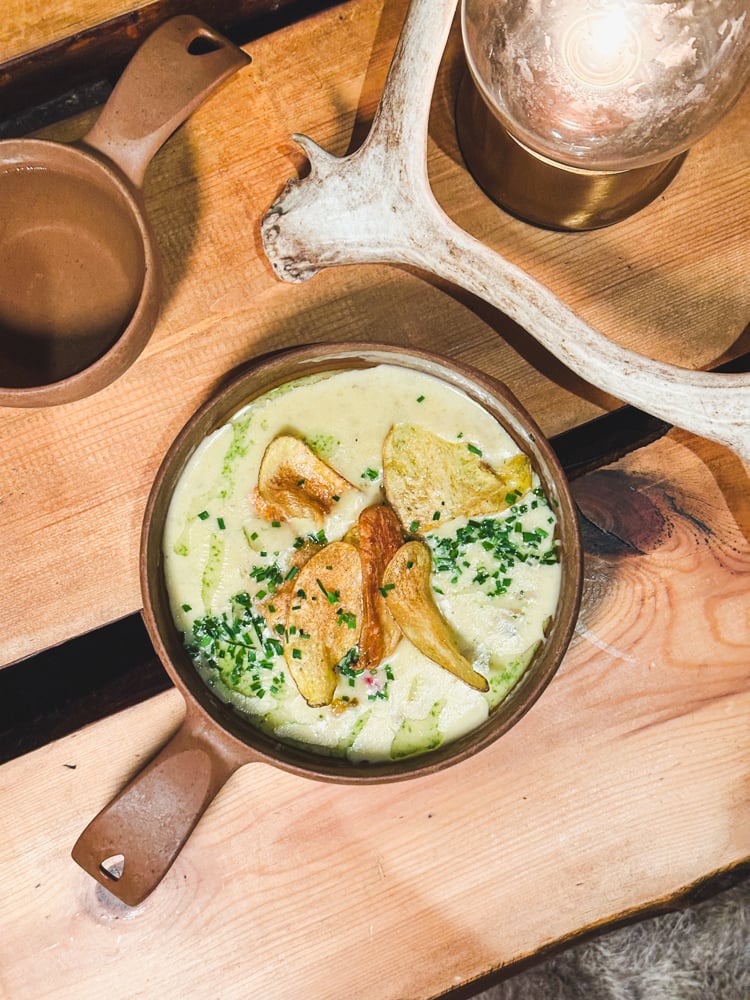
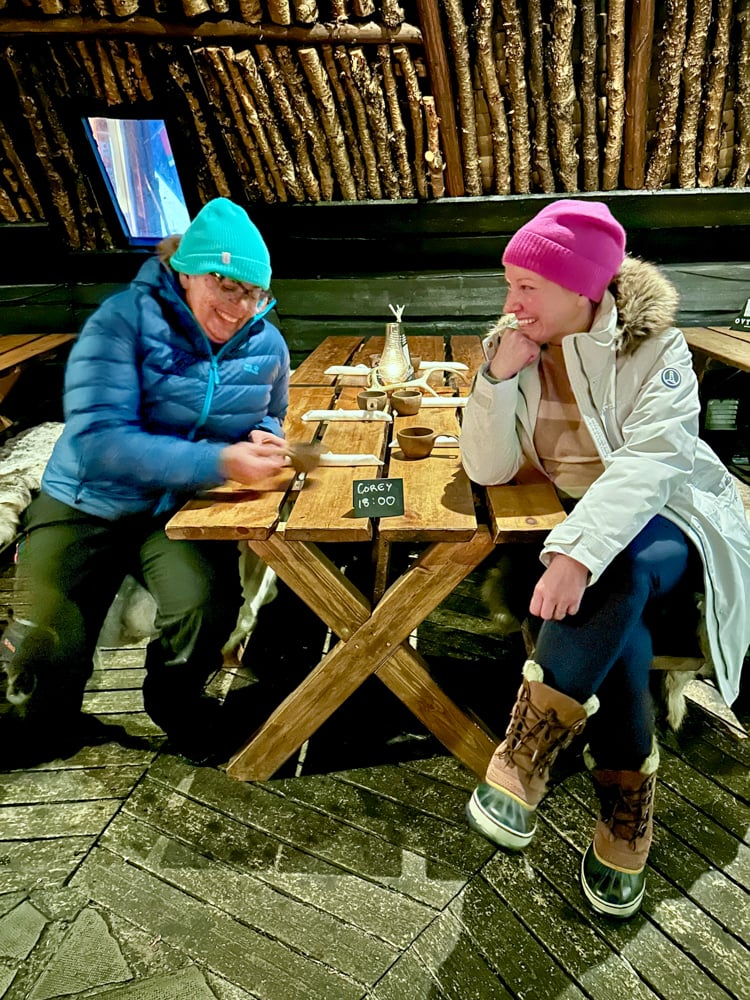
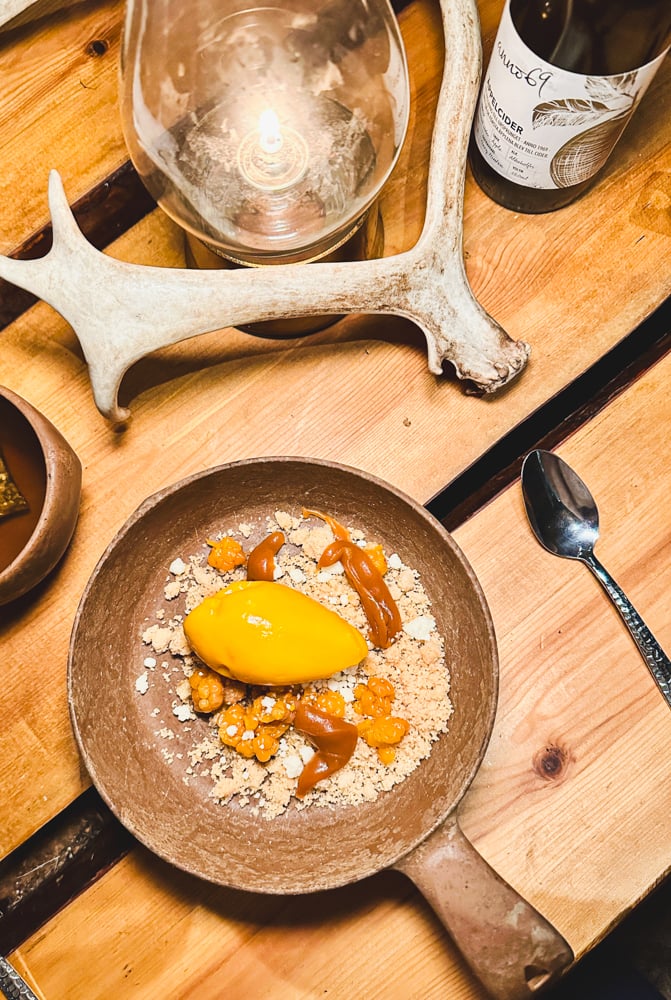
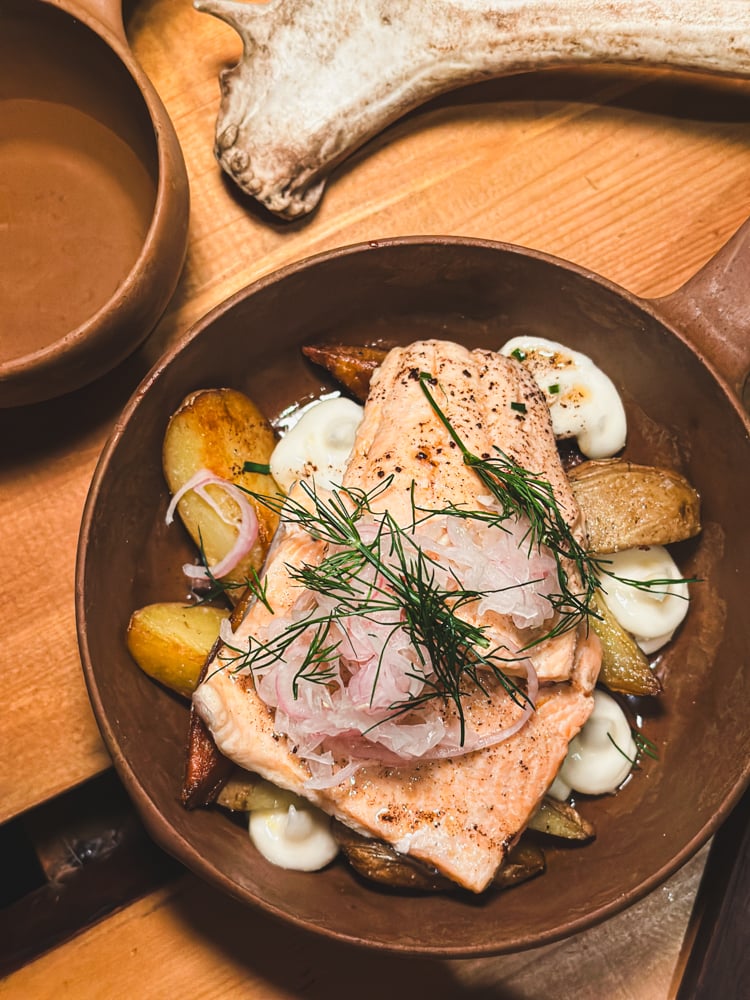
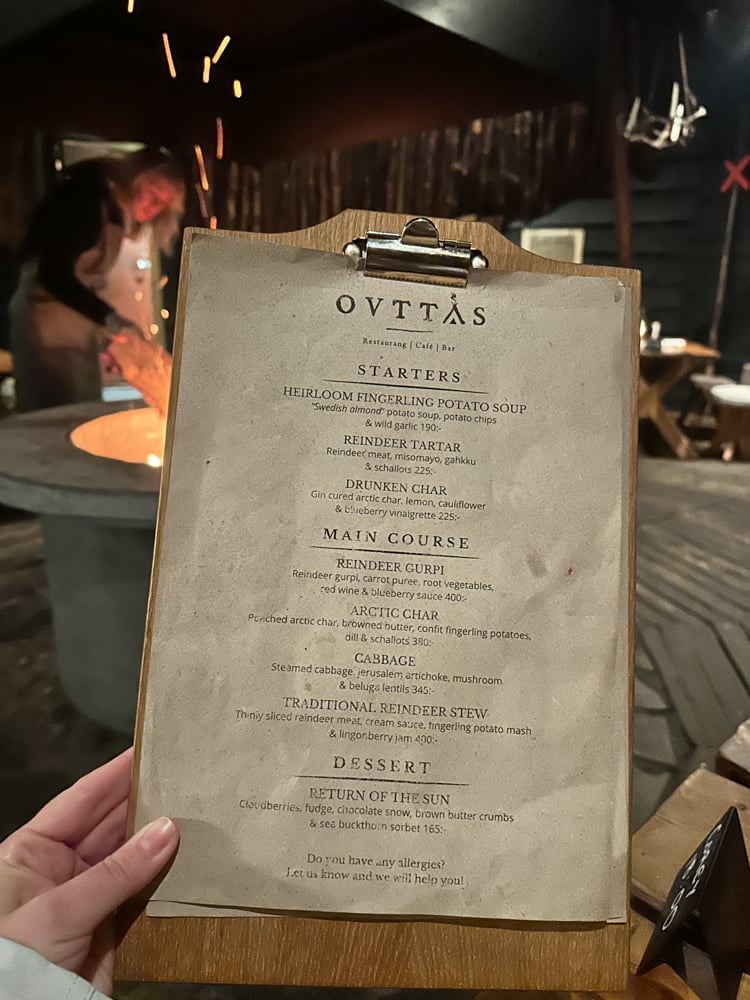
We also loved Ovttas, which felt like dining in a cozy hut around a central firepit. They’re a slow food authentic Sami experience, and the food was delicious. We had heirloom fingerling potato soup, arctic char, reindeer stew, and a dessert with cloudberry fudge and chocolate snow that was absolutely divine.
Dog Sledding Through the Wilderness
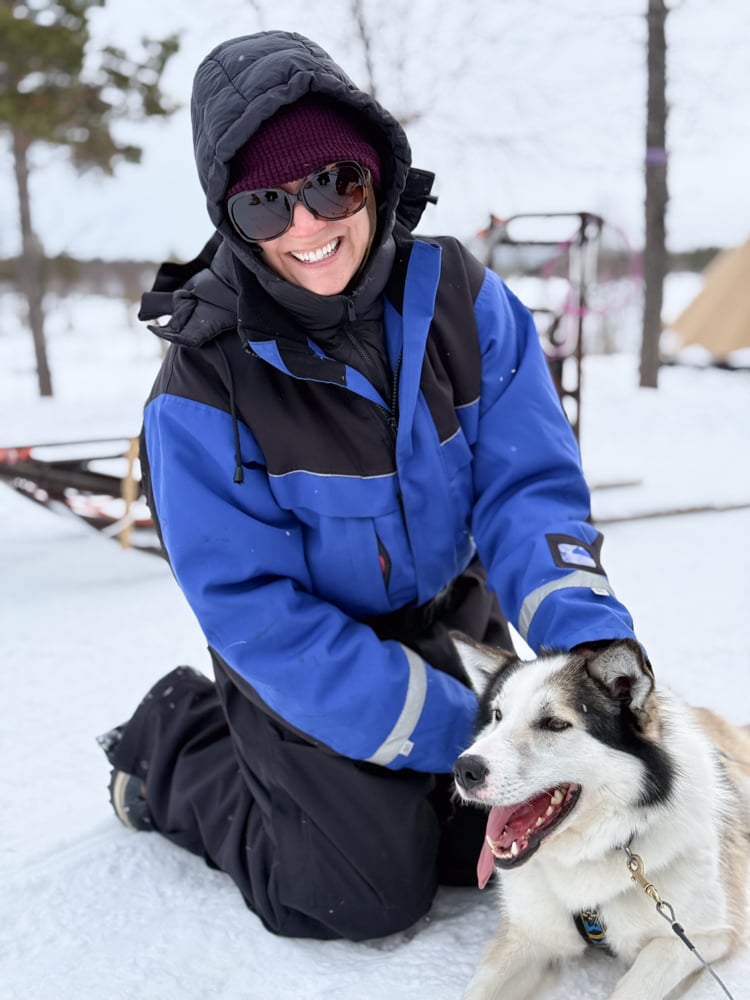
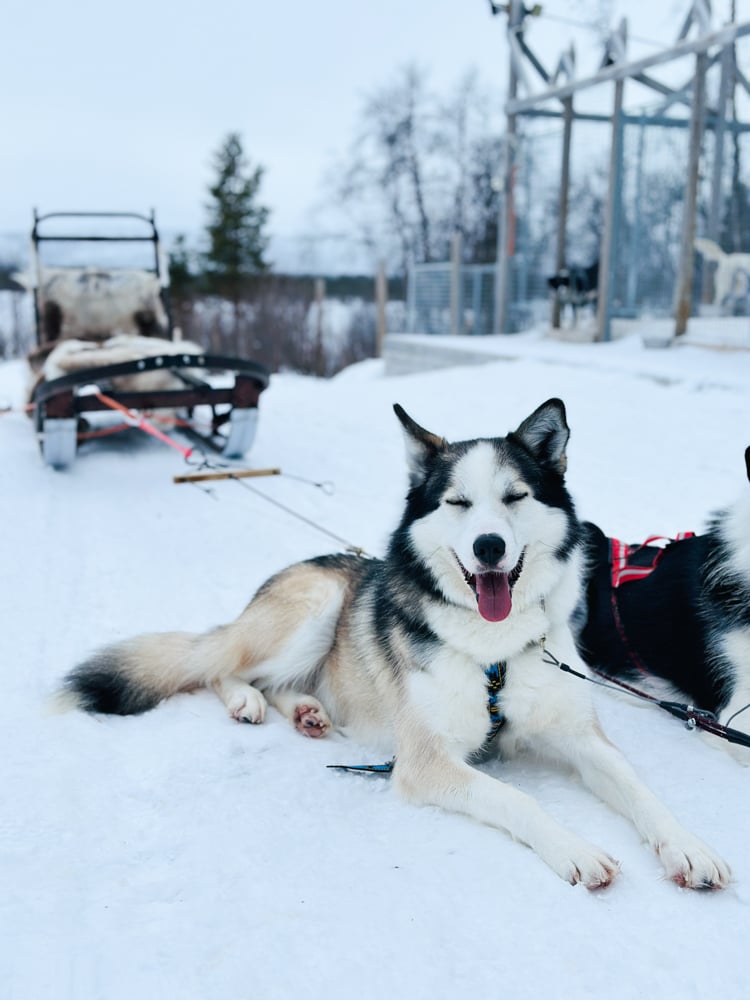
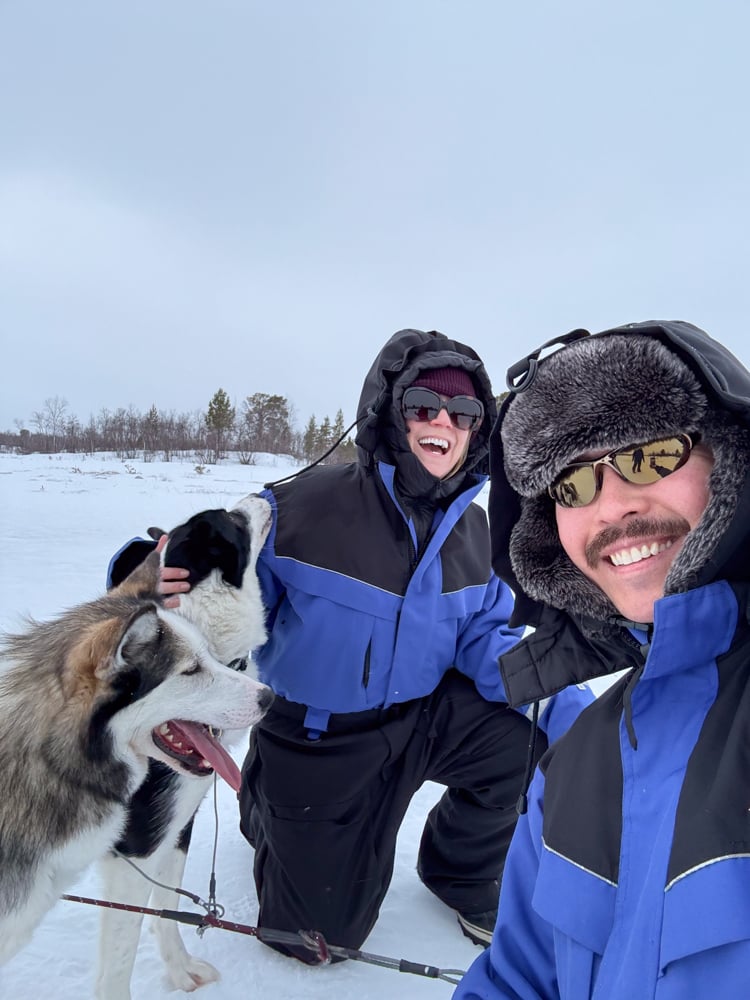
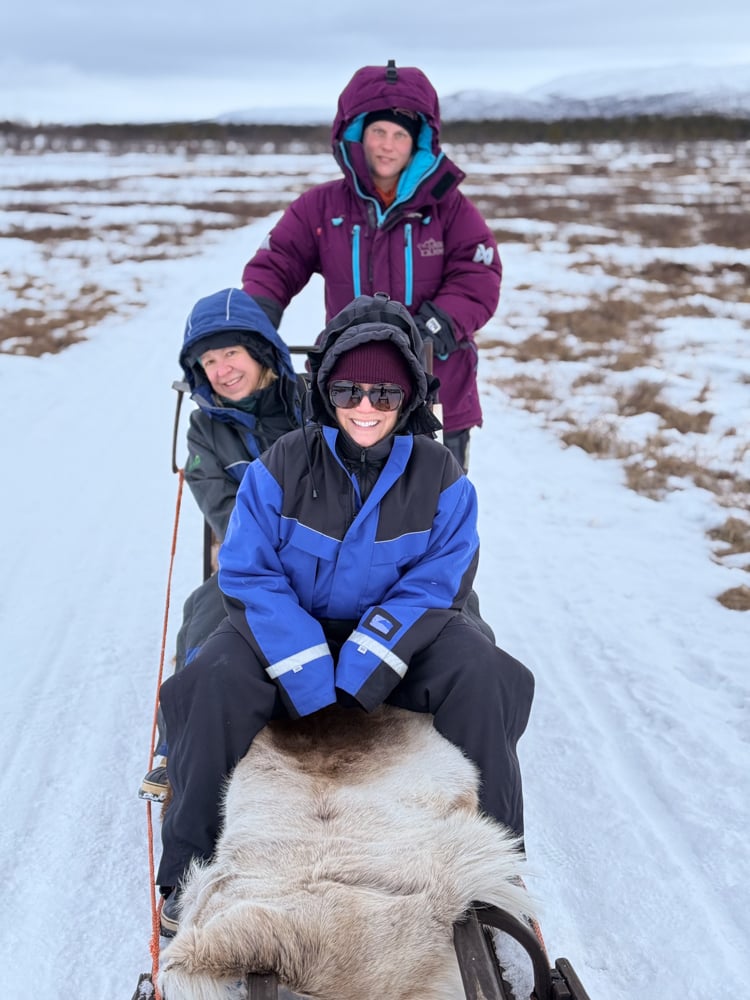
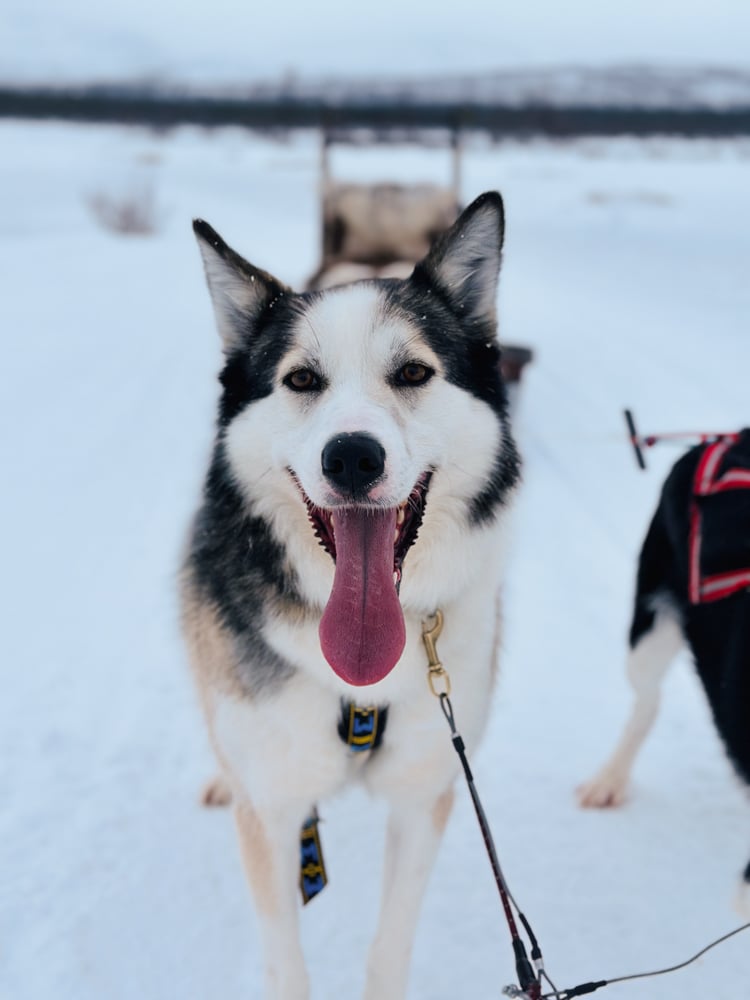
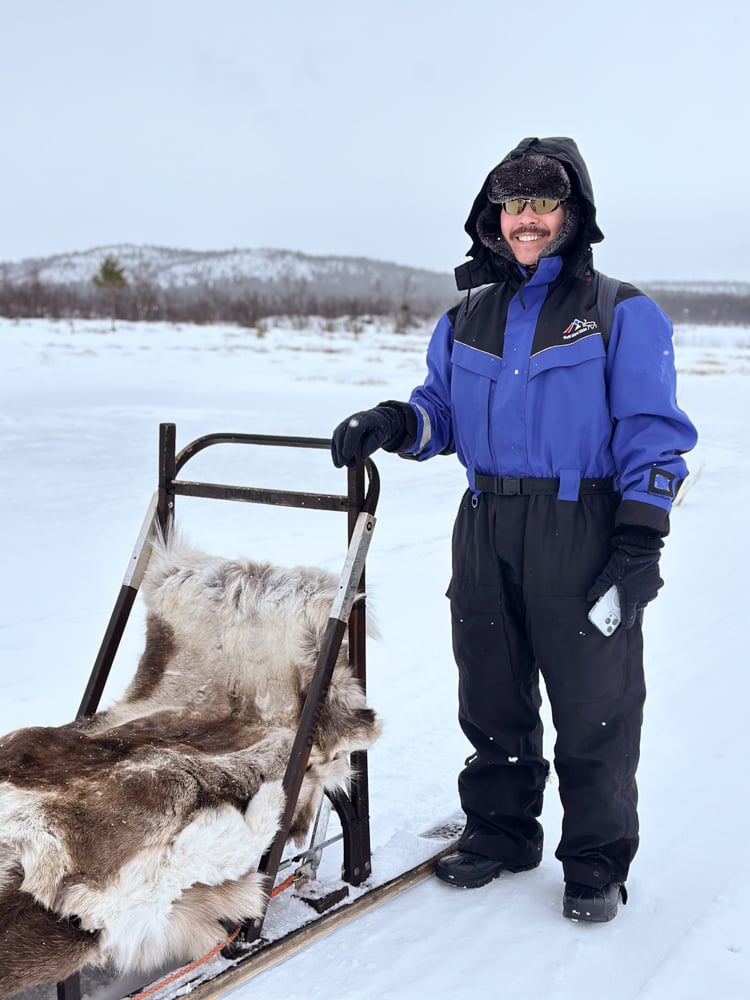
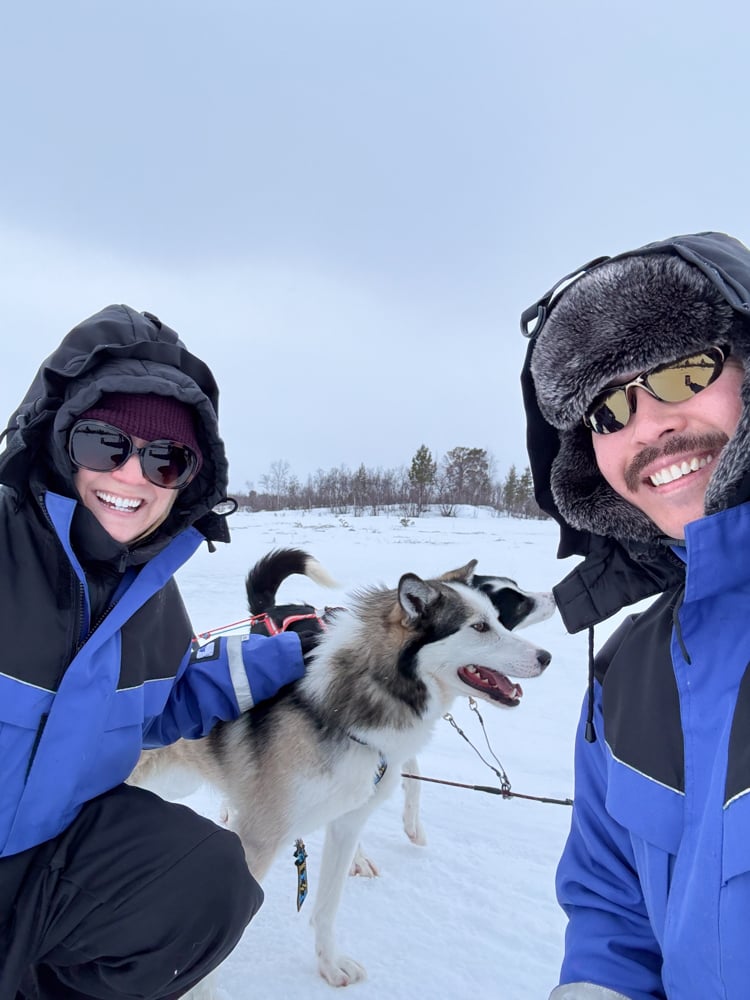
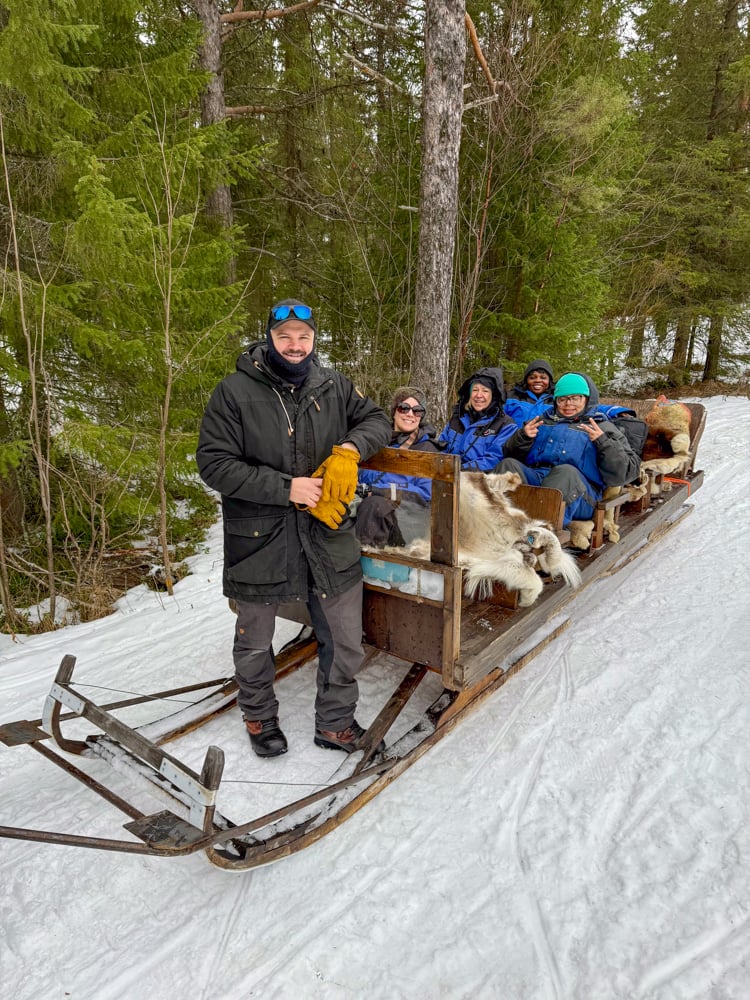
During daylight hours, we filled our time with incredible Arctic experiences. I mentioned the Ice Hotel and sauna experience above, but dog sledding was another absolute must. We rode as passengers on our guide’s sled through the icy wilderness, ending at a cozy heated tent where our guide prepared coffee, warm lingonberry juice, and snacks. I love how every activity leads to fika in Sweden.
Learning About Sami Reindeer Culture
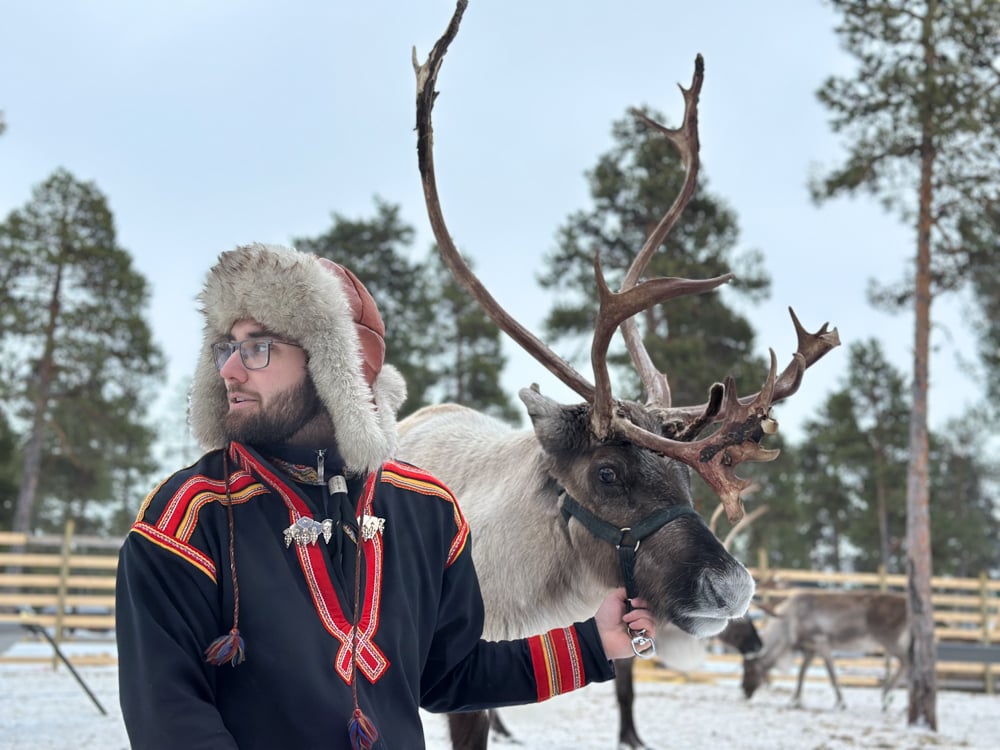
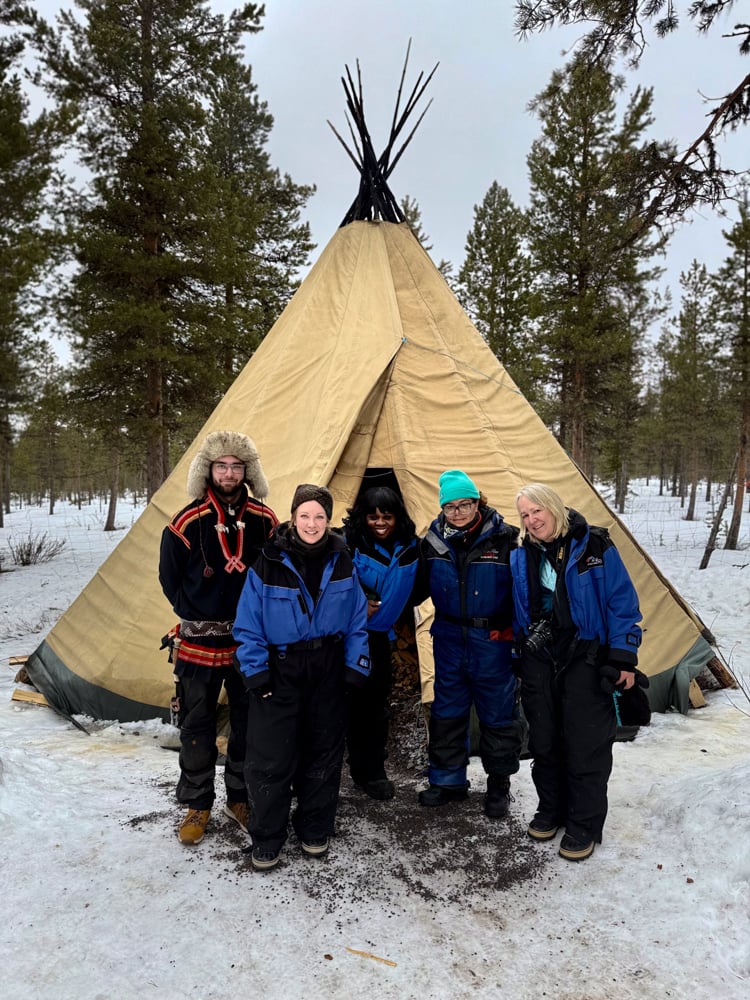
The daytime experience that really stood out was our day with Nutti Sami Siida, learning about indigenous Sami reindeer culture. This wasn’t a touristy show as they’re actually working reindeer herders.
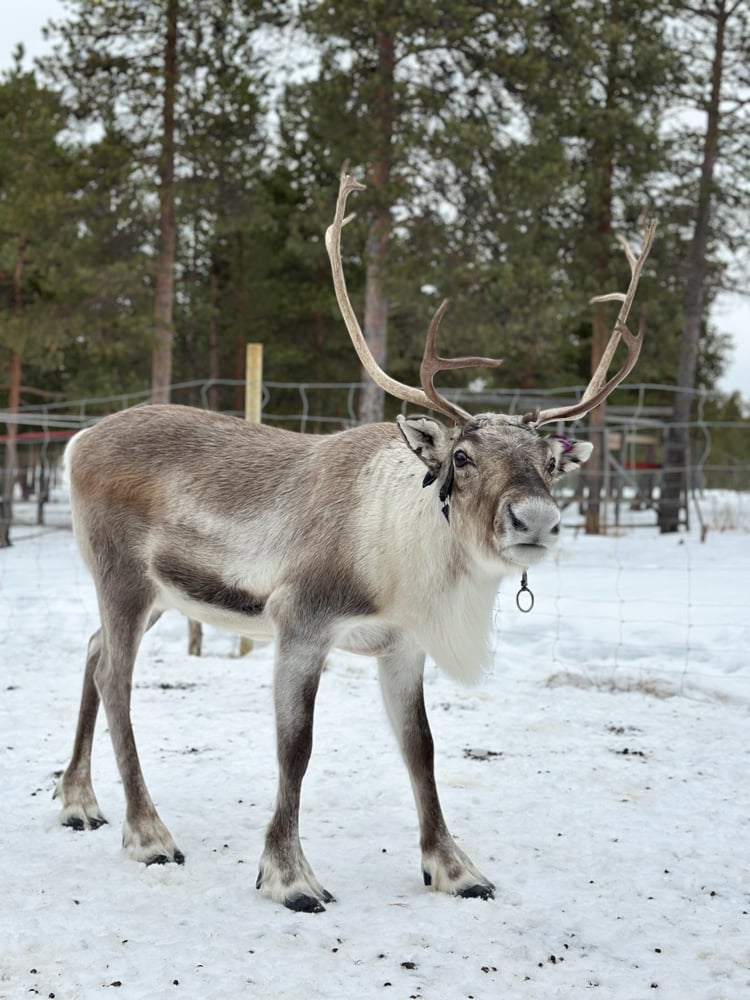
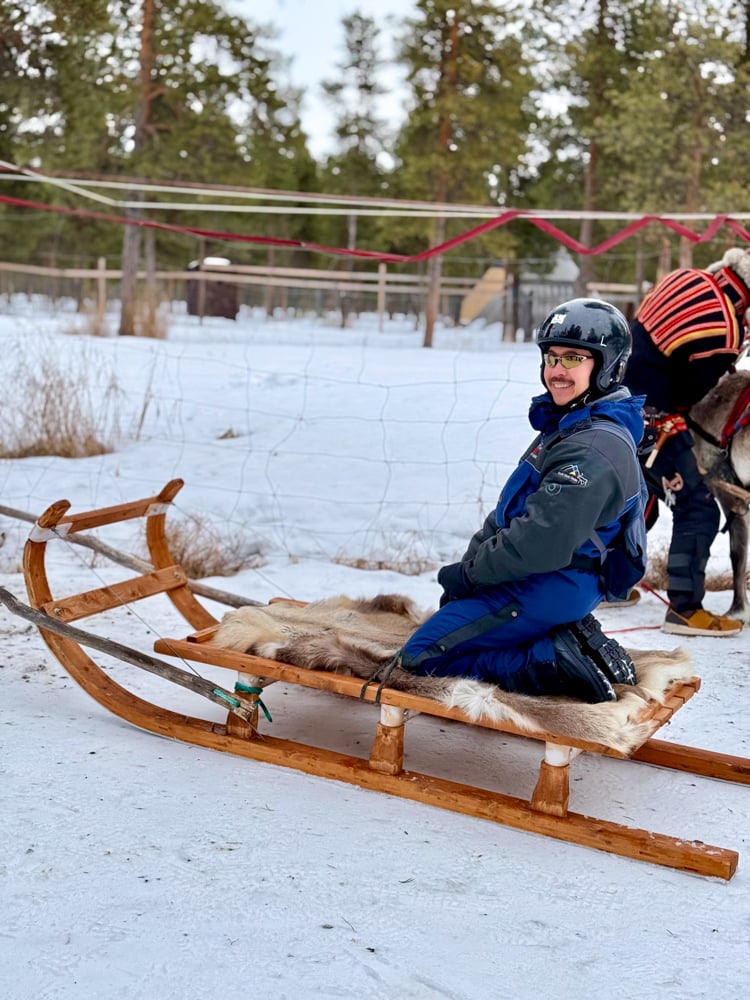
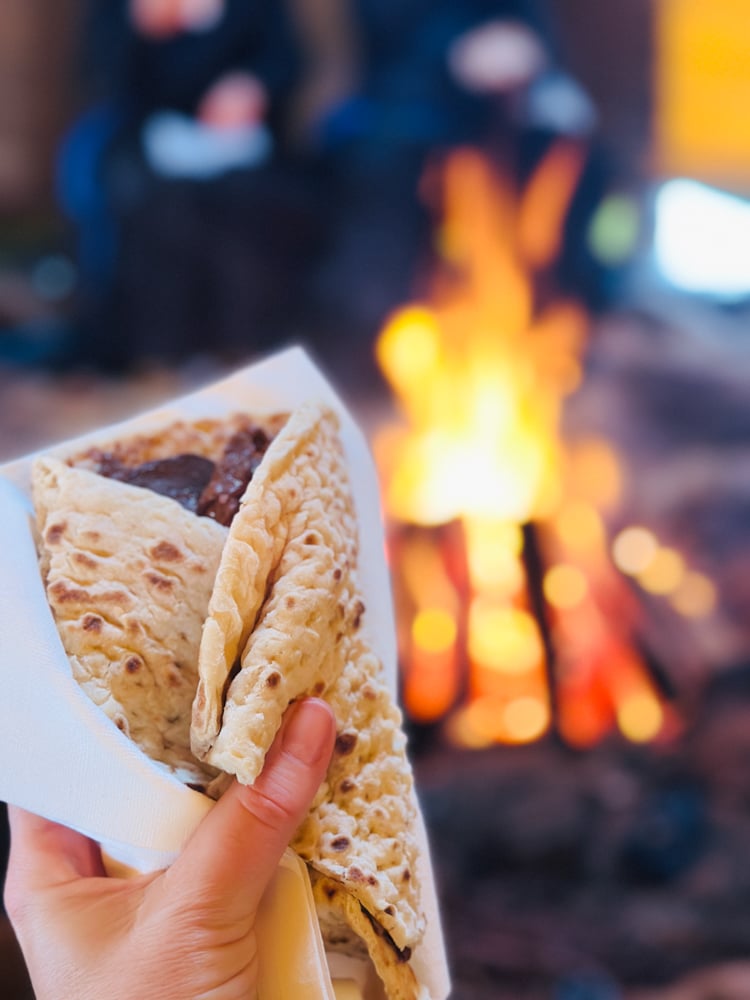
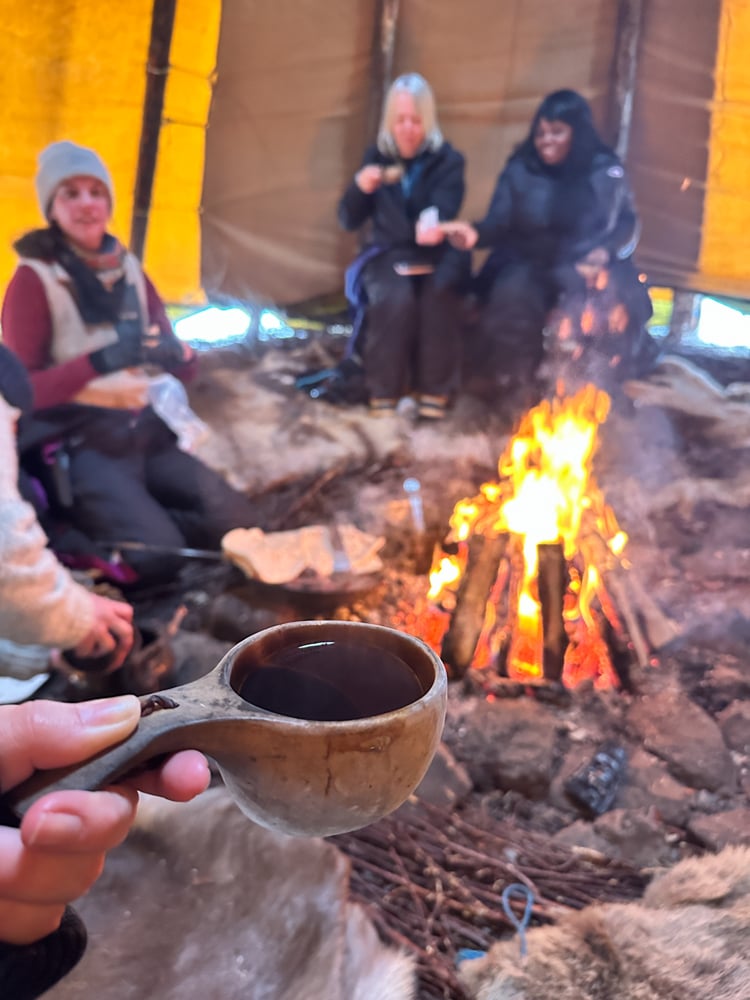
We fed reindeer their favorite lichen snacks, rode a sled as part of their training exercise, and then had lunch in a traditional Sami tent around an open fire. The whole experience gave us a much deeper appreciation for the land and the people who’ve lived here for generations.
Chasing the Northern Lights in Kiruna
Every evening after dinner, we’d bundle up in layers and head out into the darkness with Corey and Lola. She held photography sessions before our first night out, teaching us the basics of shooting in these extreme conditions, and each morning we’d review our images from the night before.
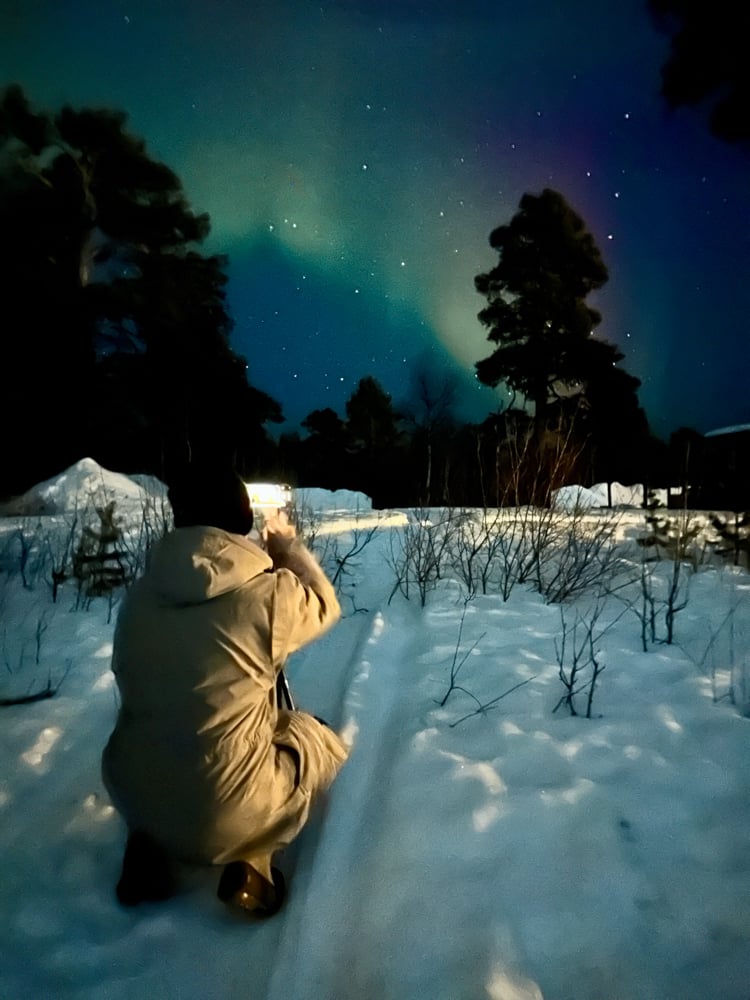
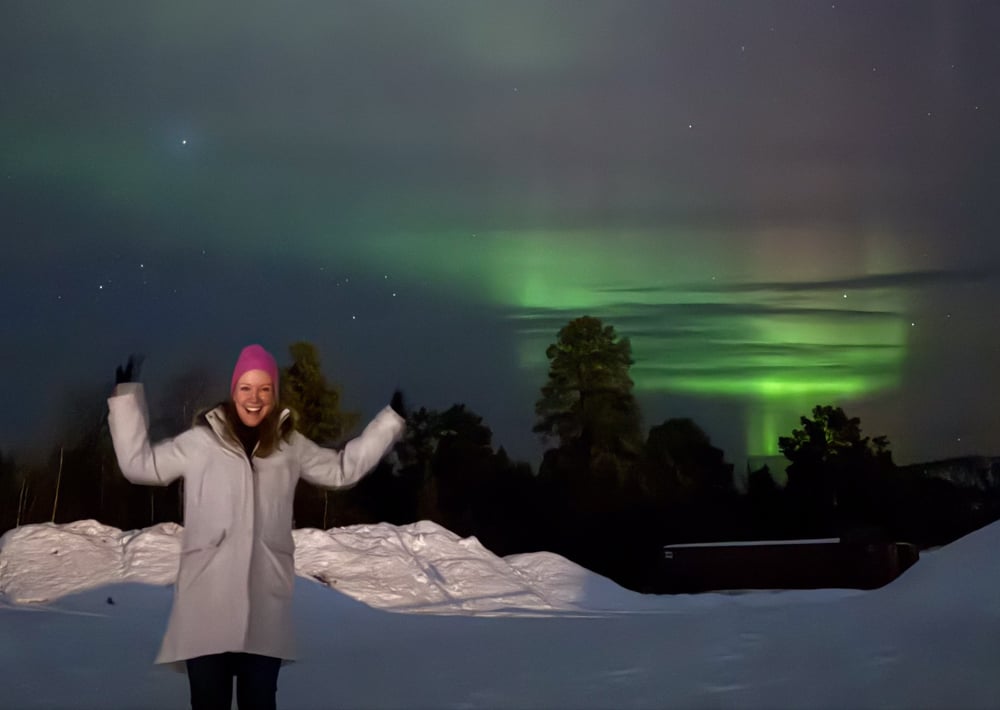
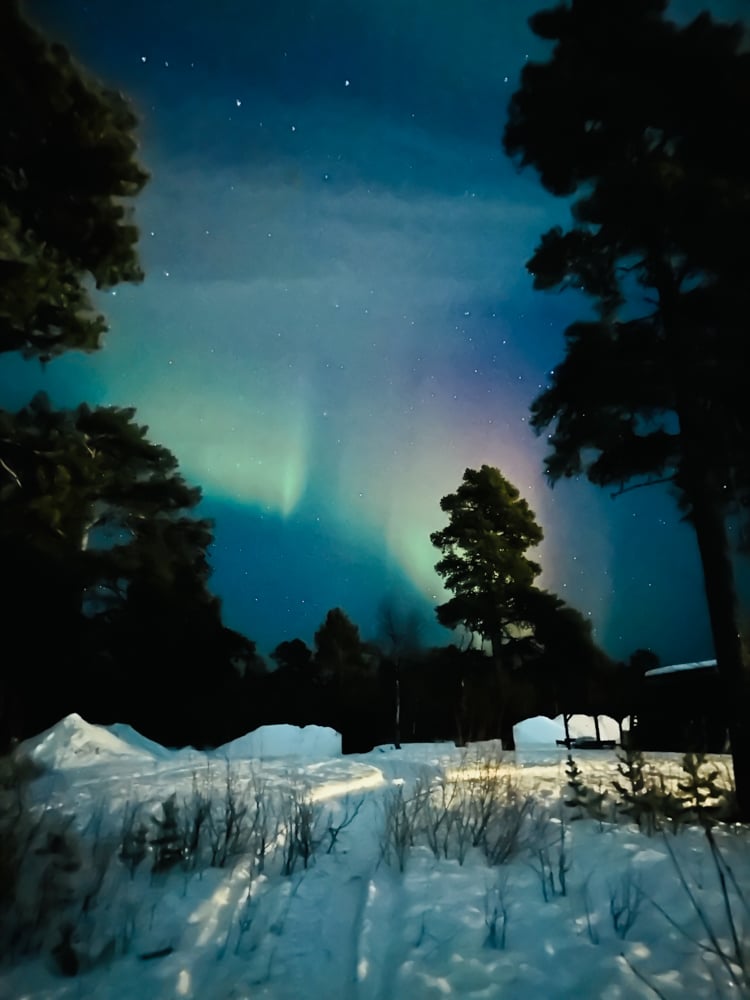
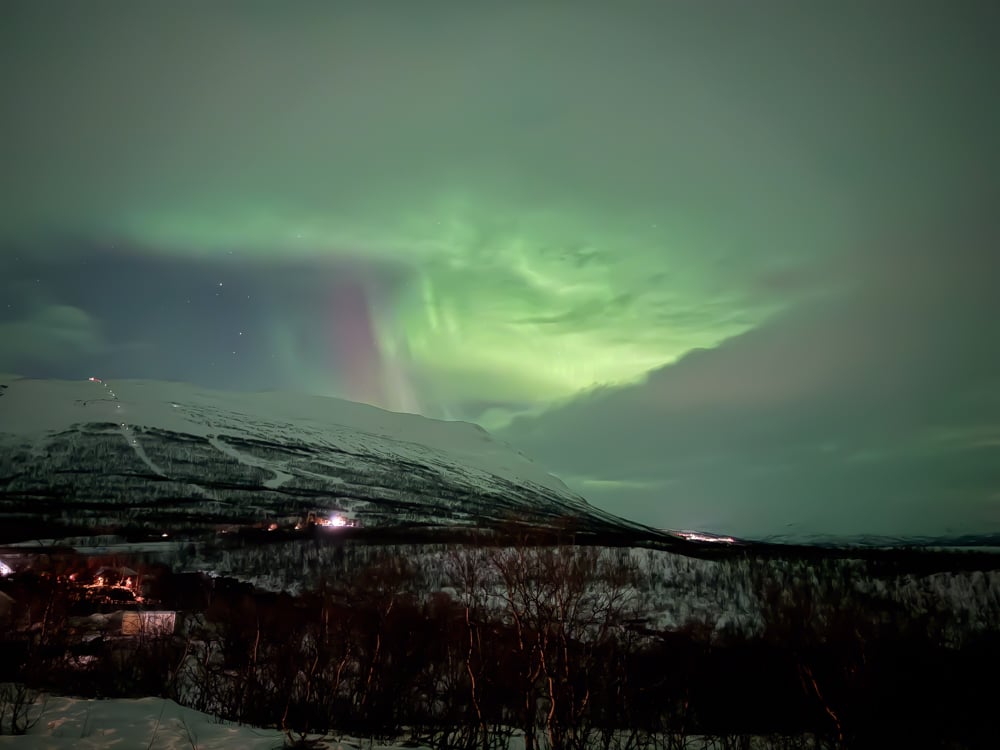
Our first night in Kiruna, we spotted them. Faint ribbons of green light hung on the horizon, and we stood there in the cold, cameras clicking. We were excited, absolutely. But also thinking, “okay, that’s cool.” It was beautiful, but not quite the show we’d been dreaming about.
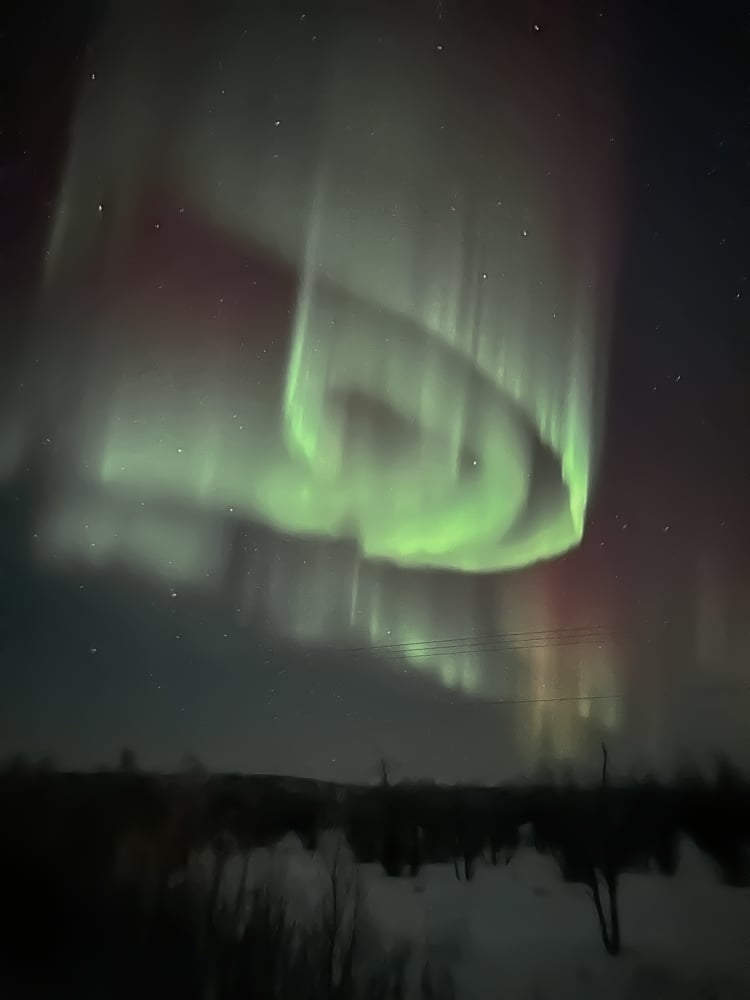
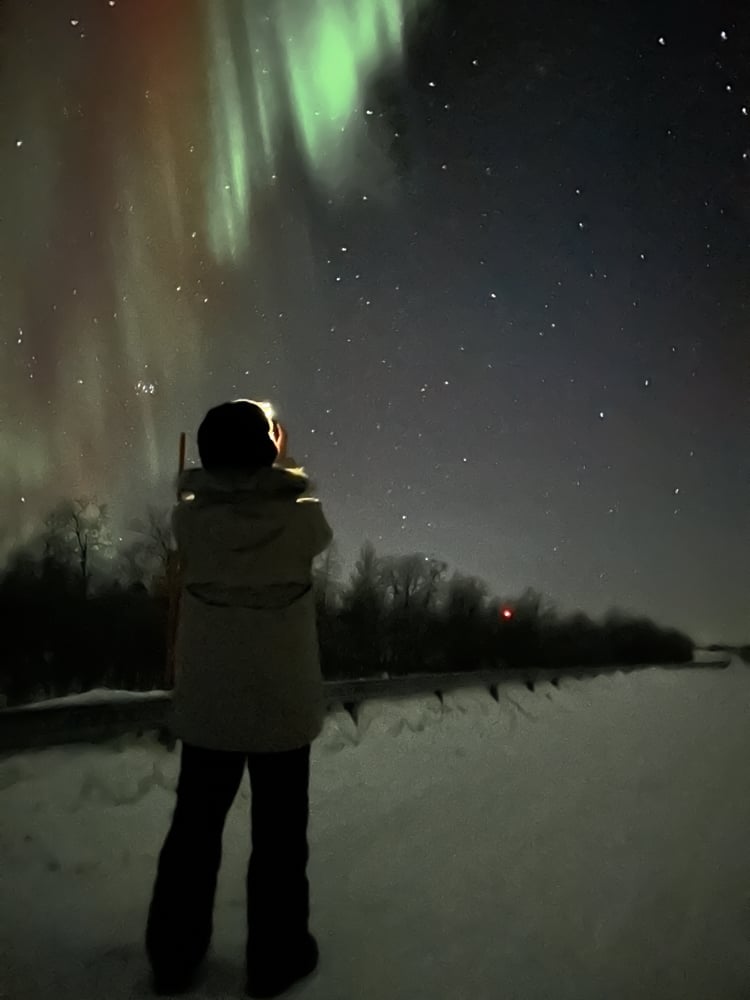
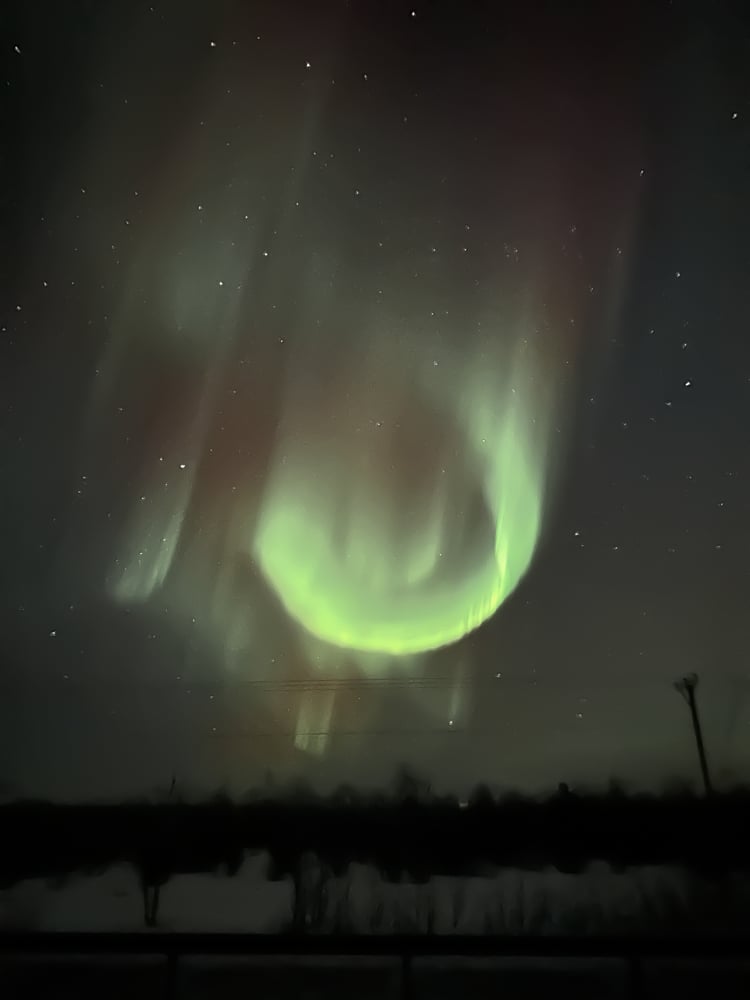
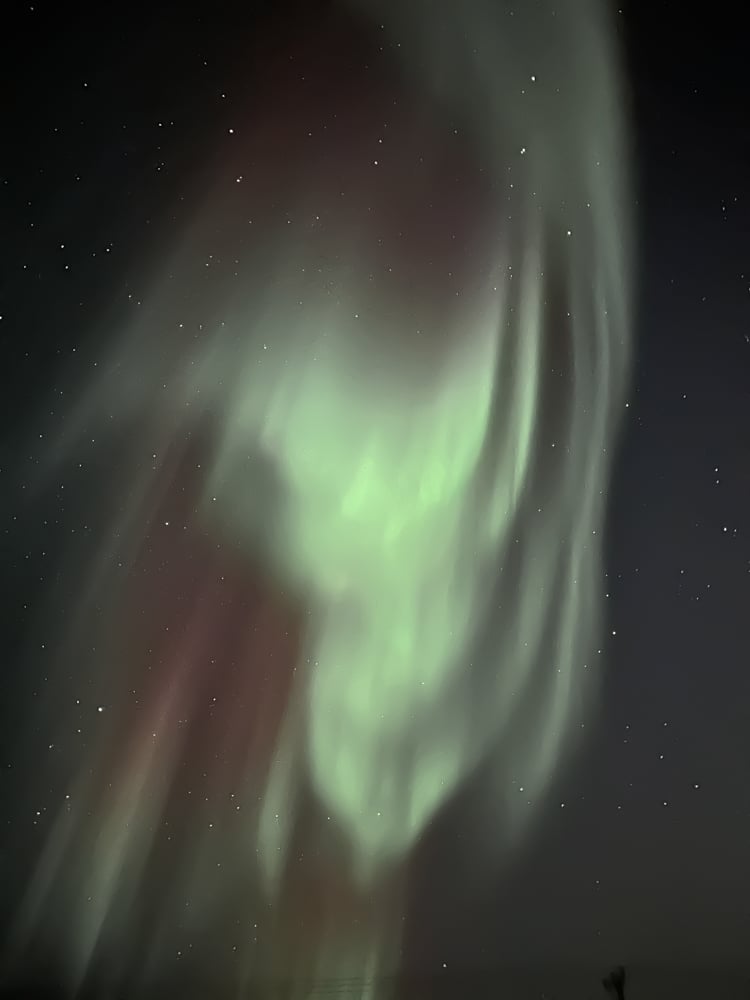
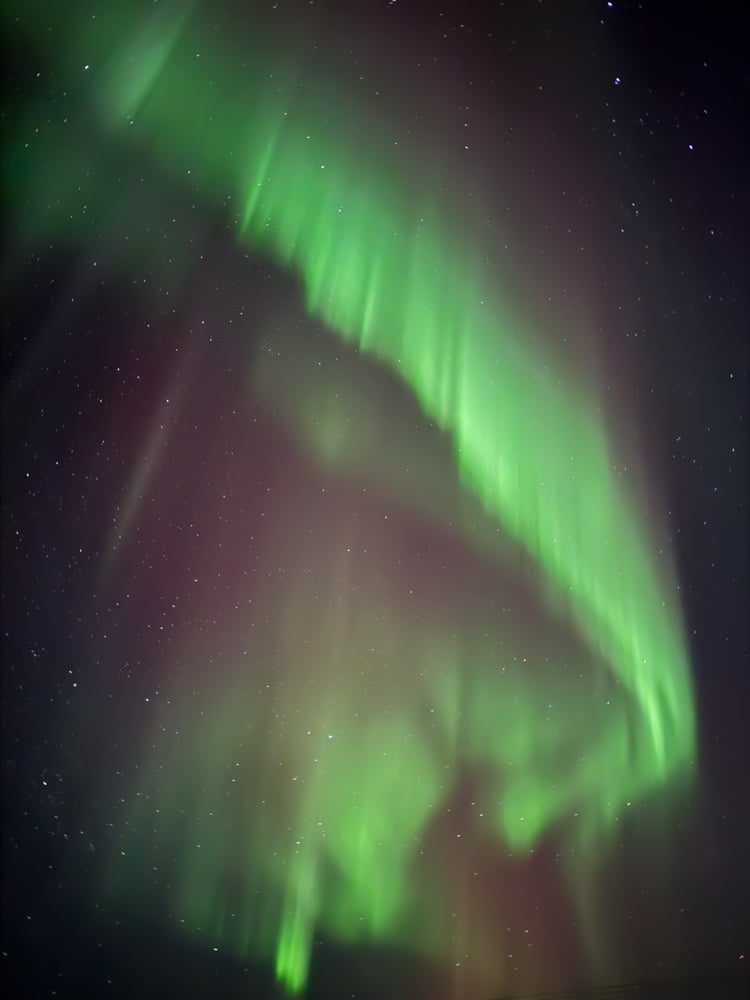
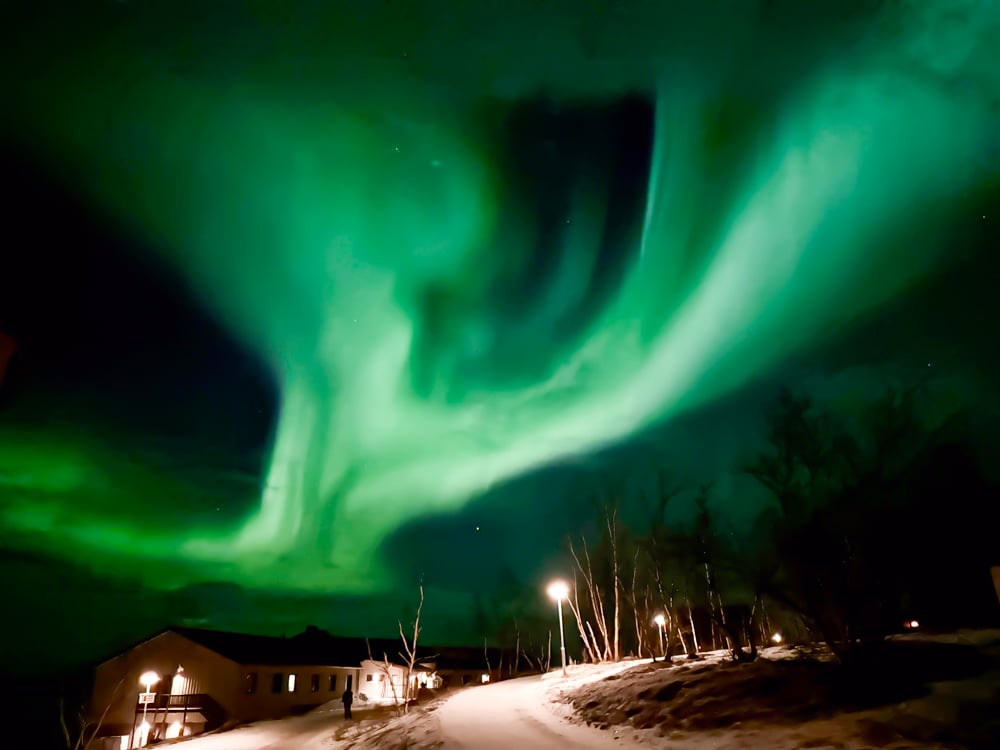
The second night brought brighter displays. We were actually driving when the aurora suddenly appeared, swirling in spirals across the sky. Corey quickly pulled over safely so we could watch and grab a few photos. The aurora can be fleeting, like a storm passing through. One moment the sky is alive with dancing lights, and the next it fades. But we caught this show, and it was more vivid than the night before. We joked about the irony that of course we’d get the best aurora show while pulled over by power lines instead of in some picturesque spot with trees and mountains. But honestly, the lights were so incredible we didn’t care about the composition.
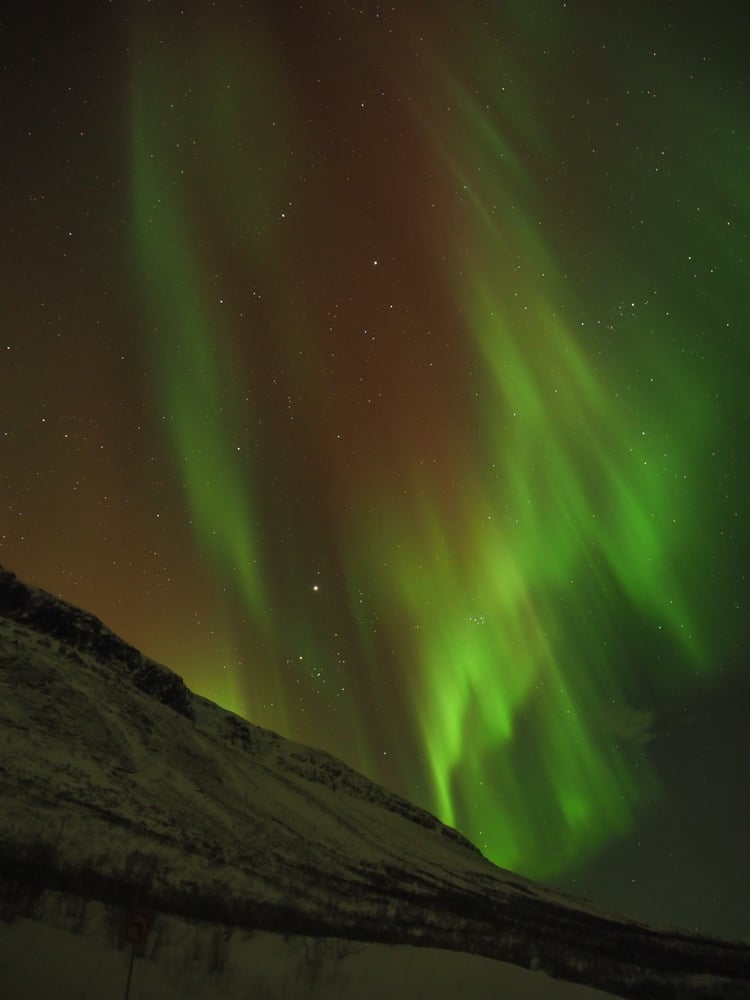
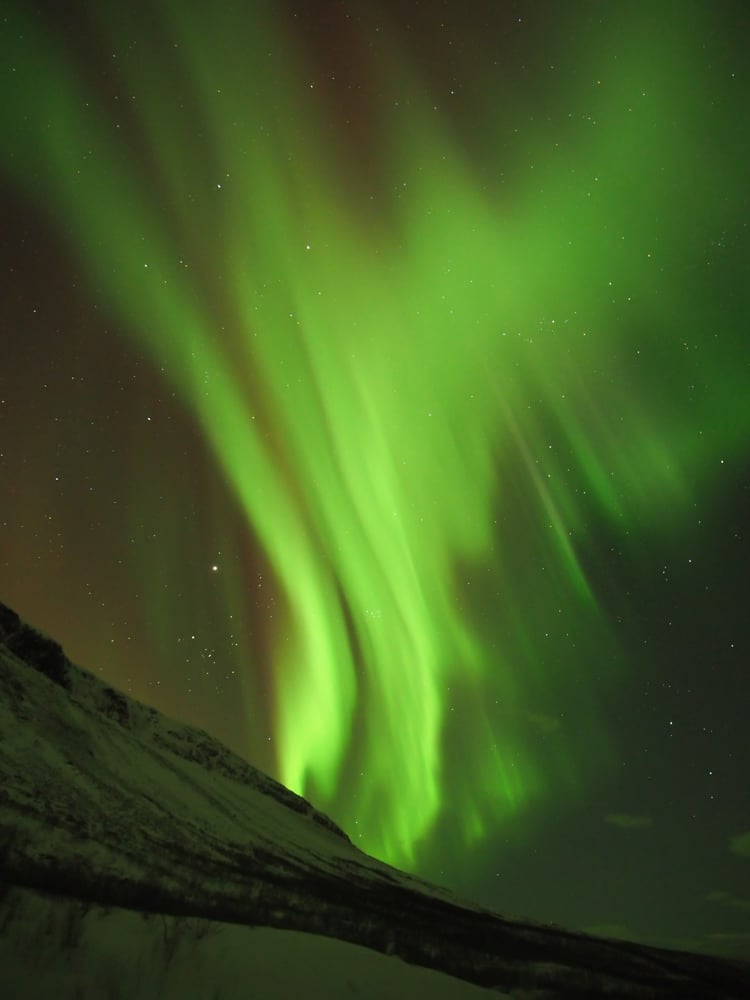
The Big Show!
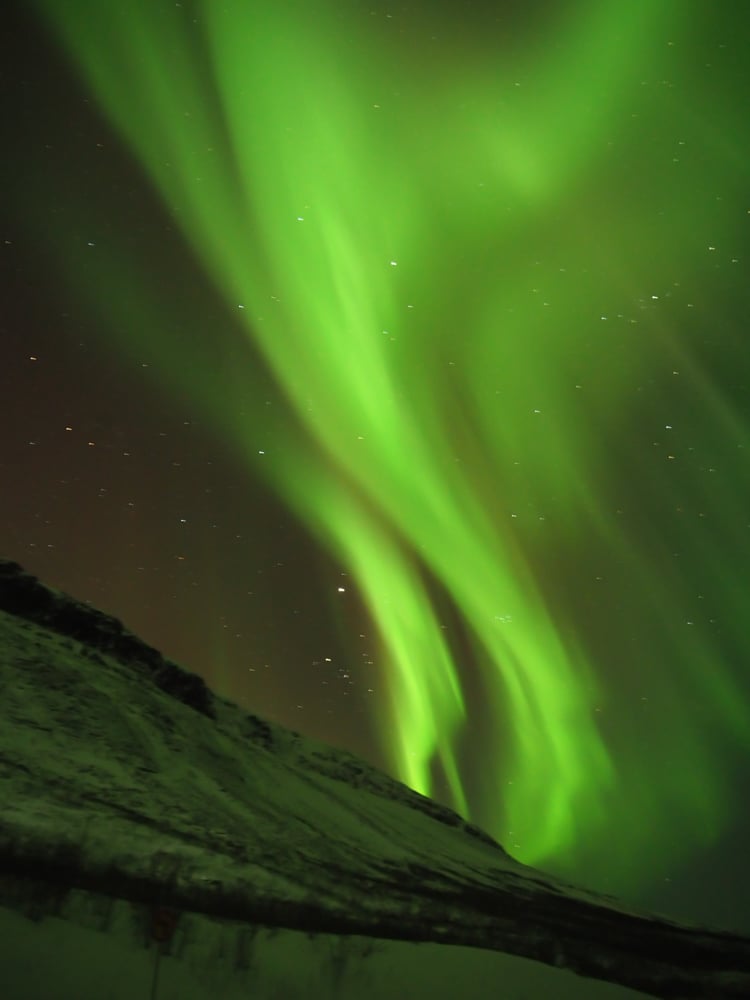
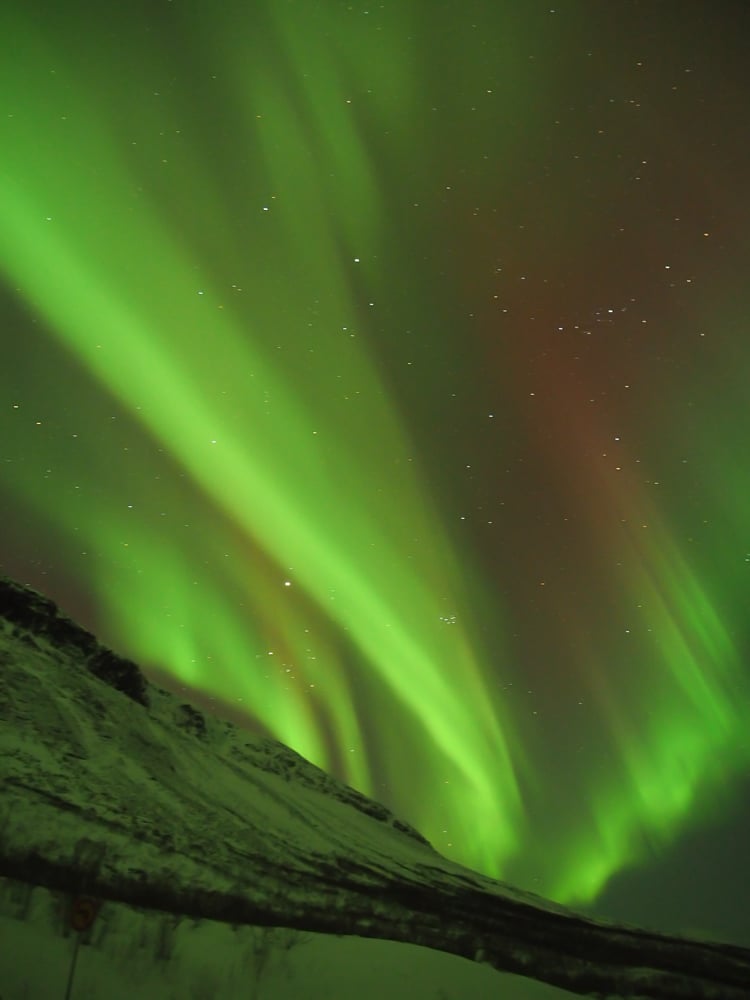
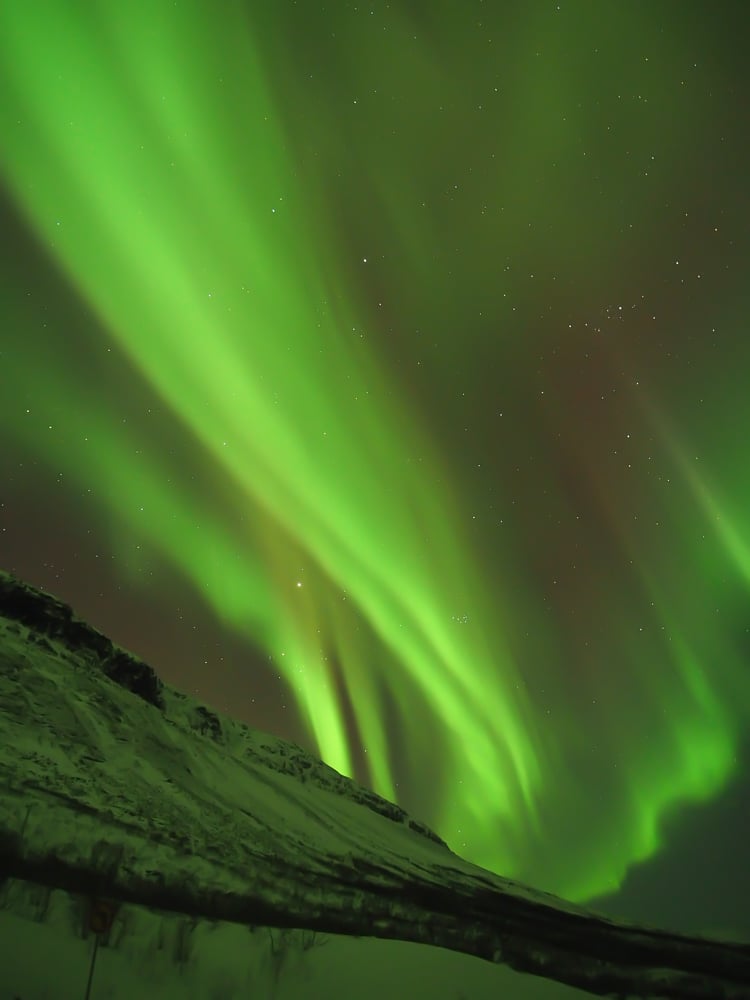
The third night was when everything changed. Corey drove us to a remote spot beside a mountain, away from any light pollution. We set up our tripods and settled in to wait, our breath visible in the freezing air. Corey had come prepared with homemade cinnamon buns his wife had baked for us to enjoy while we waited in the cold. Then suddenly, the sky exploded. Green ribbons of light erupted across the entire horizon, swirling and pulsing in ways that seemed impossible.
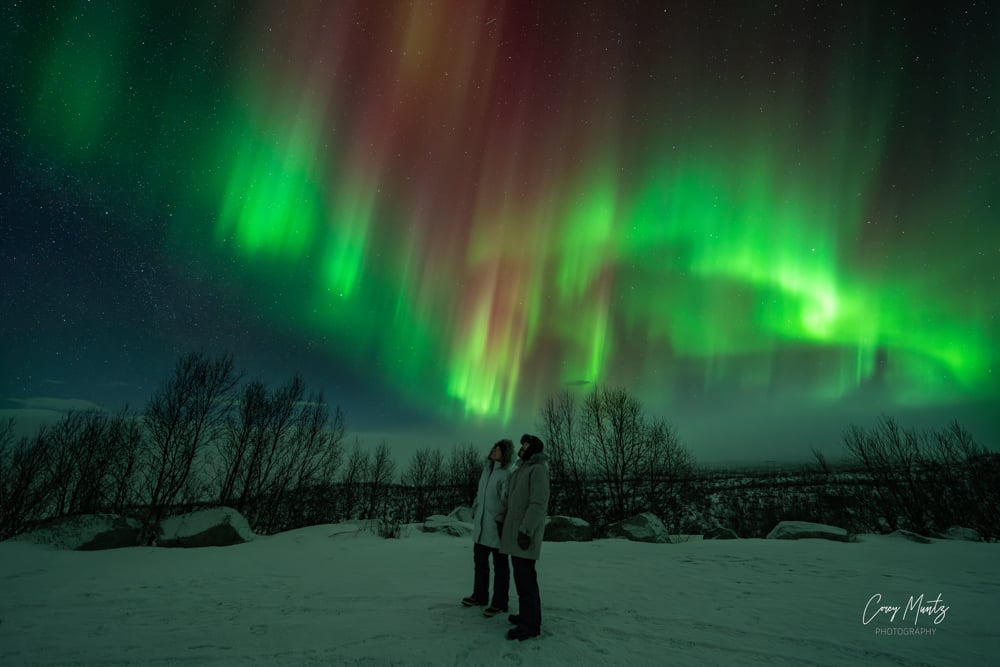
They moved so fast, dancing and twisting overhead. Pete and I just stood there with the group, mouths open, trying to take it all in while also frantically adjusting our cameras. With every click of the camera, with every blink of an eye, the northern lights changed and moved. It was like watching an epic show at a planetarium, with light all around you, except this was real life.
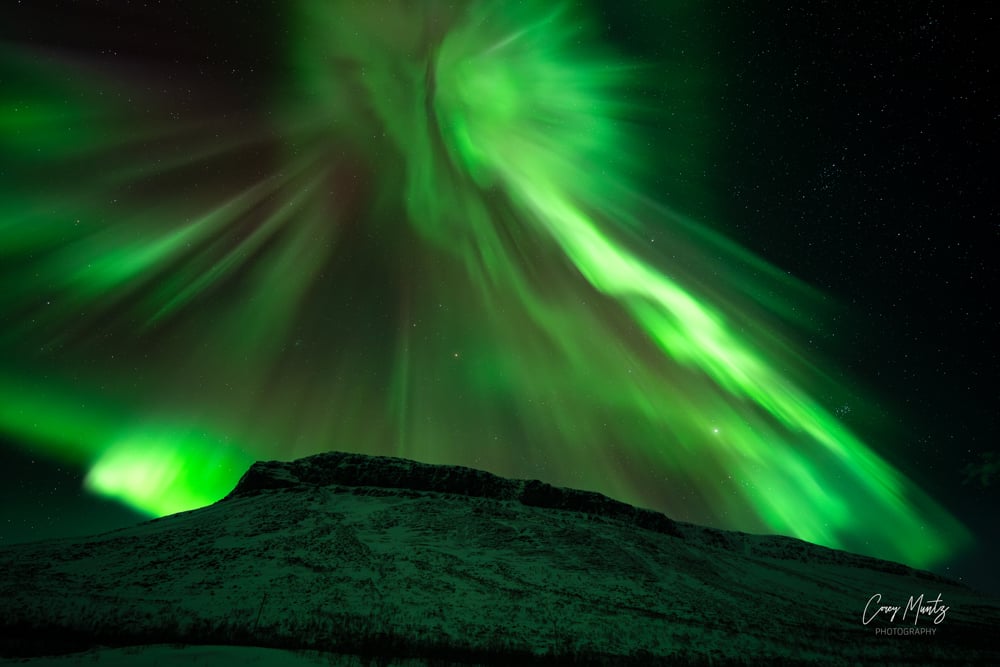
All those photos you see of the Northern Lights truly don’t exaggerate. If anything, they don’t quite capture the magic. The way the aurora moves, the scale of it spreading across the entire sky, the absolute silence of the Arctic night while this cosmic dance happens above you. It was everything we’d hoped for and more.
Moving to Abisko: The Best Place to See the Northern Lights
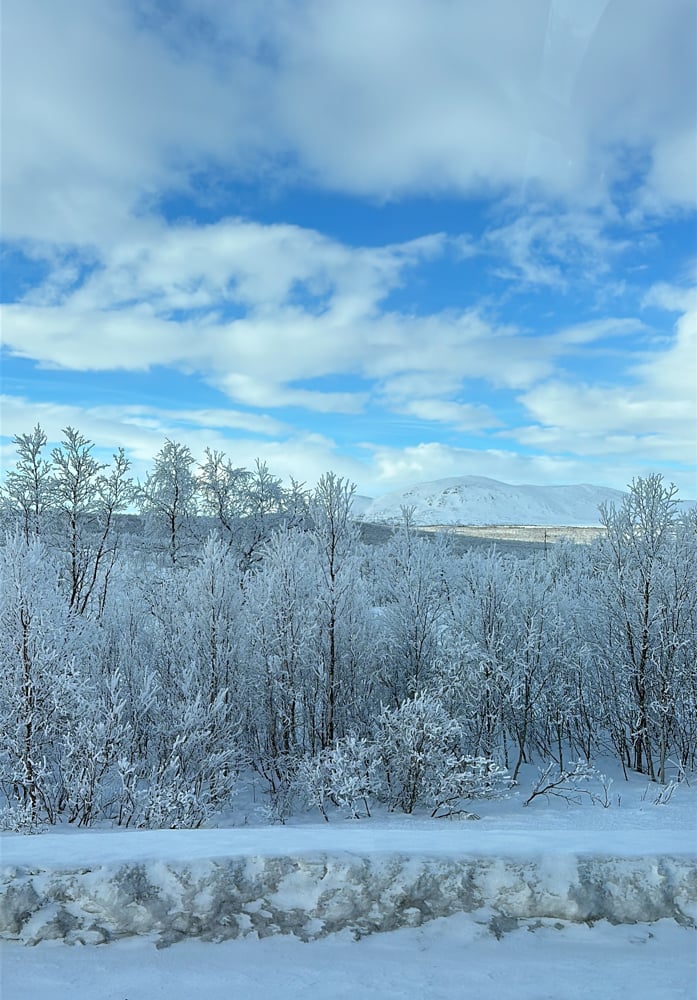
After Kiruna, we headed a little further north to Abisko. The drive takes about 1.5 hours, and we made several stops along the way with Corey and Lola for winter landscape photography (and a few snacks too). The scenery is absolutely stunning. Endless white forests against the backdrop of a clear blue sky.
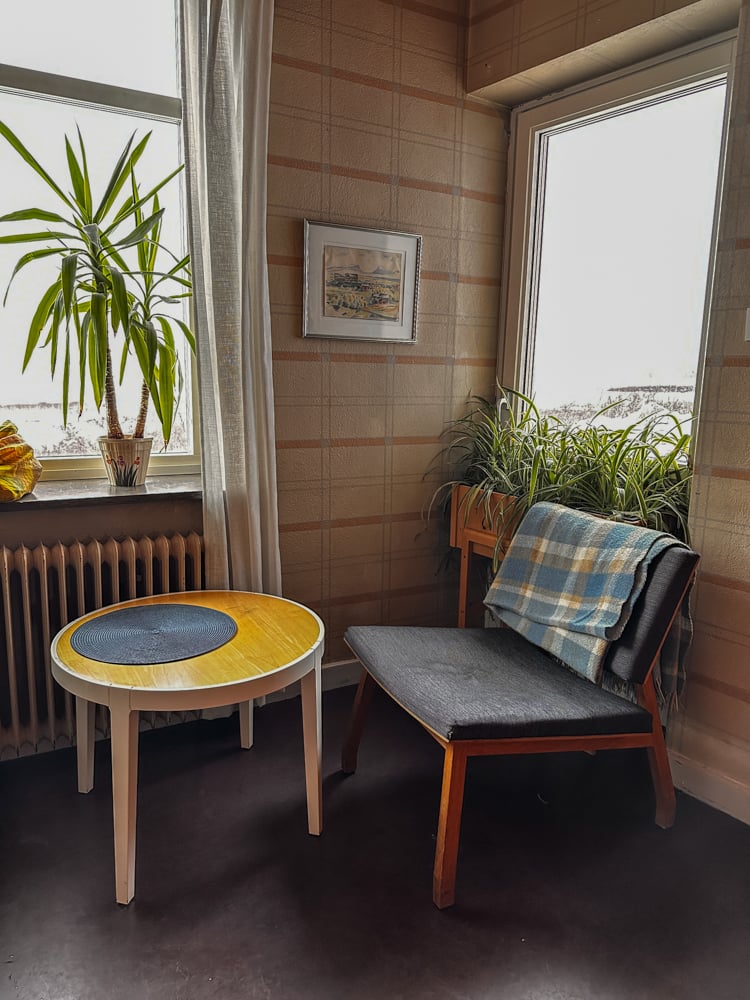
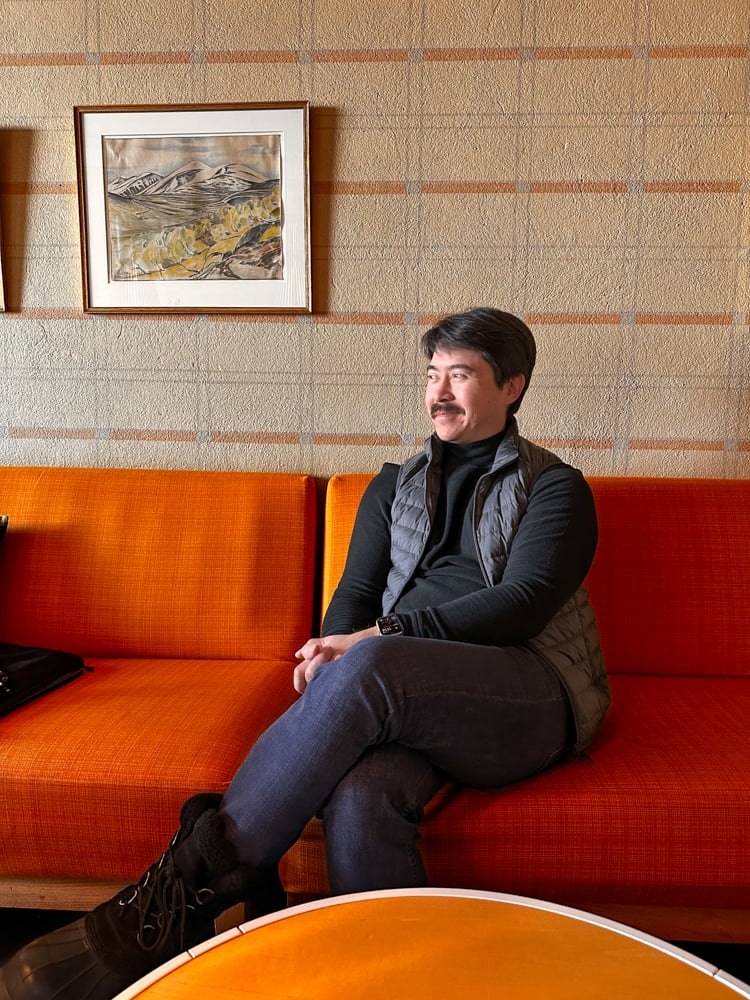
When we arrived at Abisko Turiststation, the vibe shifted. If Kiruna felt remote, Abisko takes it to another level. The turiststation has this interesting research station or mid century modern boarding school feel to it. But the restaurant was actually gourmet and incredible. The rooms are comfortable, and the food exceeded our expectations.
Why Abisko Has the Clearest Skies for Aurora Viewing
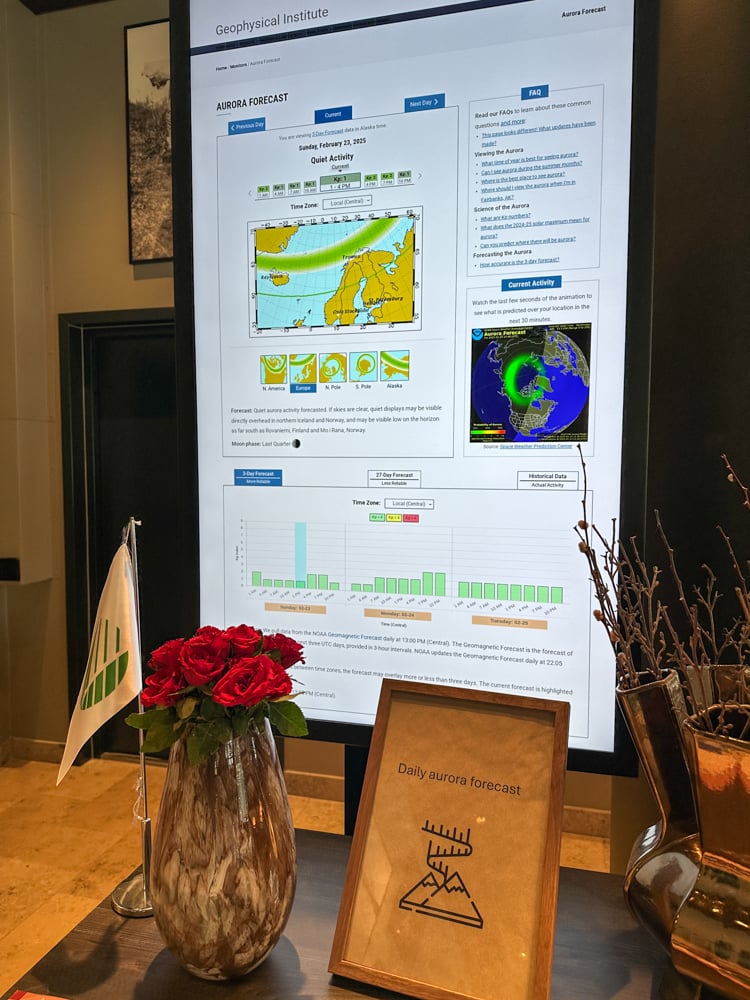
Abisko sits in a unique bowl-like valley surrounded by mountains, and this geography creates a microclimate that typically keeps clouds and bad weather at bay. It’s one of the reasons Swedish Lapland is widely considered the best place to see the Northern Lights. Lola and Cory purposefully included Abisko in our itinerary for exactly this reason: to maximize our chances of clear skies and spectacular aurora displays.
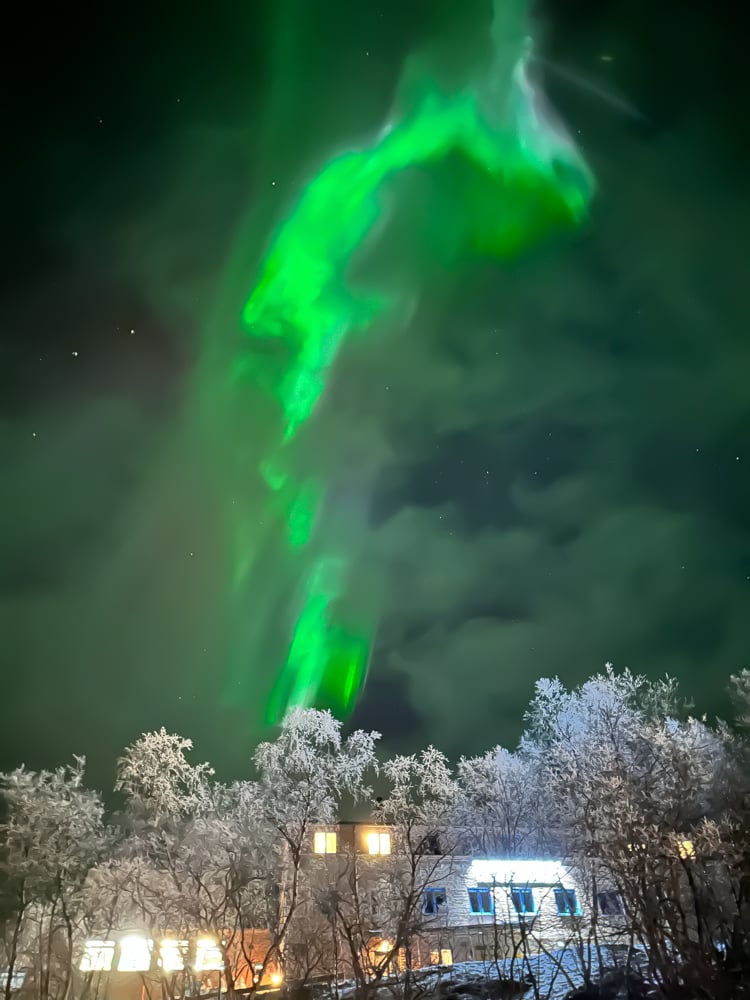
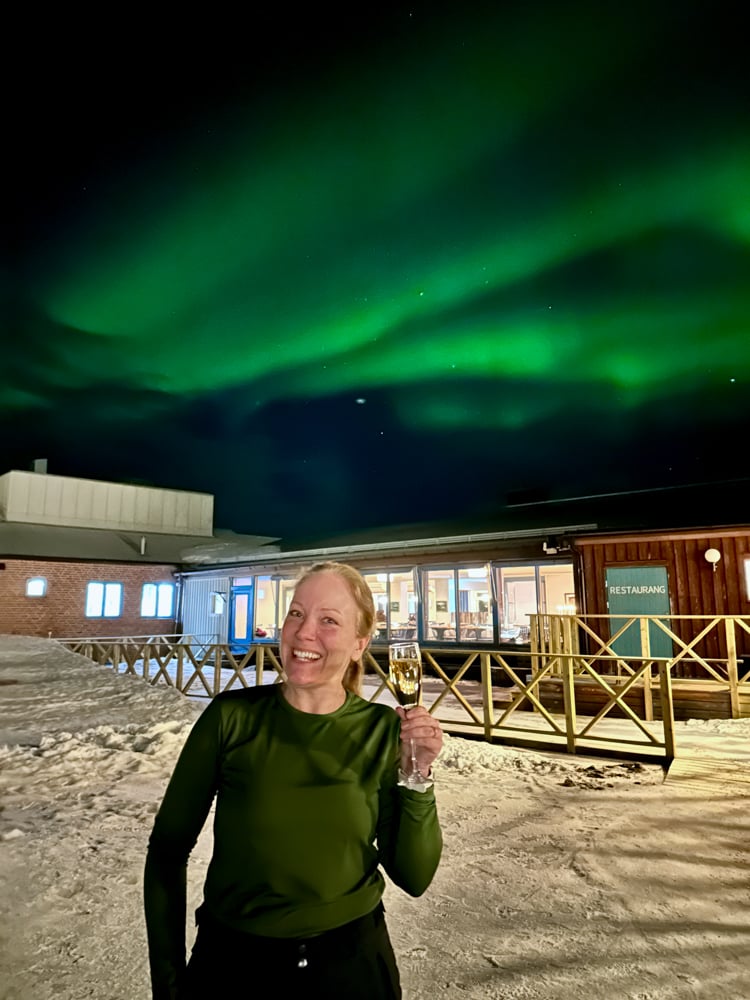
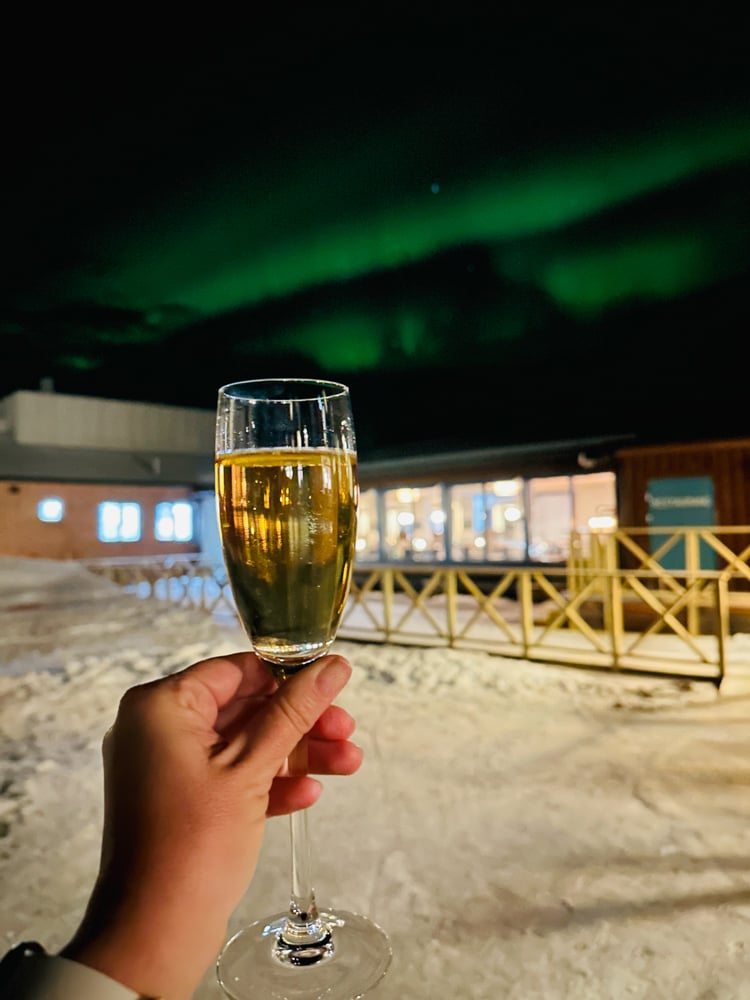
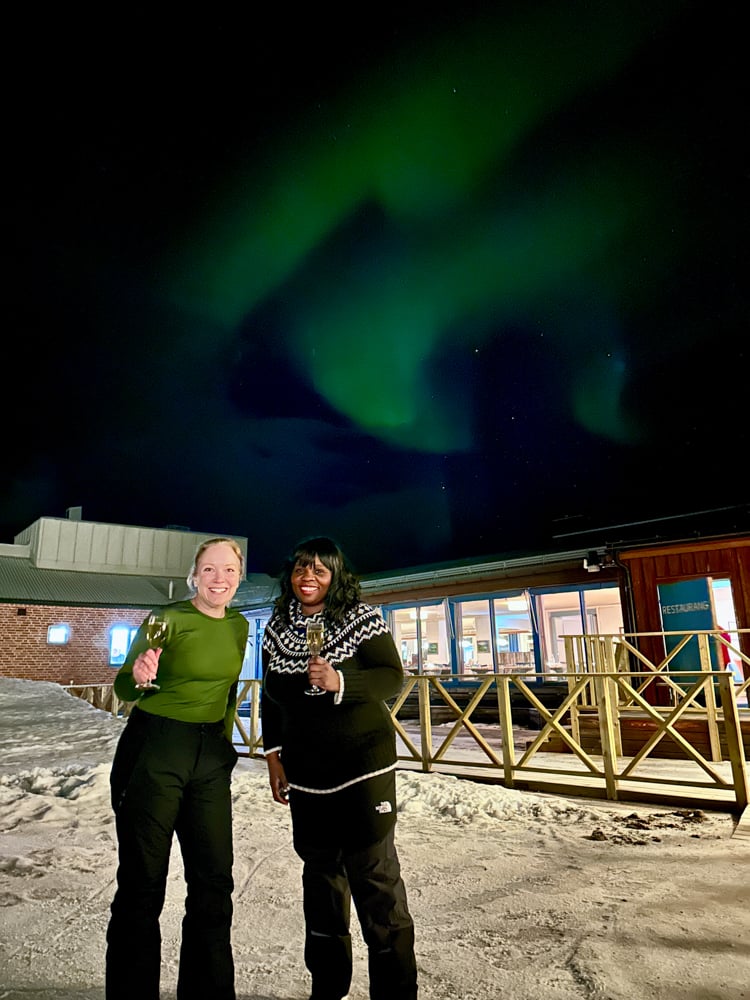
Staying at Abisko Turiststation makes aurora viewing incredibly easy. The hotel keeps an eye on the lights and everyone around seems to know there’s activity. One night during dinner, everyone just ran outside (champagne glasses still in hand, coats left behind) to catch the green ribbons dancing across the sky. It’s just amazing that you can literally step out the door and see such an amazing celestial show.
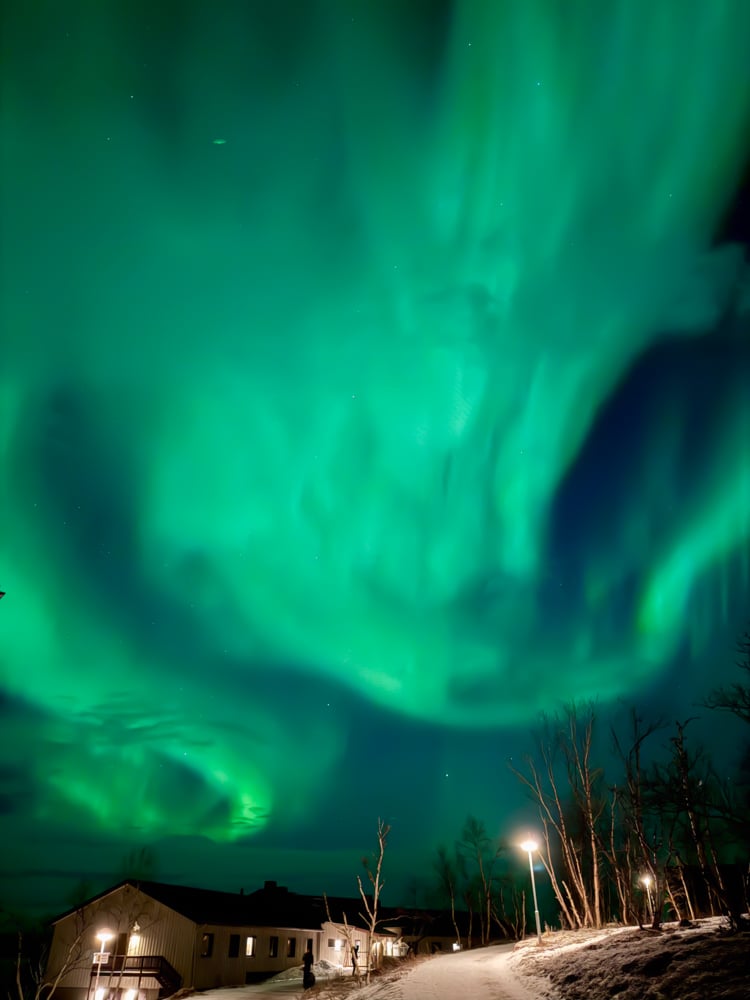
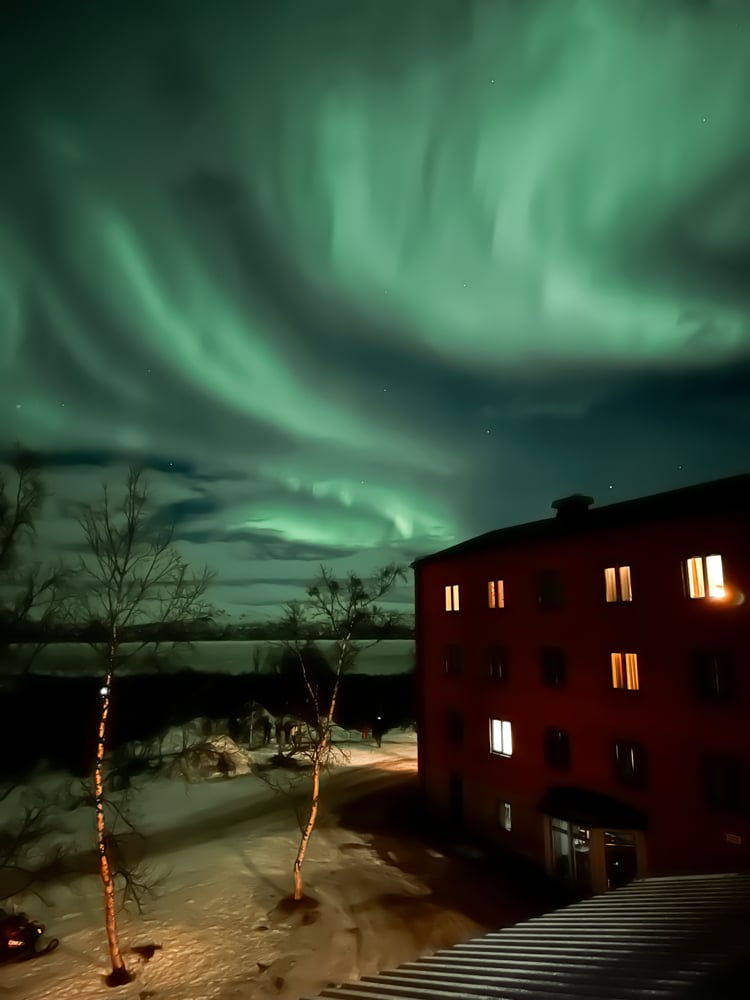
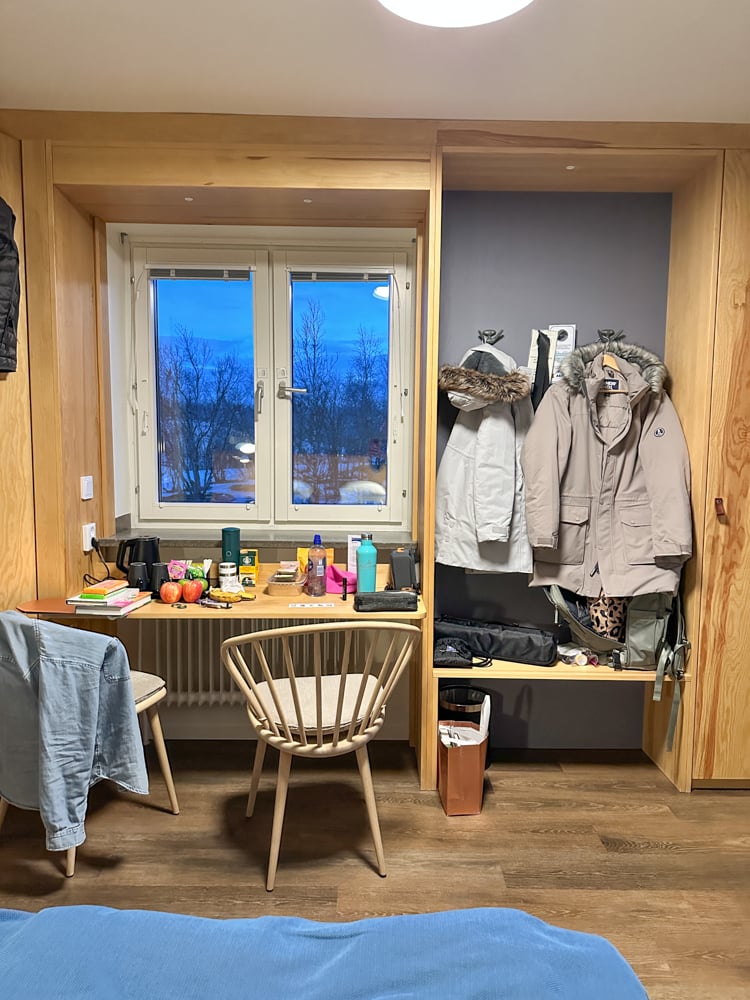
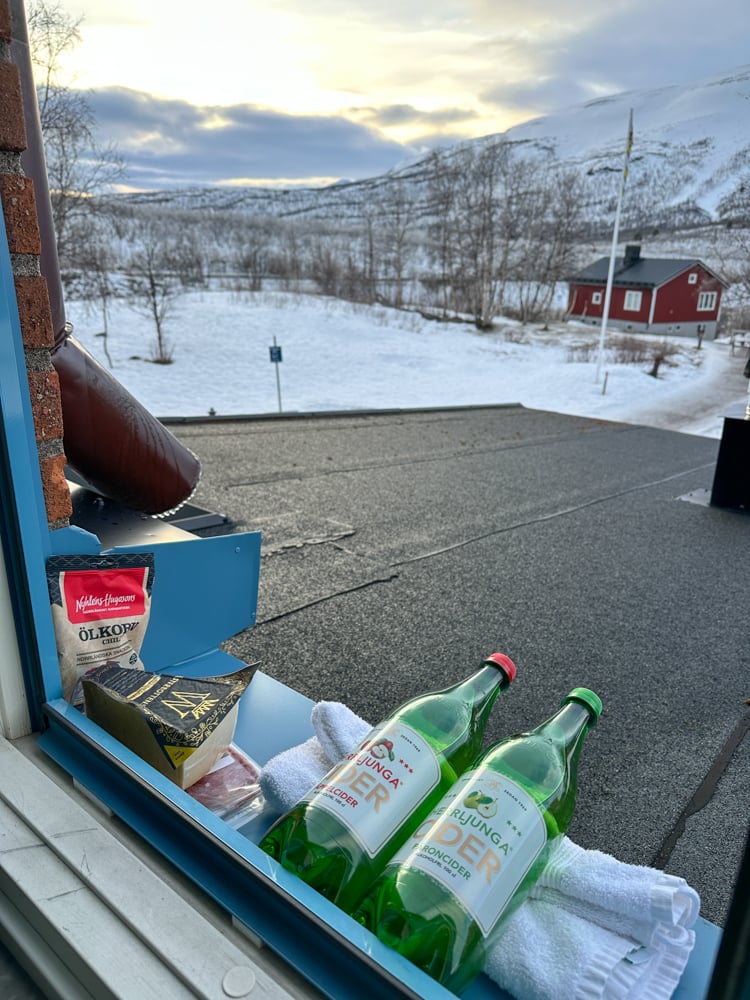
We ate most of our meals at the turiststation restaurant, which was both convenient and delicious. But we also made a trip to the local grocery store for snacks. We stocked up on Swedish meats and cheeses, and discovered that when it’s this cold outside, your windowsill makes a perfectly convenient refrigerator. Those late-night snacks in our room with local cheese and crackers after viewing the aurora became one of our favorite parts of the trip.
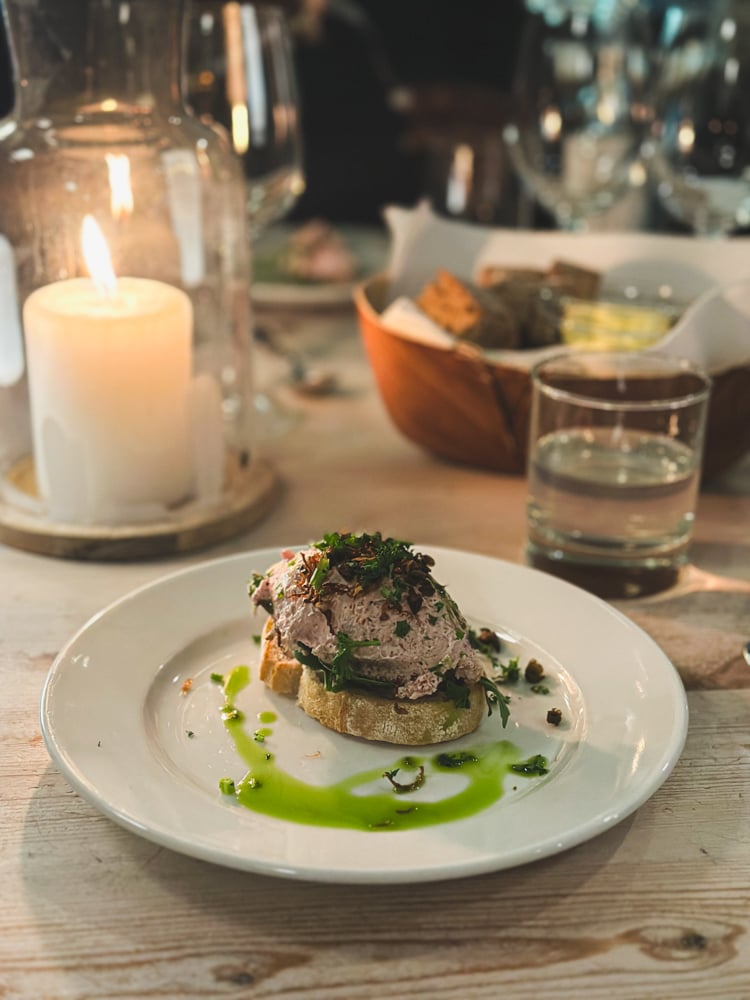
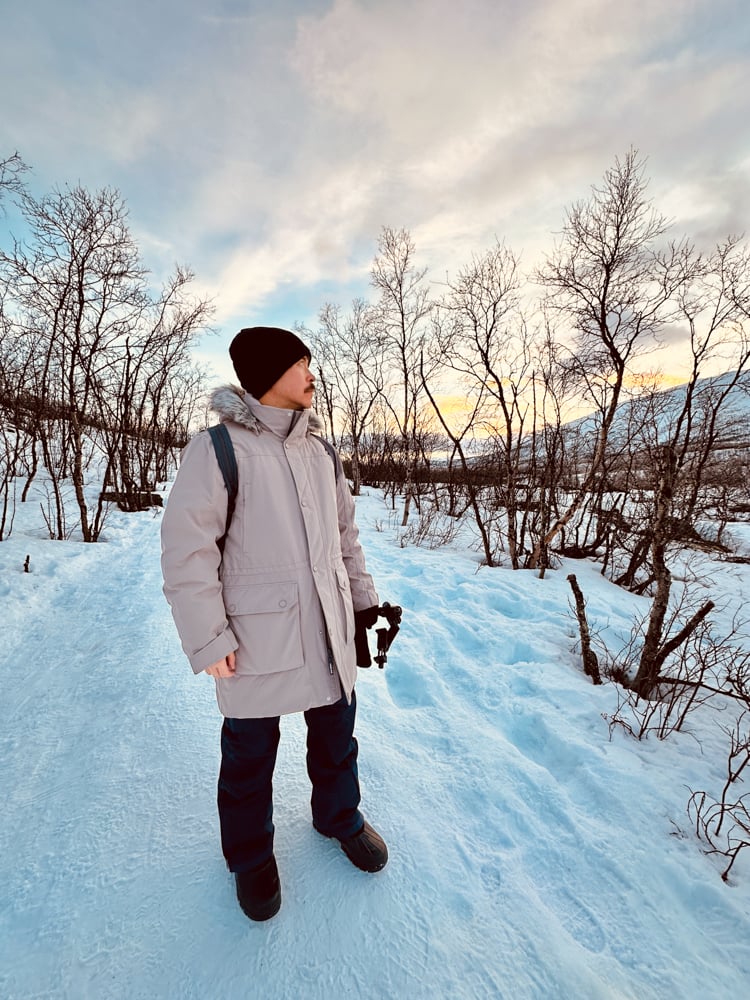
Our days in Abisko fell into a wonderful rhythm. After staying up late viewing the aurora, we’d sleep in, then head down for a hearty breakfast before venturing out for daytime adventures. On quieter mornings, we took walks down to the frozen lake through a landscape that looked straight out of Narnia. Snow-covered trees stretched in every direction, and there was absolute silence except for the satisfying crunch of snow under our boots.
Snowmobiling Into the Wilderness
Snowmobiling was another daytime highlight. They outfitted us with warm overalls that felt like wearing a blanket, plus gloves and helmets. If you have a valid driver’s license, you can drive your own snowmobile, or ride as a passenger if not.
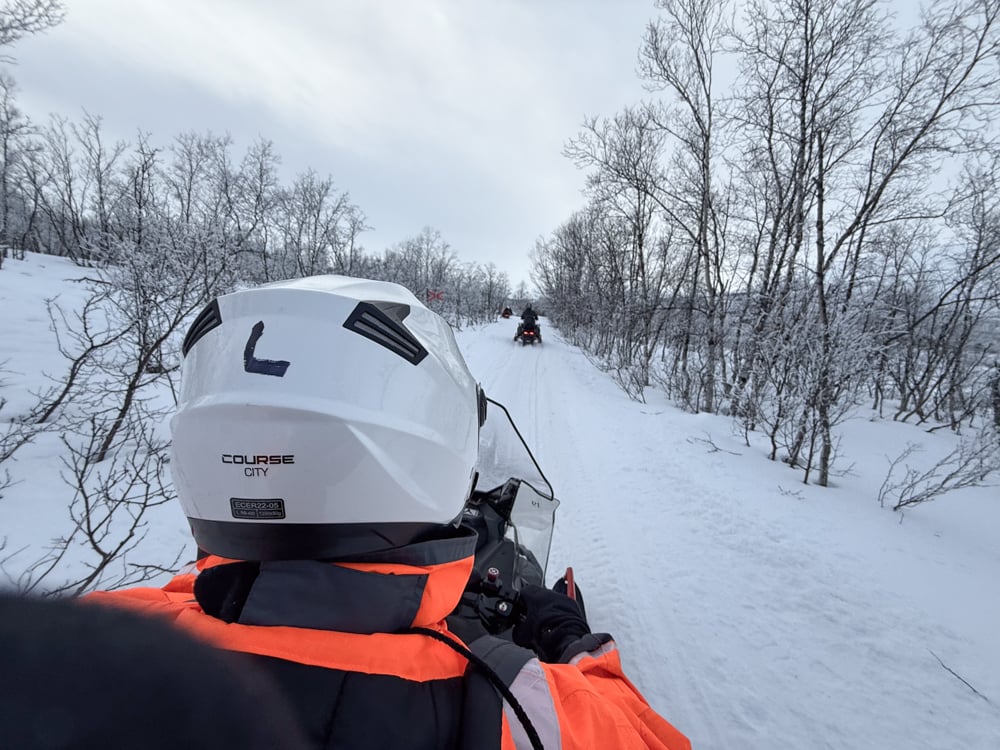
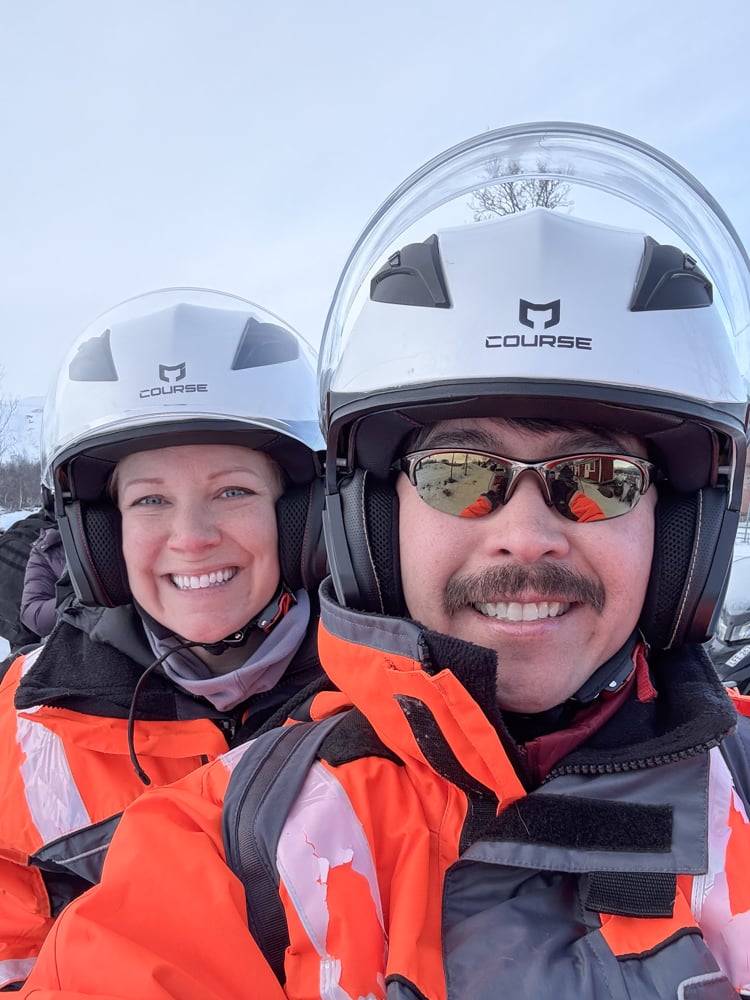
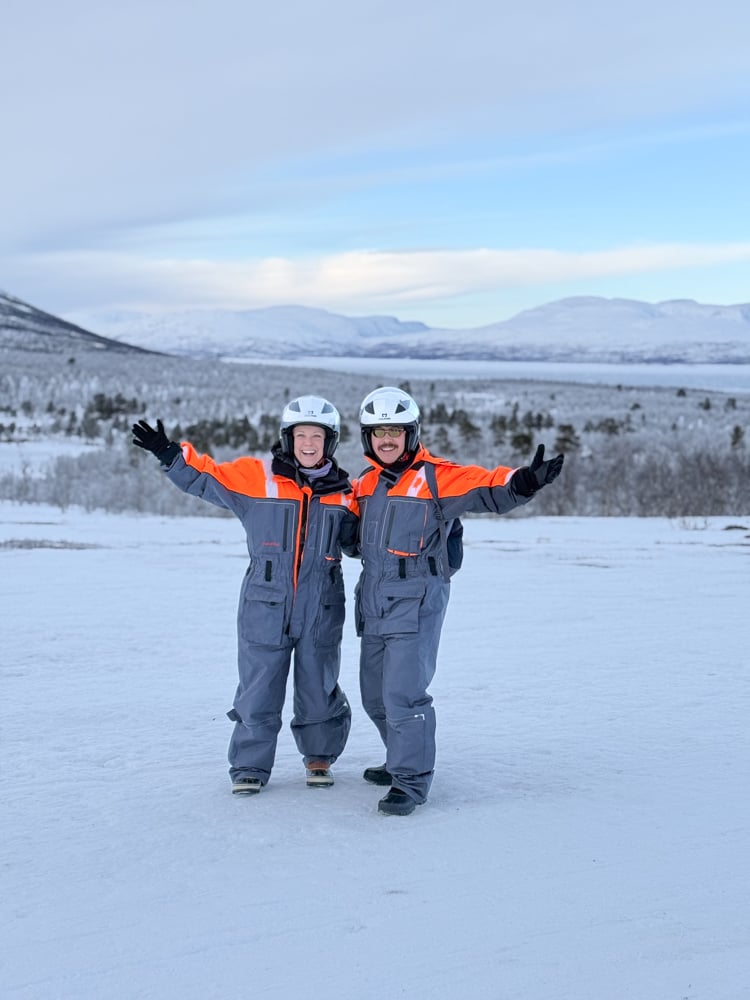
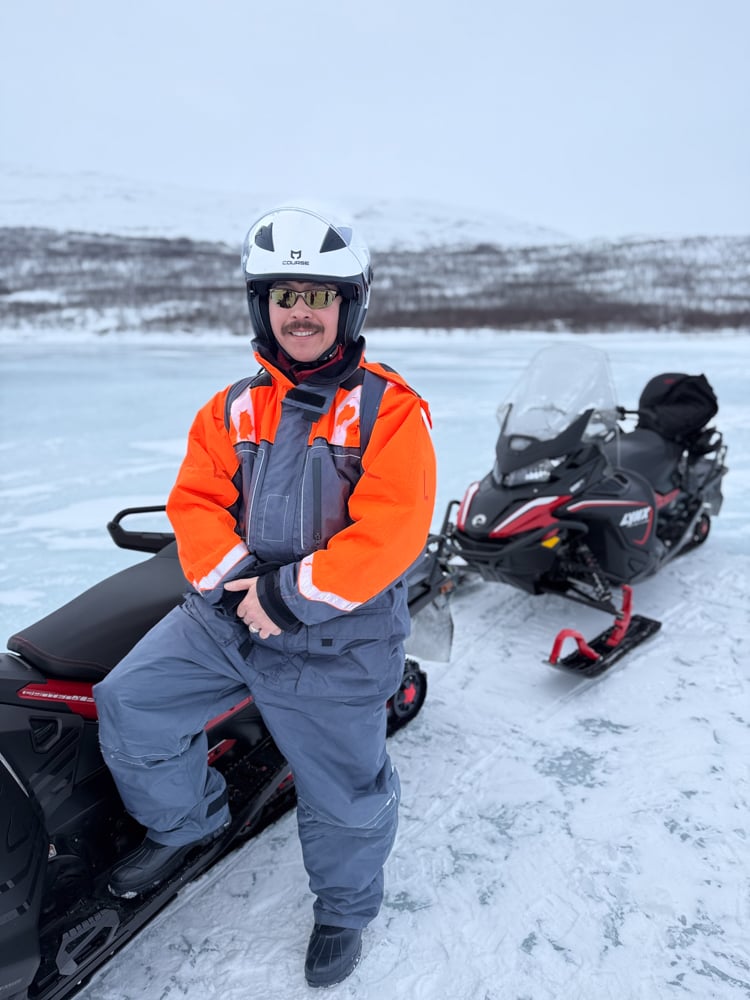
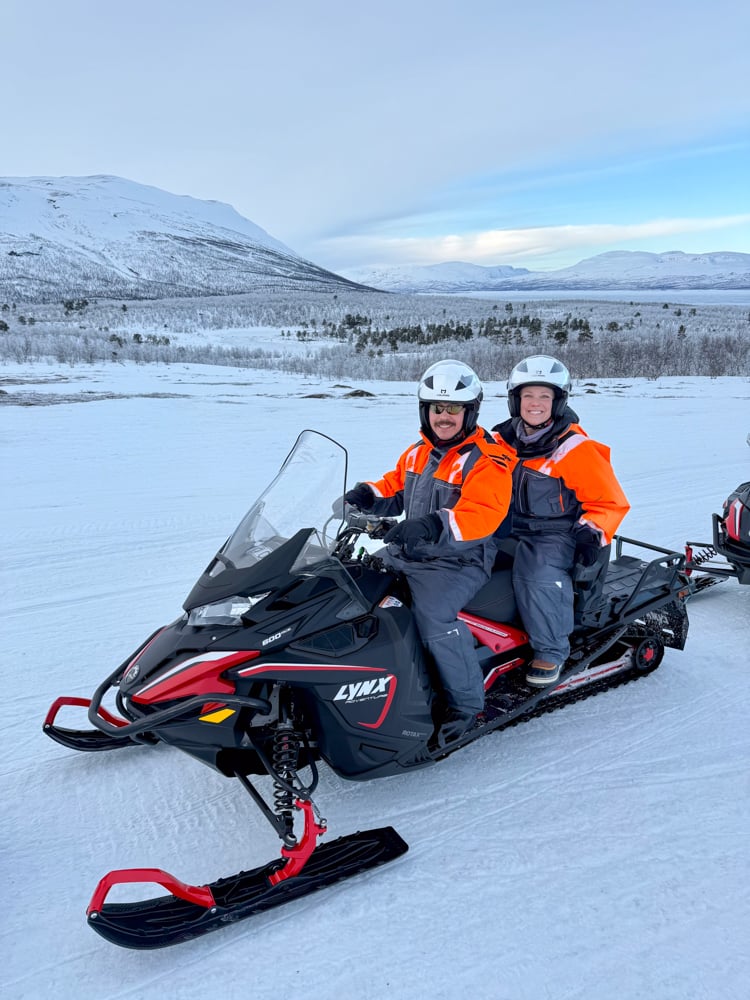
Honestly, I was happy to let Pete take the driver’s seat so I could take in the stunning landscape around us. And he loved it! We cruised deeper into the wilderness and onto a frozen lake, stopping along the way for photos.
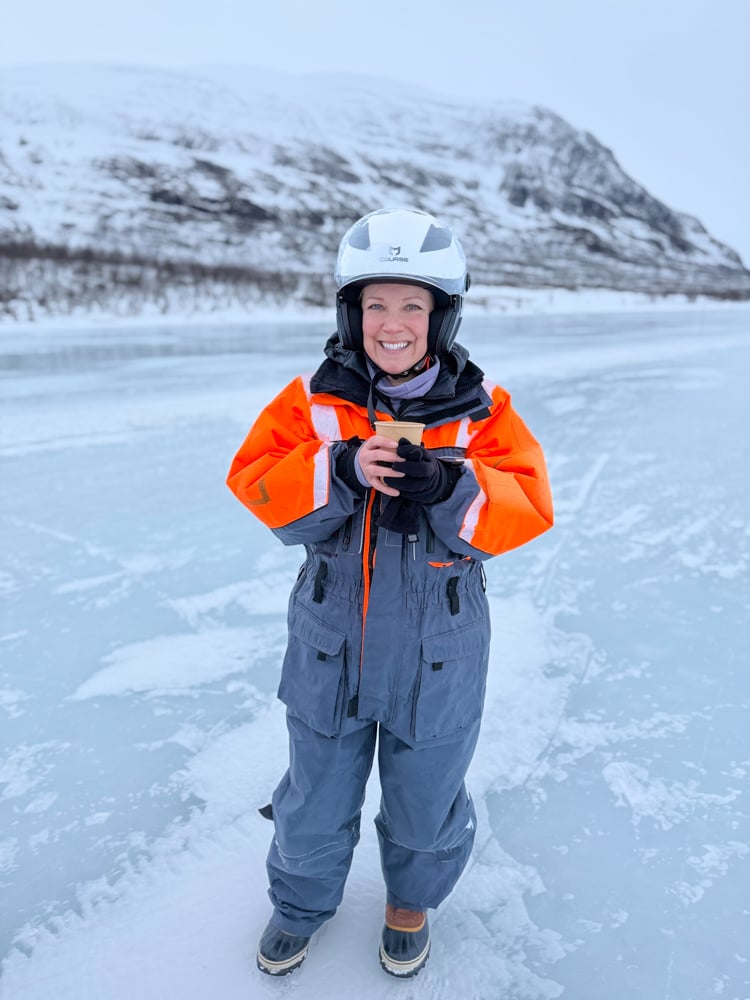
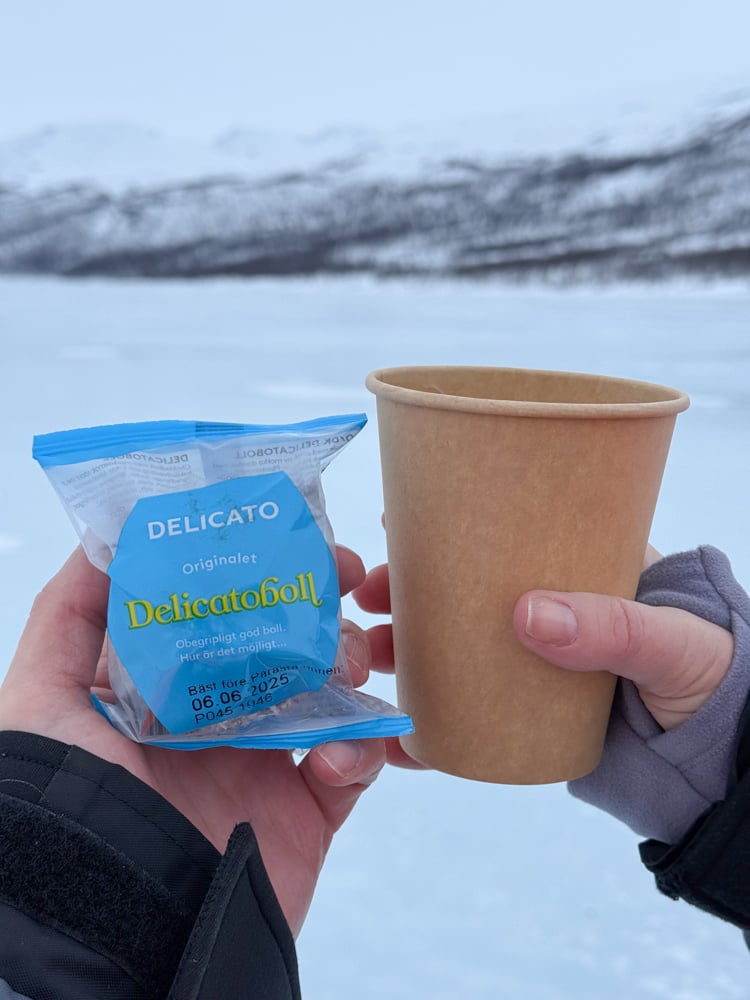
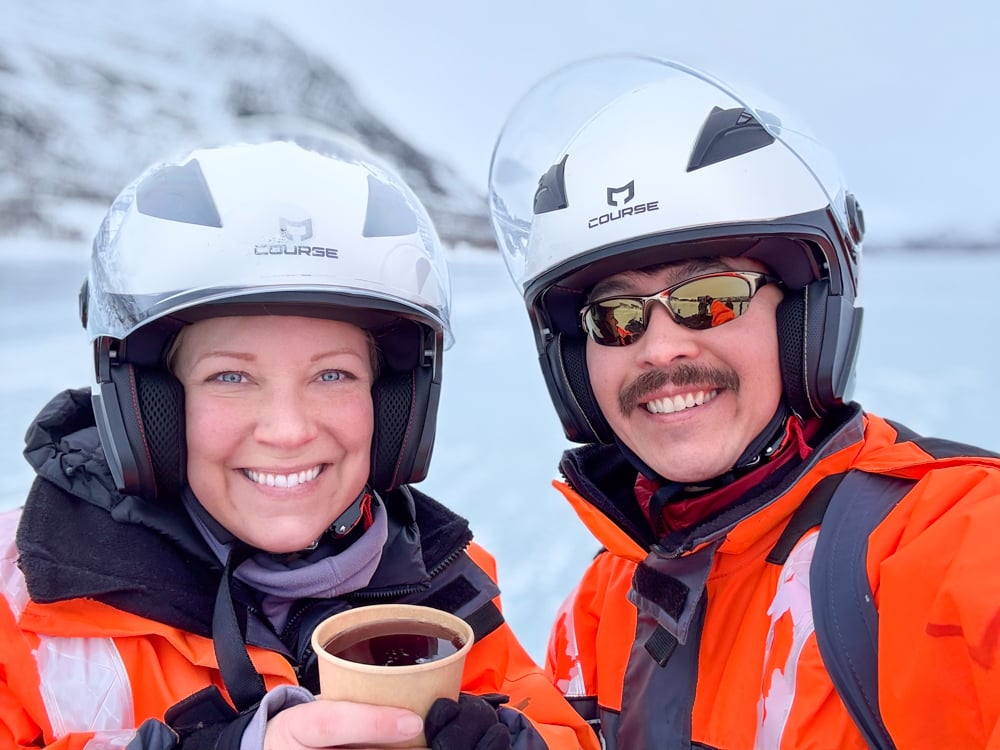
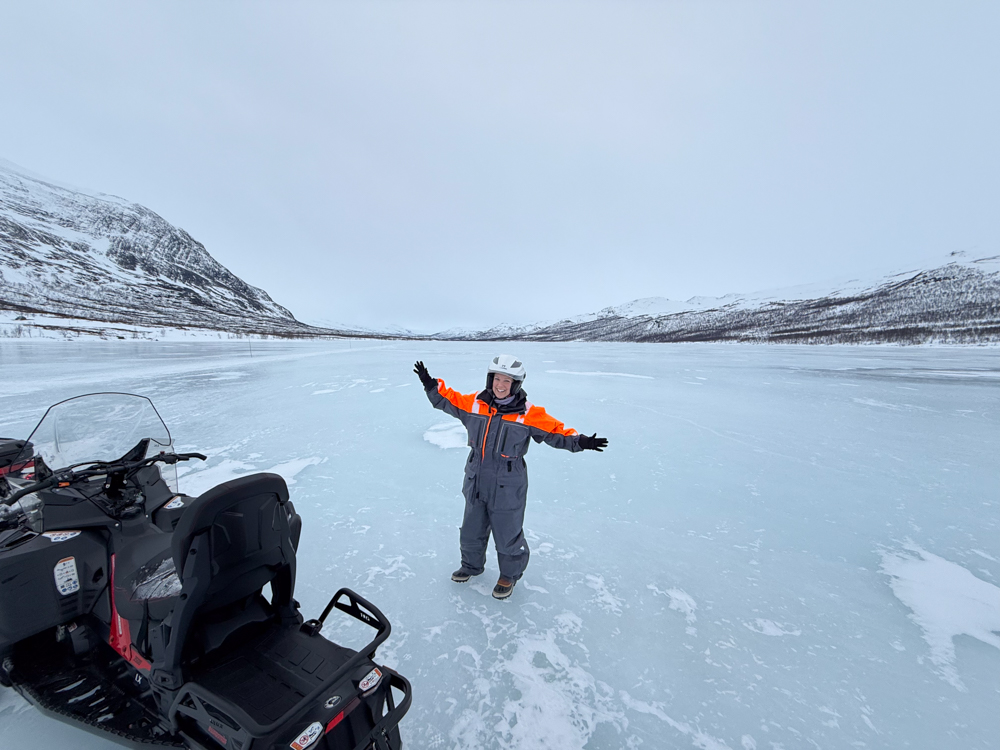
We cruised through the frozen landscape with stops for photography along the way, and took a break on a frozen lake to enjoy hot lingonberry juice and chokladbollar (Swedish chocolate balls) with magnificent mountain views all around us. Even our snowmobile guide brought chokladbollar for fika. These sweet treats are everywhere in Sweden, and they’re perfect with hot lingonberry juice when you’re out in the cold.
The Aurora Sky Station Experience
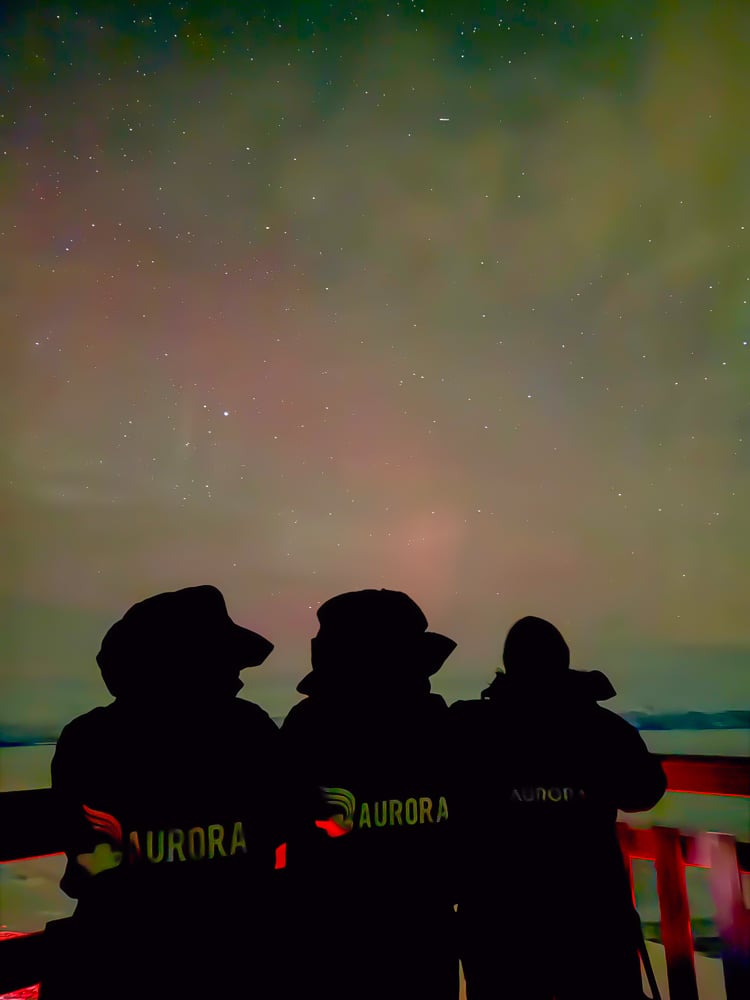
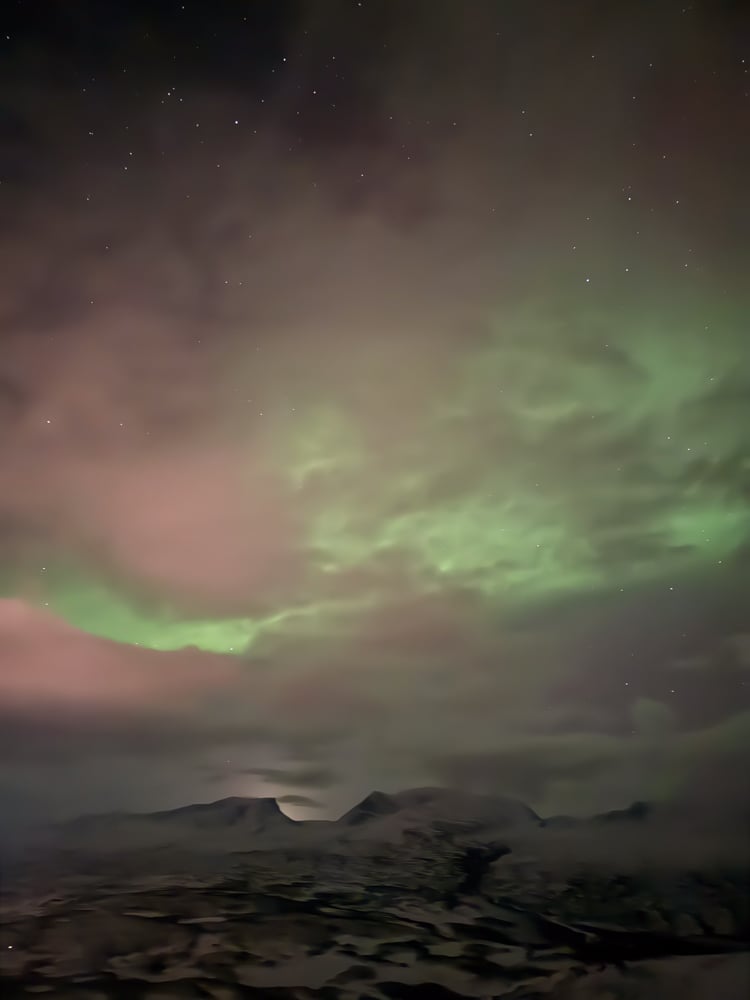
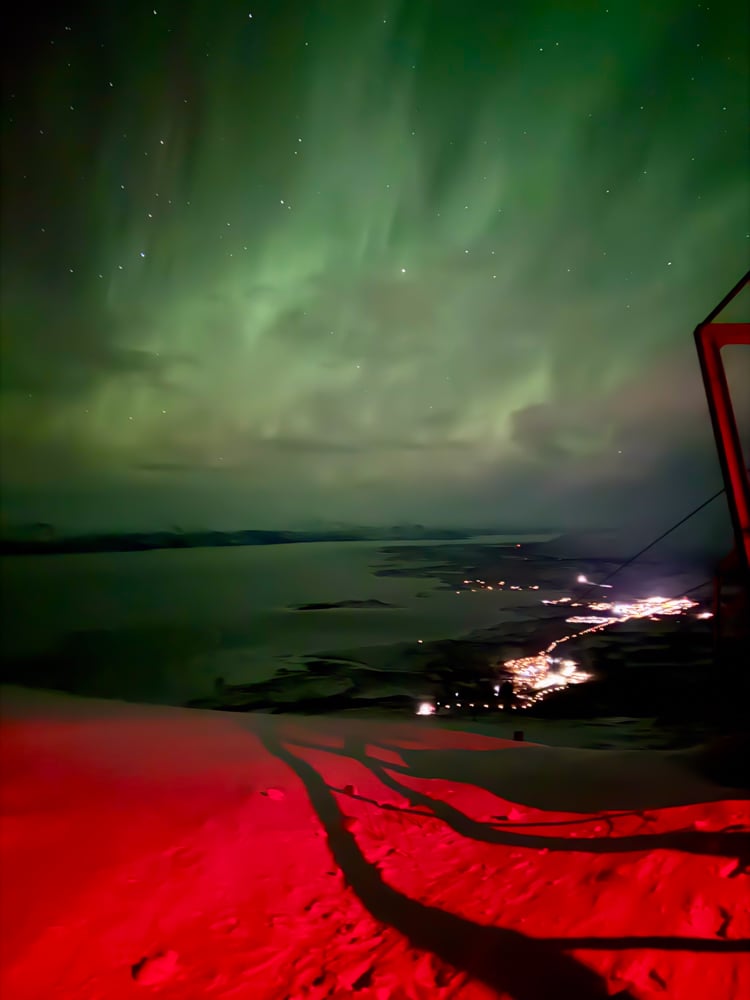
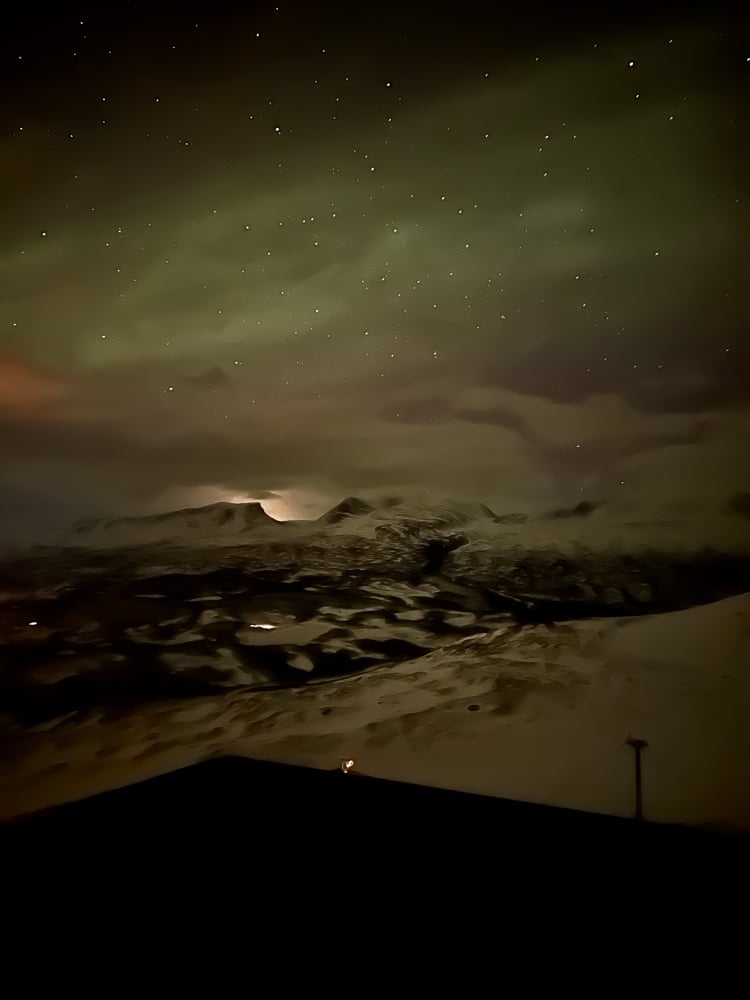
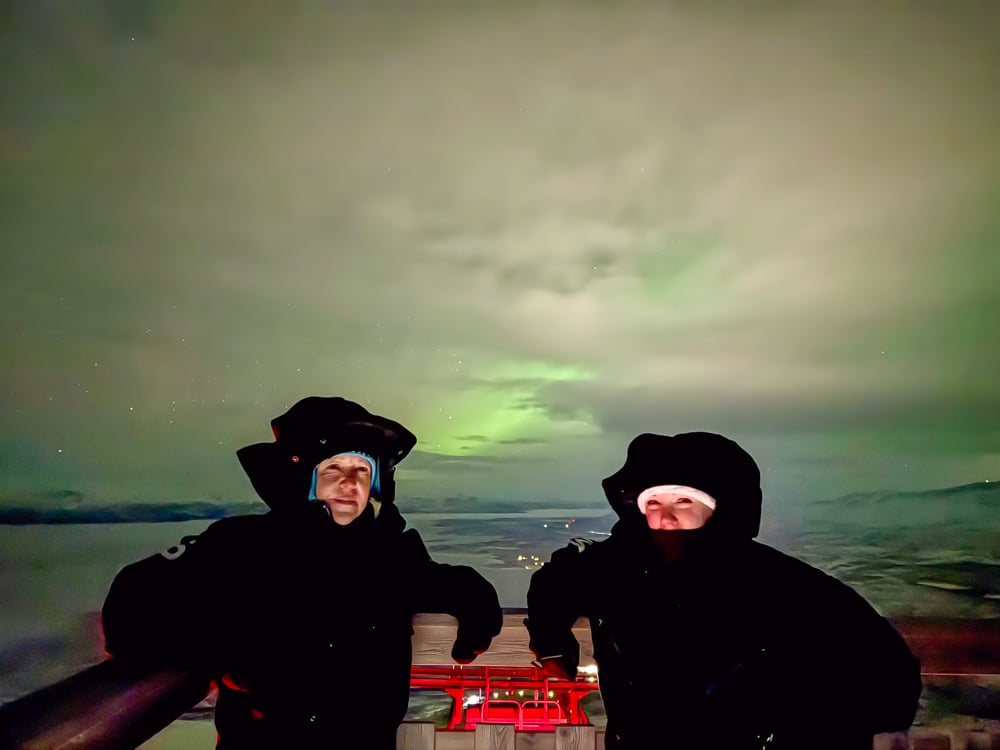
When it came to viewing the aurora, Abisko offered multiple perspectives. One night, Corey and Lola brought us up to the Aurora Sky Station via chairlift to watch the aurora from high on a mountain.
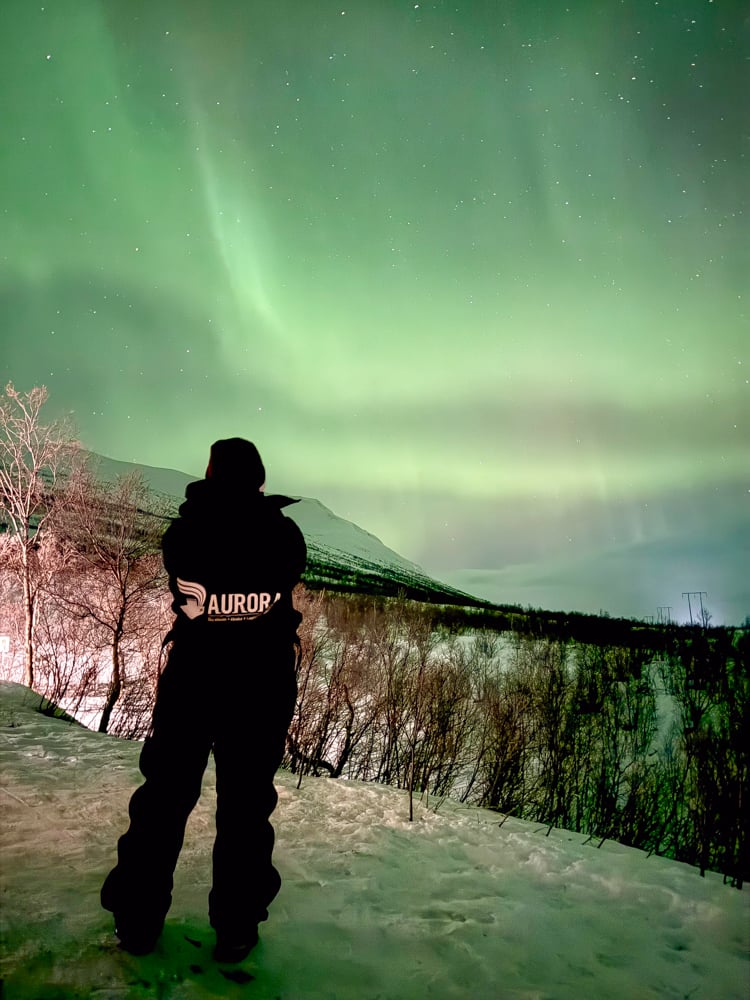
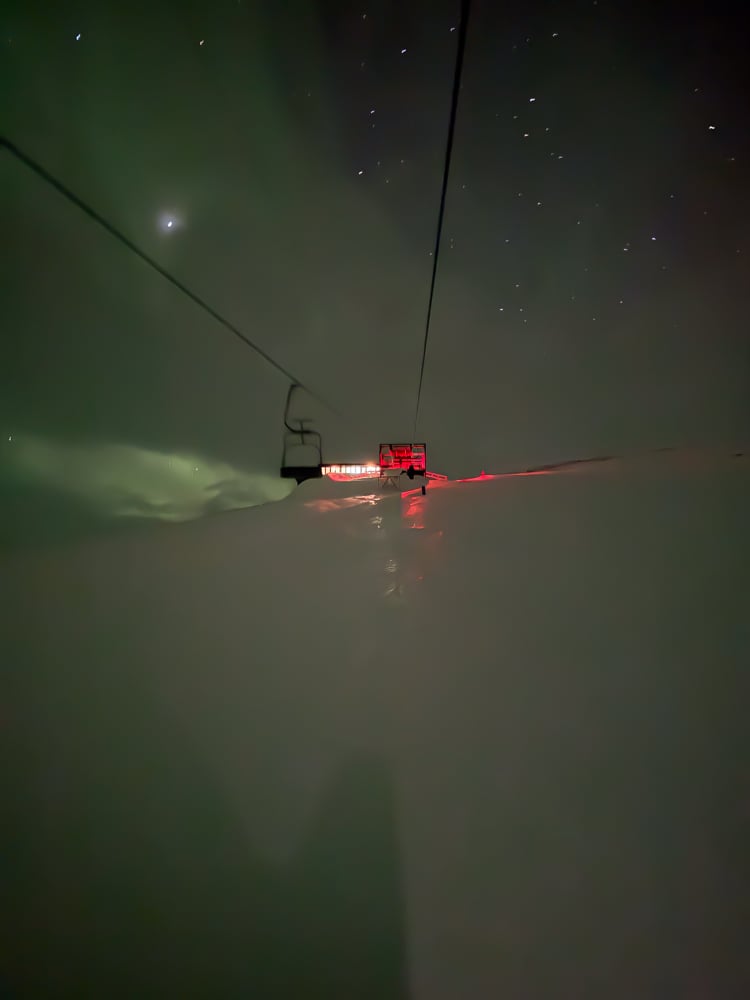
The sky station outfits you with a special snow suit to wear over your already warm winter clothes. It feels like wearing a duvet blanket. Then you ride the ski lift up in complete quiet and darkness.
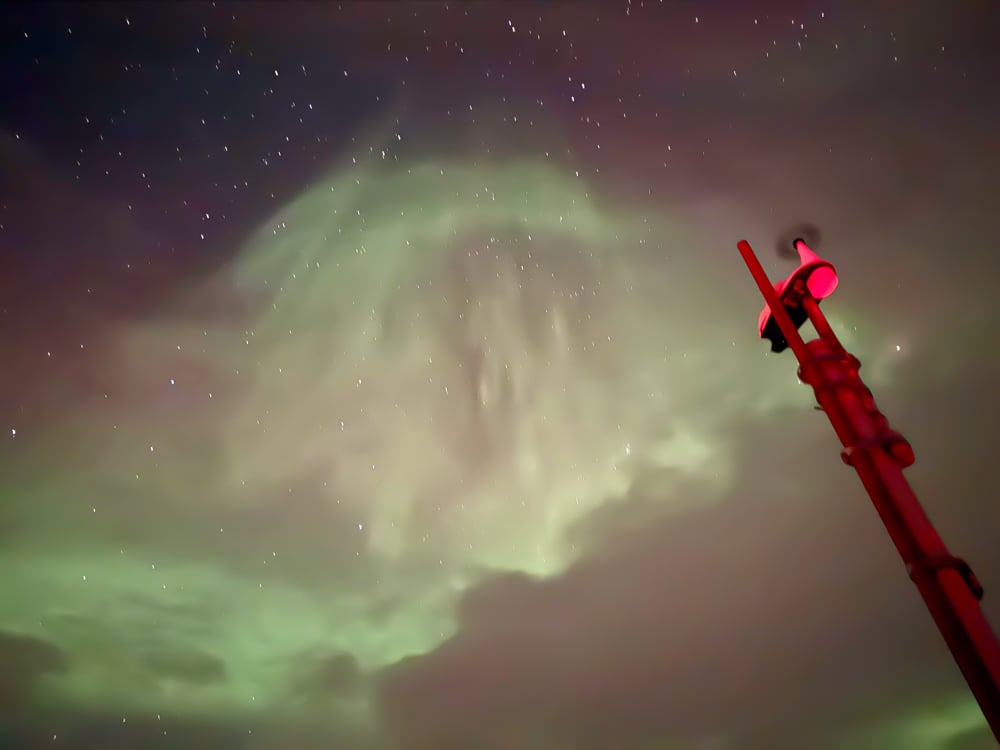
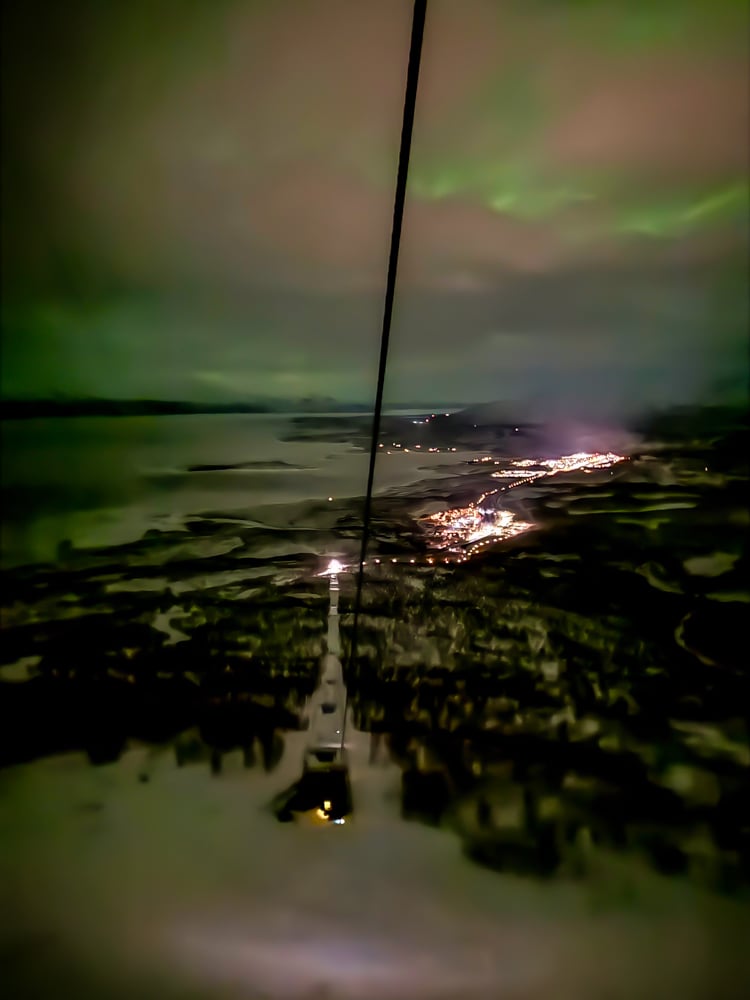
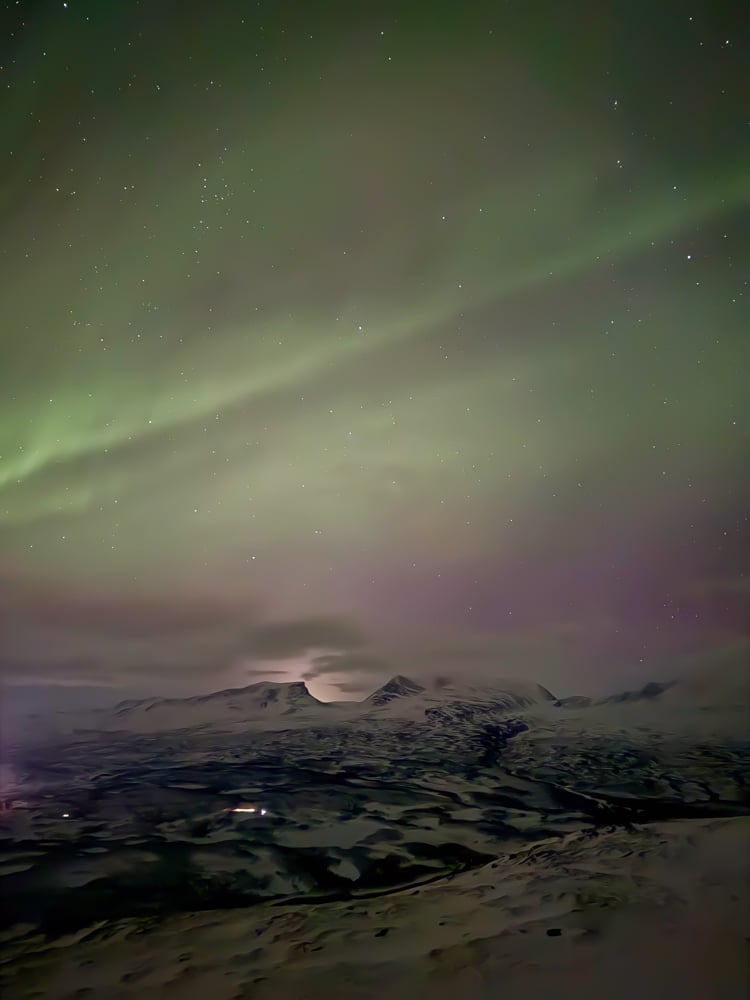
I’ll admit, it was a little scary riding up into the pitch black. But it was also unforgettable. The peace and quiet, the starlit sky over a snow-covered mountain. It felt like being lifted up into space to walk on the moon. The view from the top gave us a completely different perspective on the aurora, watching them dance along the horizon. And even on a cloudy night, the northern lights are beautiful.
Night Walk to the Frozen Lake
Another night, we took a more grounded approach. One of my favorite aurora experiences happened on a walk down to the frozen lake. The swish of our snow pants, the way the snow sparkled like glitter in low light, the soft crunch of ice under our boots, and in the distance, the sound of a train passing through the wilderness.
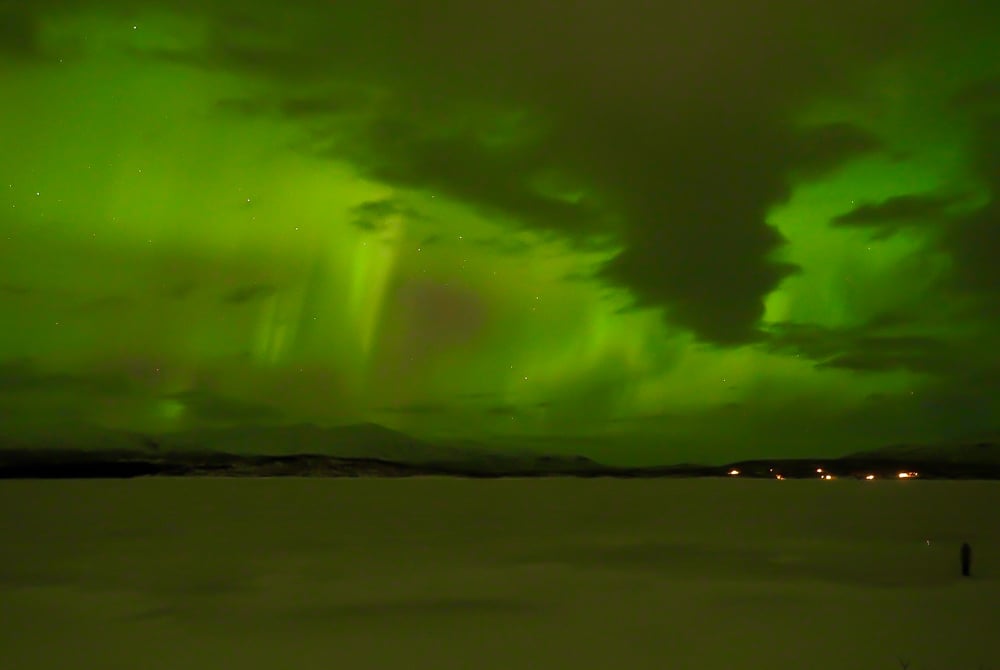
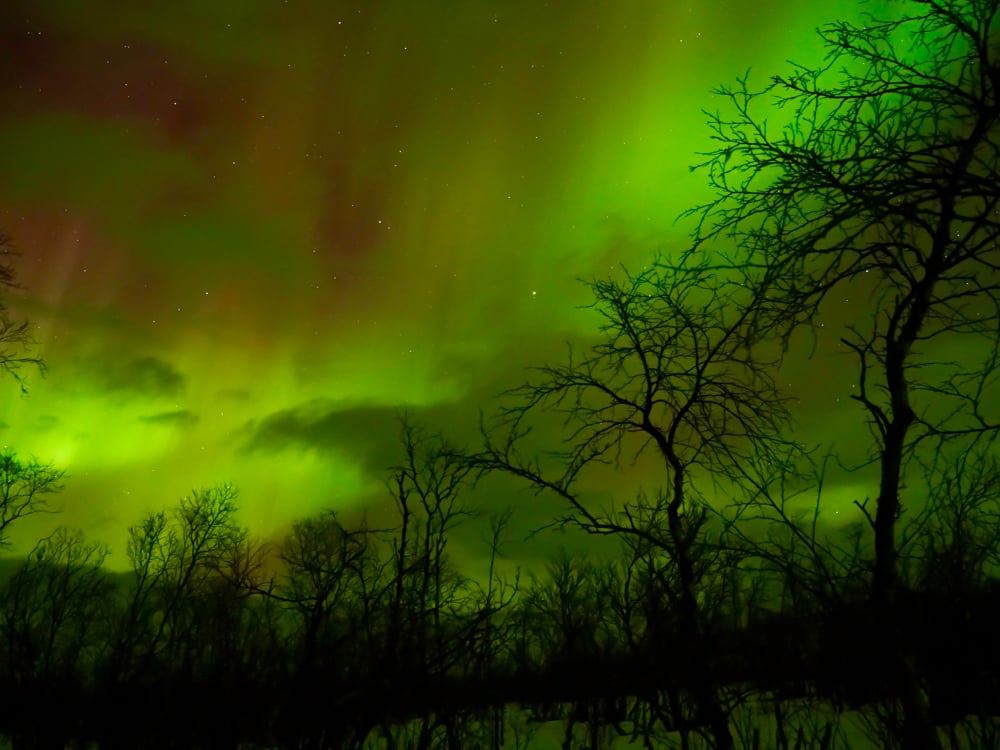
Walking along the forest path with the lights dancing overhead gave us a completely different perspective than standing in an open field. We caught some amazing displays on our walk. I captured one that looked like a dragon, and Pete got one that looked like a jellyfish.
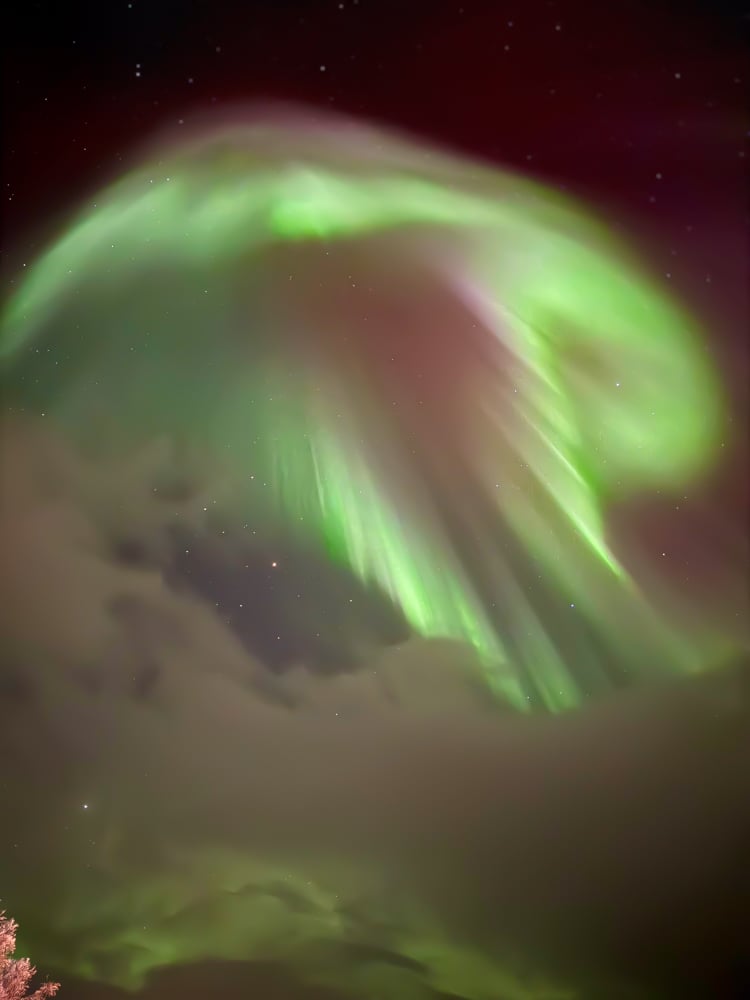
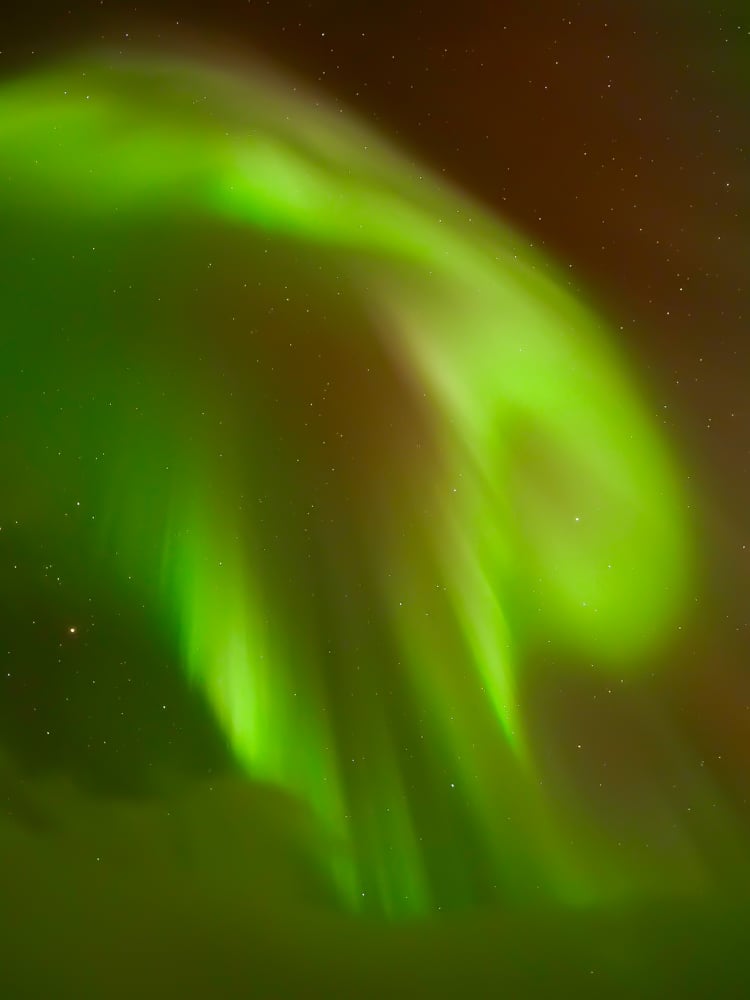
At the lake, there was a fire pit going where we warmed up with some late night fika. By the time we arrived, the aurora show had quieted down, which was actually perfect. We stood by the fire, enjoying the stillness and warmth before walking back through the snowy forest.
Planning Your Trip: Why Swedish Lapland is the Best Place to See the Northern Lights
Now that you’ve heard about our experience, let me share what you need to know if you’re planning your own trip.
The Northern Lights Reality Check
I’ve read so many stories of people who travel to see the Northern Lights and never actually experience them. Either the weather is awful the entire trip, or they never make it out into the wilderness where you can actually see them.
Let’s be honest: this is an expensive trip. The season is limited, you need specialized Arctic gear, and flights and accommodations in remote locations add up quickly. No one can guarantee you’ll see the Northern Lights. But being in the right place with the right guide certainly stacks the odds in your favor!
That’s why Swedish Lapland consistently ranks as the best place to see the Northern Lights, and specifically why Lola and Corey included both Kiruna and Abisko in our itinerary. Abisko has unique geography (a bowl-like mountain range that naturally keeps clouds at bay). It’s famous for having some of the clearest skies in the region. So even if we hadn’t been successful in Kiruna, we had Abisko as our backup plan.
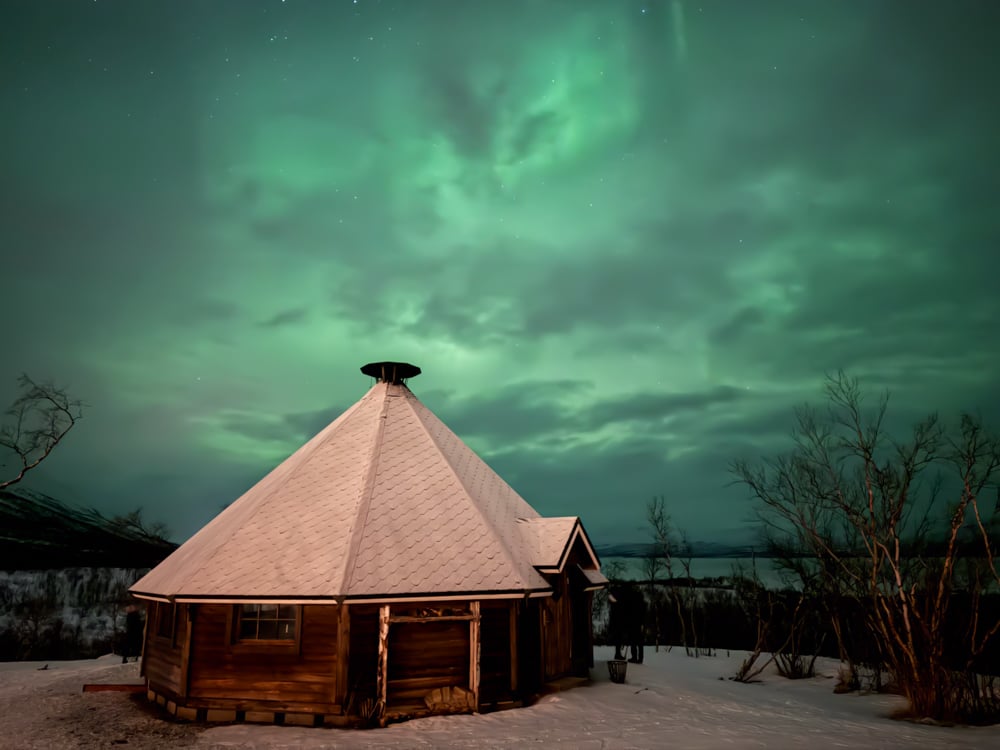
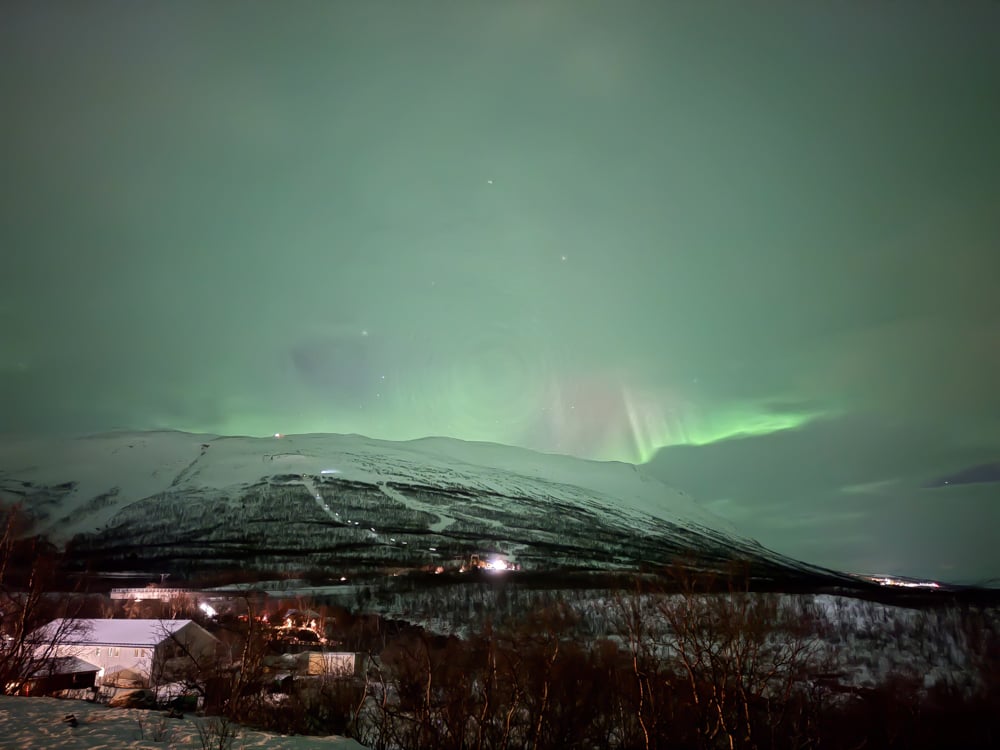
Turns out we didn’t need the backup (because we had such great guides!). But having that insurance built into the trip gave us peace of mind. We saw the Northern Lights every single night. That’s not guaranteed anywhere, but the odds up here are excellent.
Why You Need a Guide to See the Northern Lights
Let me be clear about something: don’t try to chase the Northern Lights on your own up here. I cannot emphasize this enough. A local guide is essential for several reasons:
Winter Driving Conditions – We’re talking about driving on snow and ice-covered roads in pitch darkness. Swedish winter weather is no joke, and these aren’t conditions most visitors are equipped to handle.
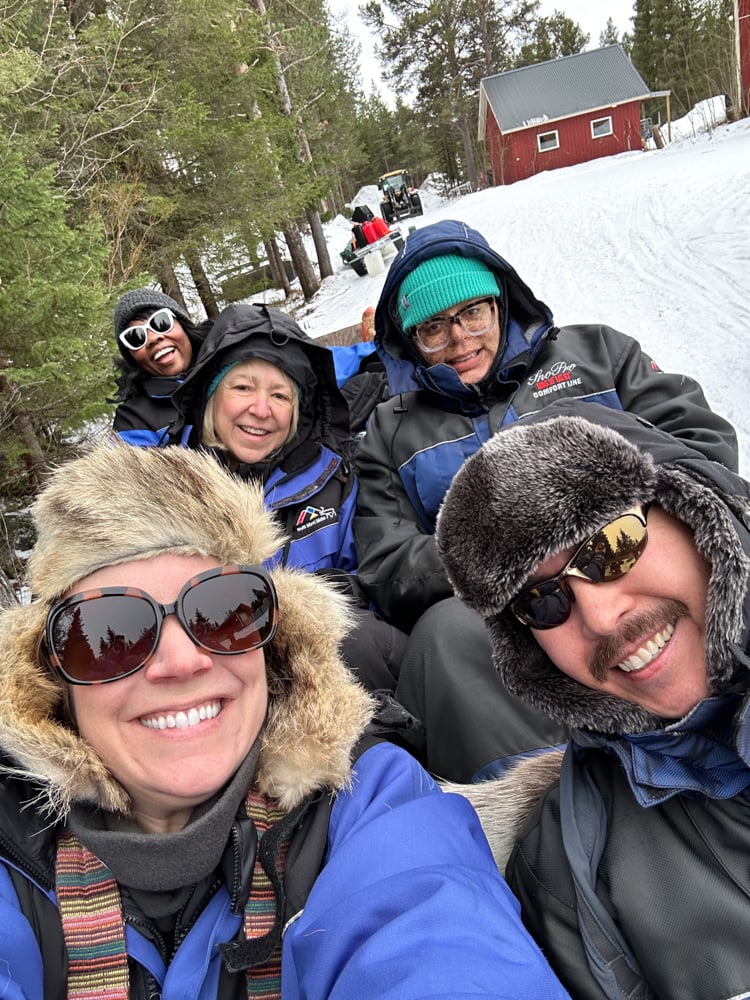
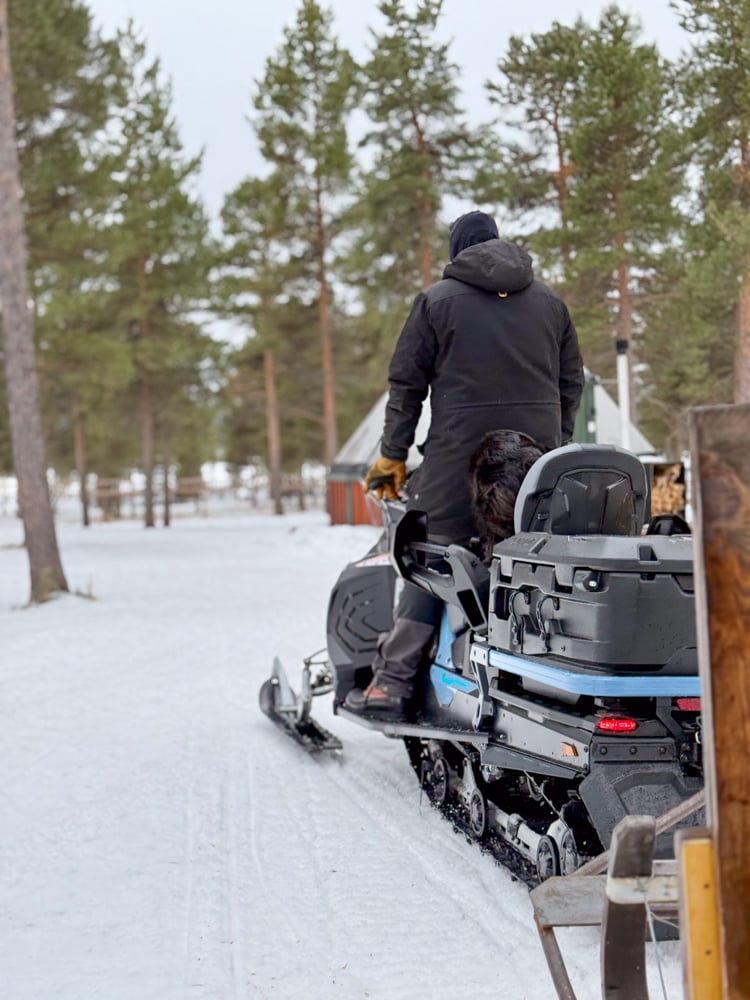
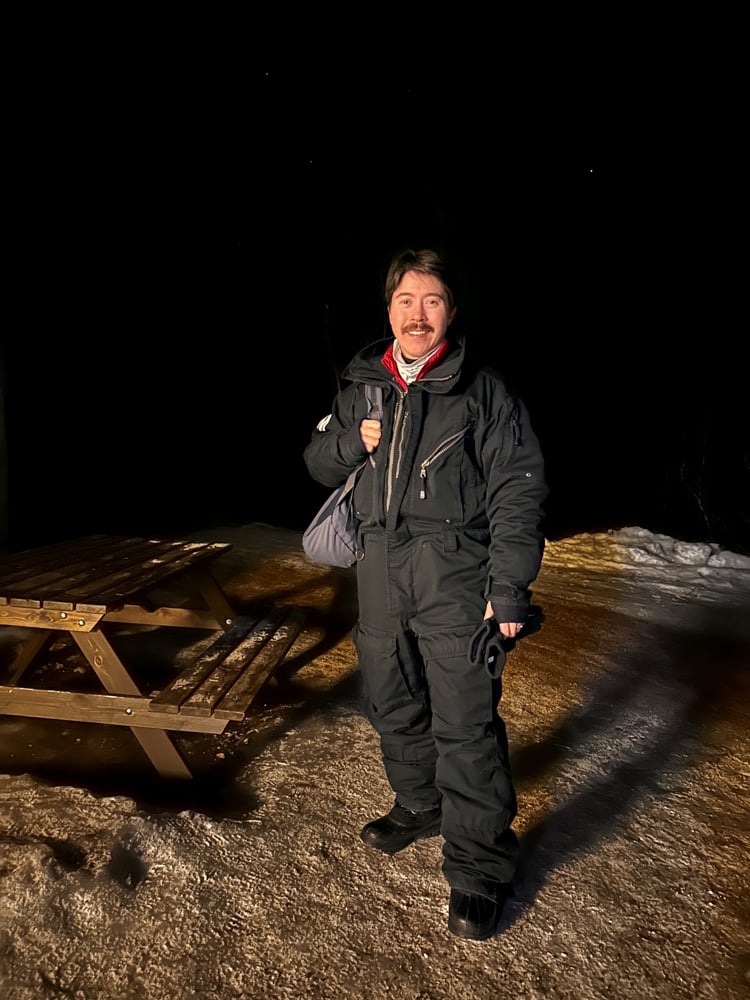
Proper Arctic Gear – Our guides made sure we were outfitted with serious cold-weather gear. Sure, we had our parkas and winter boots. But when doing activities like snowmobiling, or even just standing outside at night waiting for the aurora, you need Arctic-level protection. (We also have a Winter Packing List with a breakdown of everything we brought with us to Sweden)
Finding the Best Spots – The Northern Lights aren’t typically visible from the city. You need to get outside of Kiruna to darker areas, and local guides know exactly where to go. They also understand how to read the local weather forecasts specifically for aurora activity and snow conditions.
Photography Help – If you want photos (and you do), guides who are also photographers can help you capture the moment. Having both Corey and Lola providing nighttime photo instruction throughout our trip meant we actually got photos of this once-in-a-lifetime experience instead of just blurry green smudges.
Why Swedish Lapland is the Best Place to See the Northern Lights
After experiencing this trip, I can confidently say Swedish Lapland deserves its reputation. The combination of location inside the aurora zone, surprisingly easy accessibility, and expert local guides who know exactly what they’re doing makes it ideal. Add in Abisko’s unique bowl-like valley with its famously clear skies, and you have the perfect recipe for Northern Lights success.
But this experience goes beyond just chasing the aurora. The cultural activities made the trip truly special. Dog sledding through snowy wilderness, learning from Sami reindeer herders, snowmobiling across frozen lakes, the traditional sauna ritual, and simply being immersed in that stunning Arctic landscape created memories just as powerful as the lights themselves.
Essential Information
Ready to plan your own Northern Lights adventure? Here are the key contacts and resources that made our trip amazing, including our guides contact information and where we stayed. Also, don’t forget to check out our winter packing list for what to bring on an Arctic adventure like this.
Our Guides:
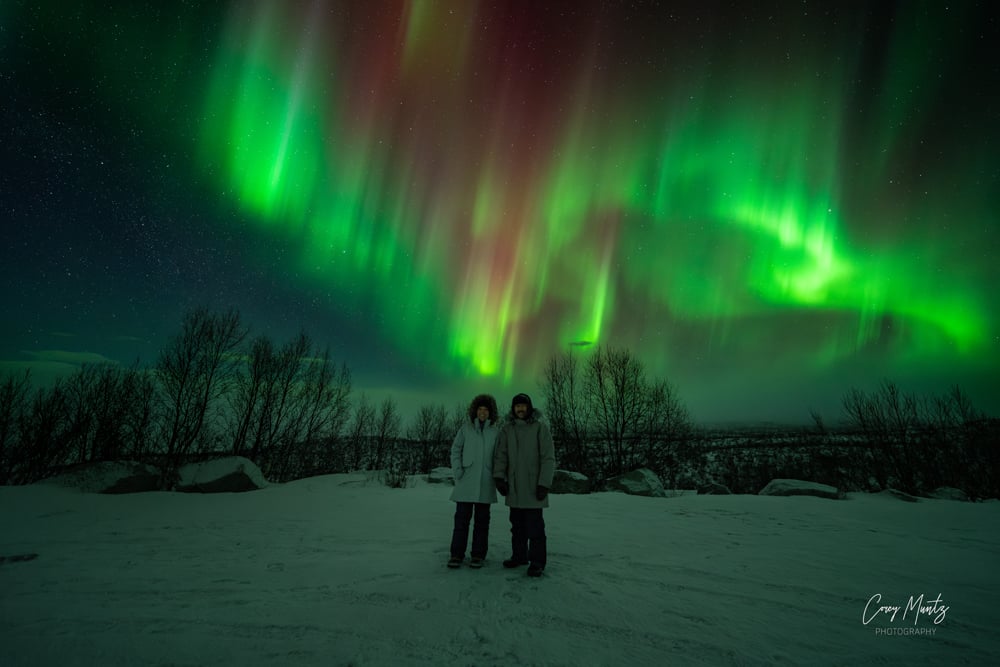
Corey Muntz – Based in Kiruna, Corey is a professional aurora photographer and guide who knows the region intimately. Ever the photographer, he’s always behind the lens and not in front of it, which means we don’t have many photos of him!. I’m forever grateful he shared with us the gorgeous aurora and captured these once-in-a-lifetime moments. If you’re planning your own Northern Lights adventure, I highly recommend reaching out to Corey.
Lola Akinmade Åkerström – Based in Stockholm, Lola is an award-winning author and photographer who led this unforgettable trip. Her expertise in both photography and Swedish culture made the experience even more special. While she’s no longer hosting aurora tours, she does offer incredible book tours in Stockholm that weave together literature, history, and hidden corners of the city. You can find more about her work and tours at her website.
Where to Stay:
Stockholm: Hilton Stockholm is comfortable and well-located for exploring the city before your morning flight to Kiruna. The location makes it easy to grab fika at nearby cafés or visit Östermalms Saluhall market. Since you’re only staying one night, you want something convenient without sacrificing comfort.
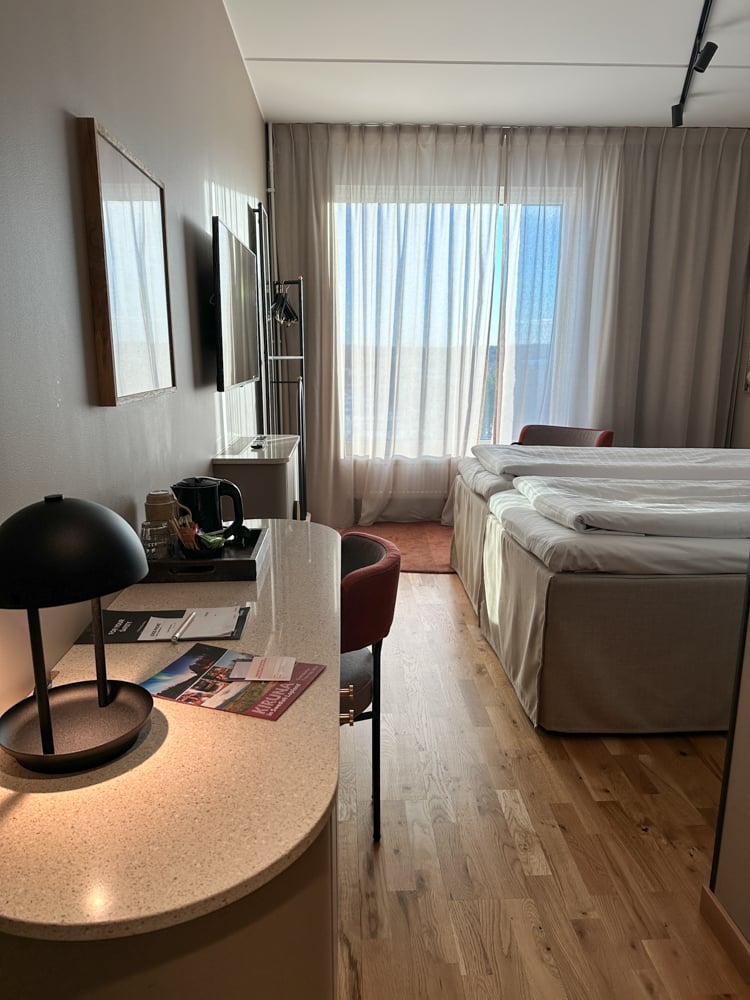
Kiruna: Scandic Kiruna was perfect for our needs with excellent breakfast and a warm, welcoming atmosphere after long days in the cold. The Ice Hotel in Jukkasjärvi is nearby if you want to splurge on an overnight stay, but day passes are available if you just want to visit and experience the sauna ritual like we did.
Abisko: Abisko Turiststation has that unique mountain lodge meets research station vibe, and the location is unbeatable for aurora viewing. The station has an excellent restaurant, and aurora alerts go out so you never miss a show. You can step outside your door and see the Northern Lights without driving anywhere.

Leave a Reply