
Last Updated: May 2026 | Originally Published: August 2014
If you’ve ever dreamed of wandering through a wine region with rolling green hills tumbling down to a glittering riverbank, storybook villages tucked between ancient churches and castles … then Germany’s Rheingau wine region needs to be on your bucket list immediately. I know this because I’ve been there, and it genuinely felt like stepping into a fairy tale that happens to serve world-class Riesling.
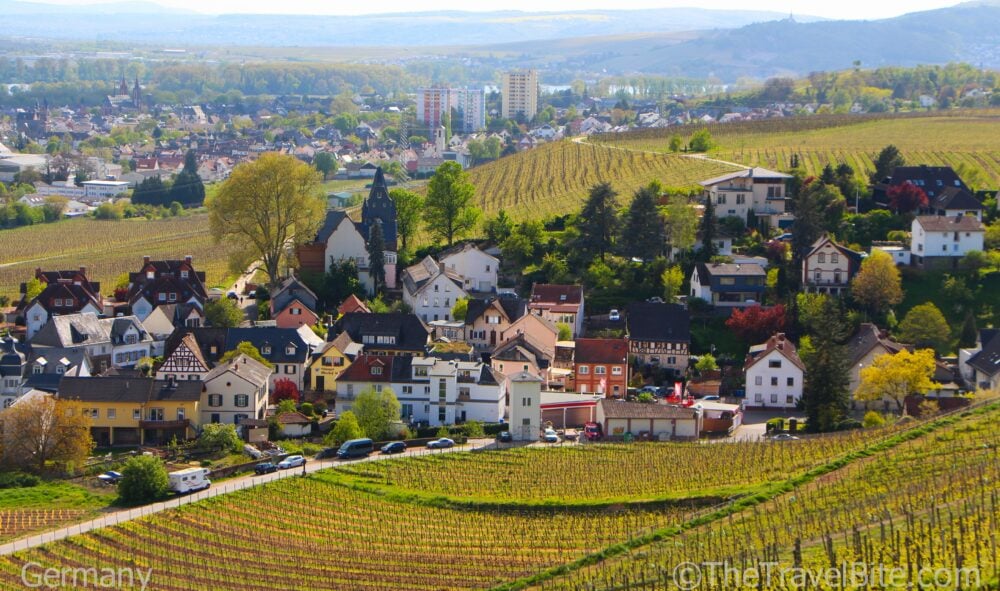
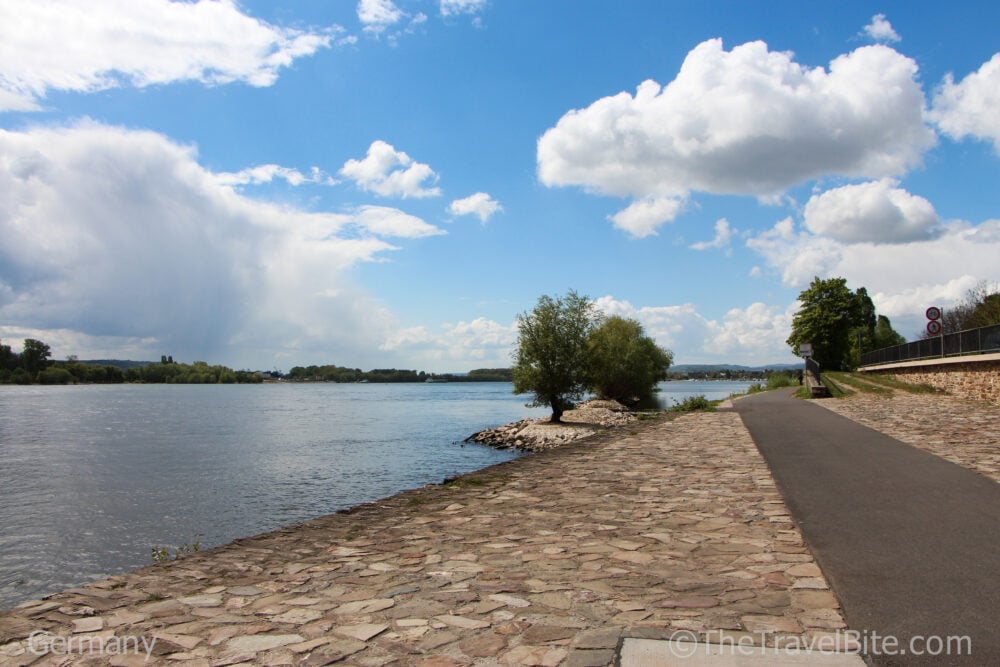
Nestled along the Rhine River between Frankfurt and Koblenz, the Rheingau is one of Germany’s most historically important wine regions. While it’s small (the region spans only about 30 kilometers) what it lacks in size it more than makes up for in character, history, and some of the finest white wine you’ll ever taste. Over 78% of the vineyards here are planted with Riesling, and after one sip you’ll understand exactly why.
Here’s everything you need to know to plan your visit, including the three places I’d tell any friend to put at the very top of their list.
What Is the Rheingau Wine Region Known For?
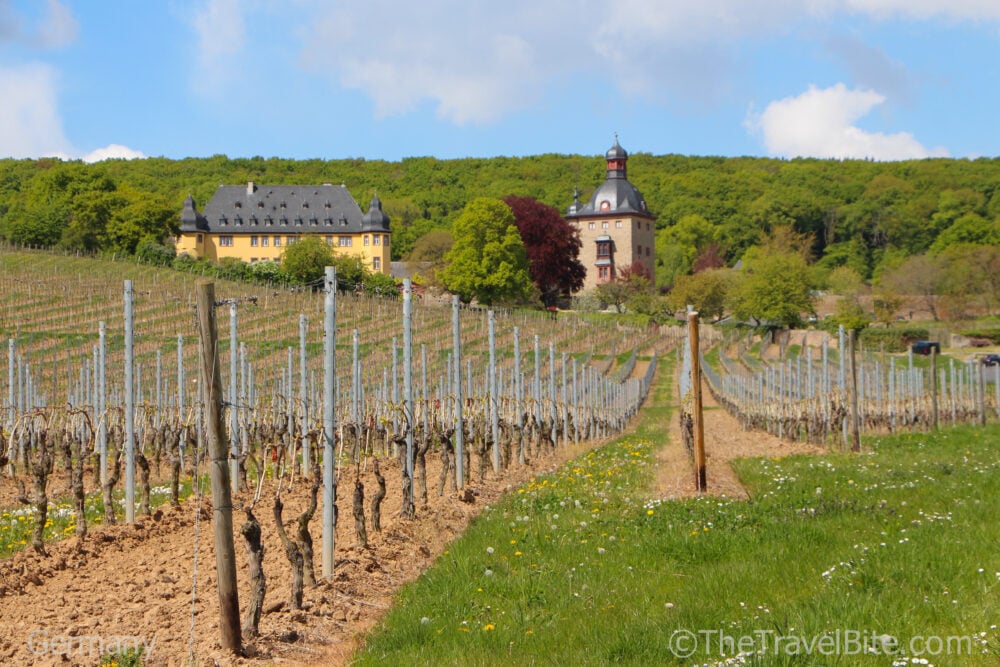
The Rheingau is the spiritual home of German Riesling. The vineyards are planted on south-facing slopes along the Rhine River, which reflects sunlight back up onto the vines and creates a uniquely warm microclimate. It’s perfect for producing wines with that signature combination of bright acidity and complex minerality.
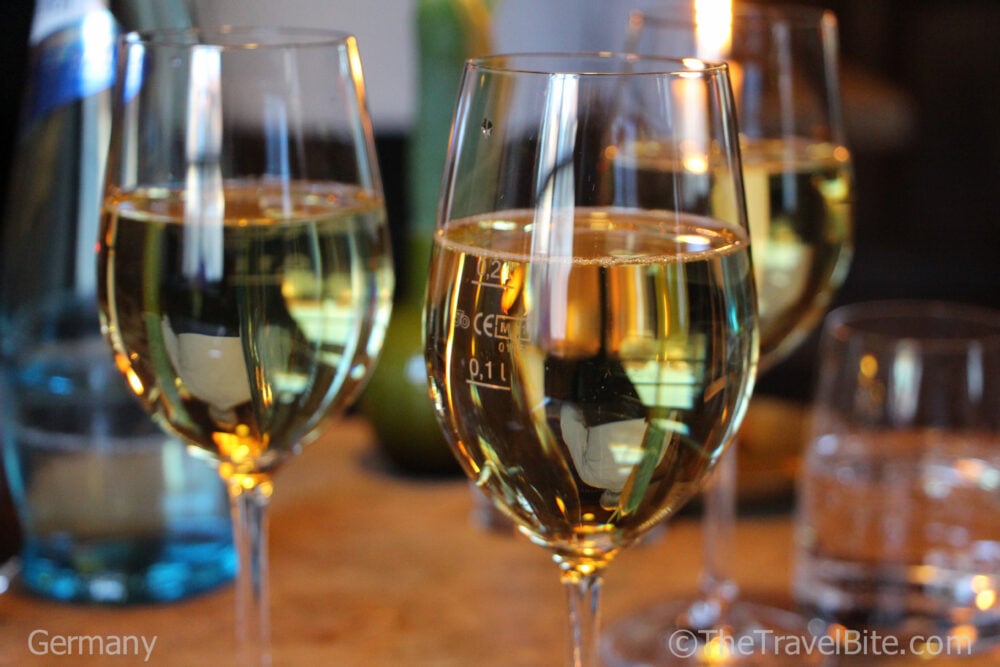
Beyond Riesling, you’ll also find some excellent Spätburgunder (Pinot Noir) here, particularly around the village of Assmannshausen. And if you’re curious about late-harvest wines (those gorgeous, golden dessert wines) well, the Rheingau is literally where they were invented. More on that in a moment.
3 Must-Visit Places in the Rheingau Wine Region
1. Kloster Eberbach (Eberbach Monastery)
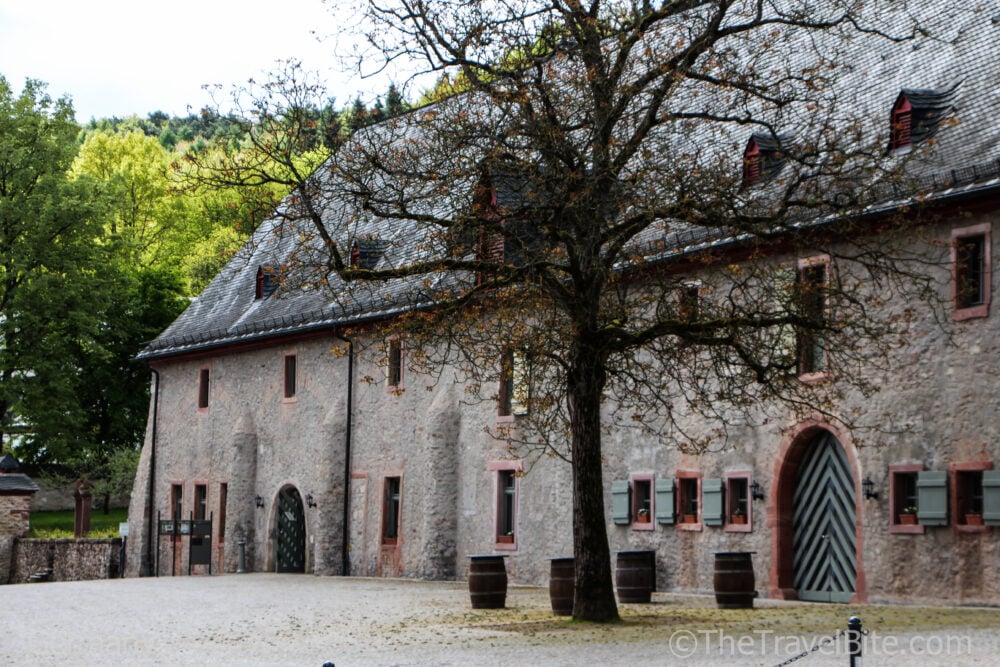
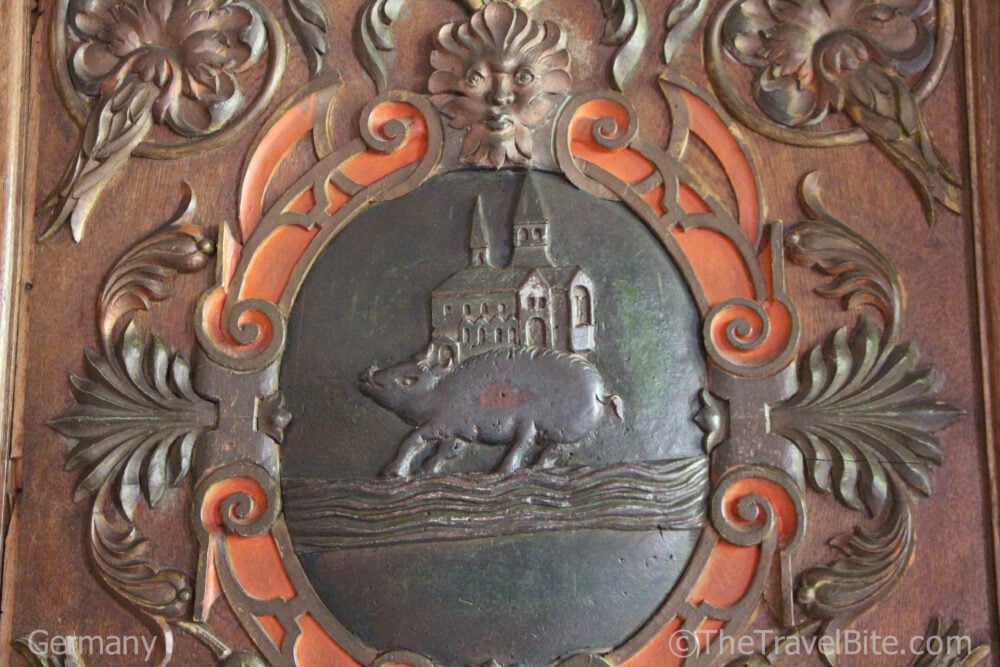
Of all the places I visited in the Rheingau, Kloster Eberbach was the one that made me stop and just breathe it in. This stunning Romanesque monastery was built around 1136 by Cistercian monks. And its name literally translates to “boar and creek,” a nod to the legend that the monks, startled by a wild boar leaping out of the reeds over a stream, took it as a divine sign to build right there. (The monastery’s record say the name refers to a local stream called the Eberbach, but I love the boar story legend).
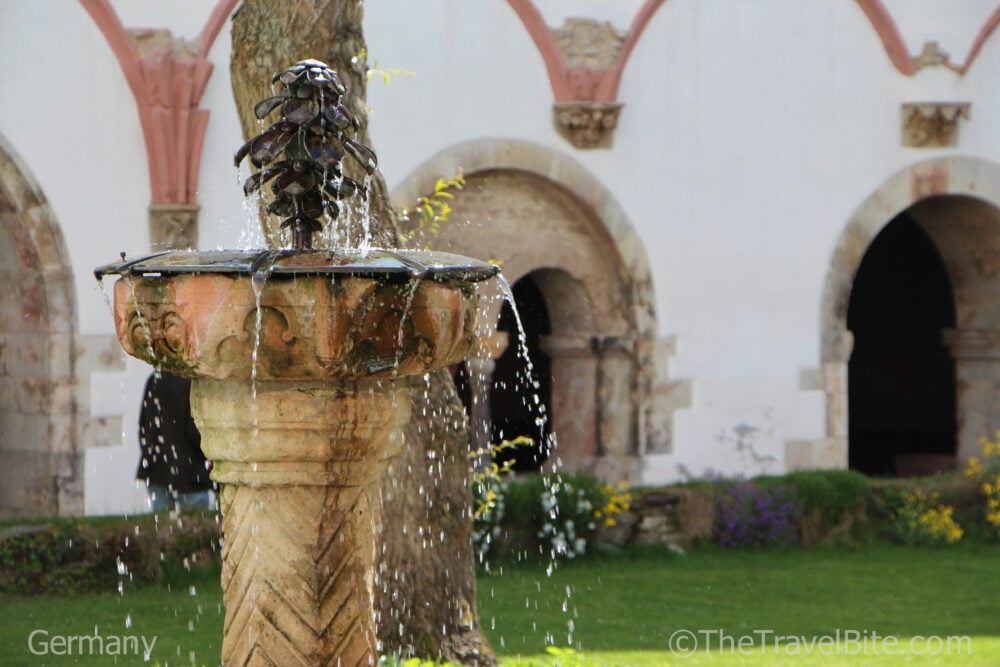
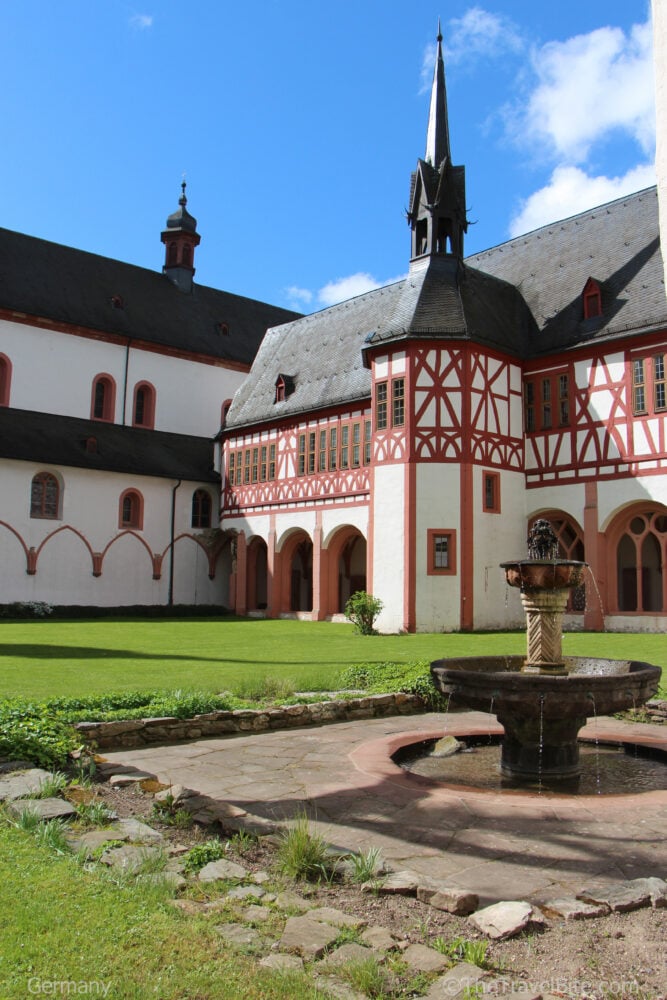
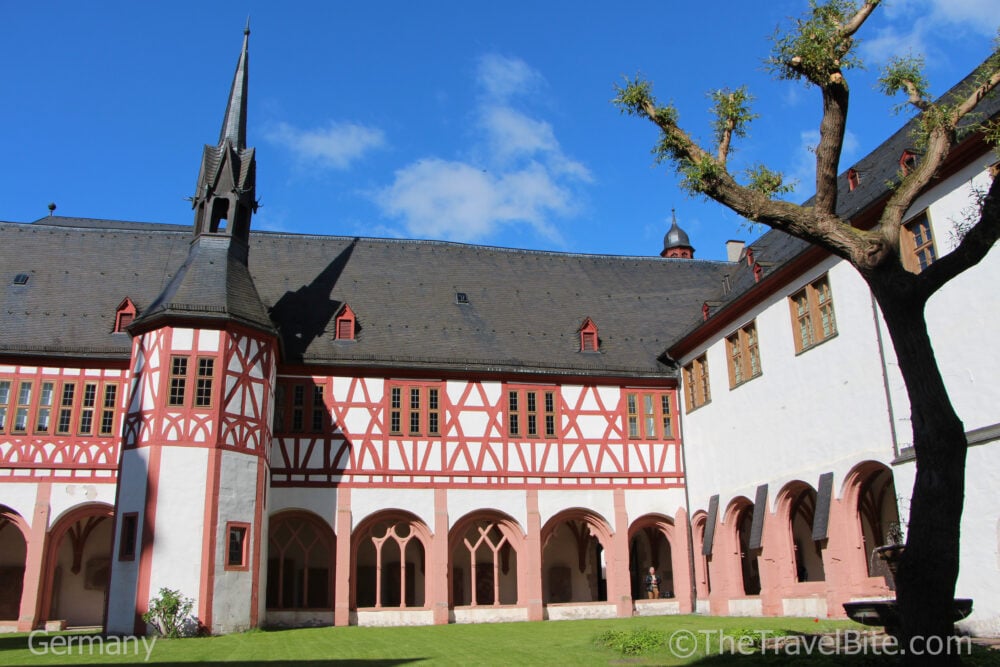
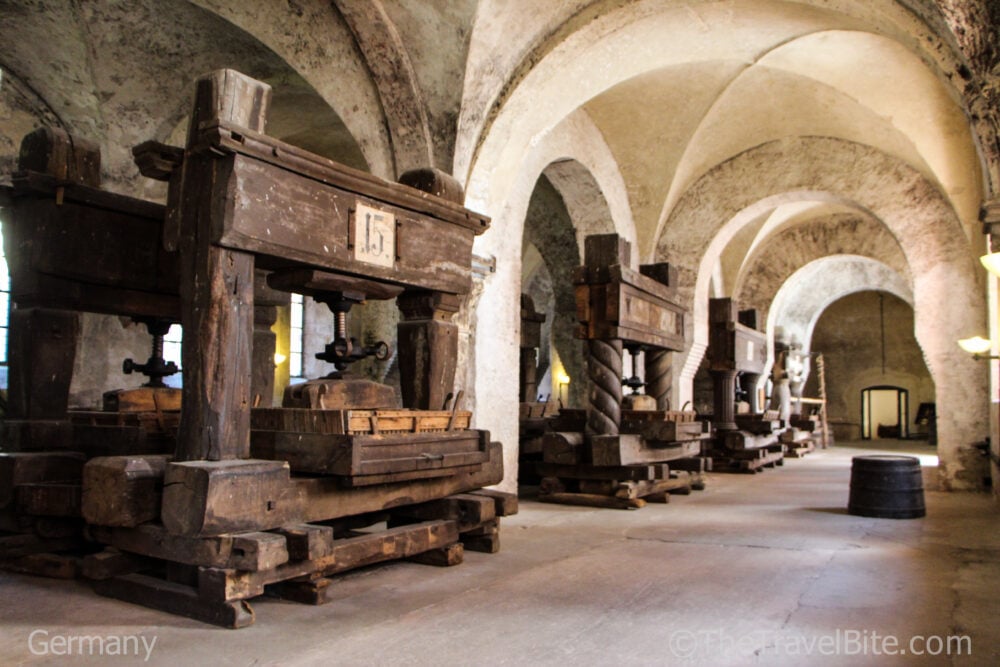
What blew me away were the historic wine presses. There’s an entire hall filled with massive, medieval-looking contraptions. And standing there imagining a grape harvest in the 12th century is one of those moments that makes travel feel like you’ve stepped into hisotry. The architecture of the church itself is breathtaking. And the acoustics so extraordinary that the monastery hosts concerts during the annual Rheingau Music Festival every summer.
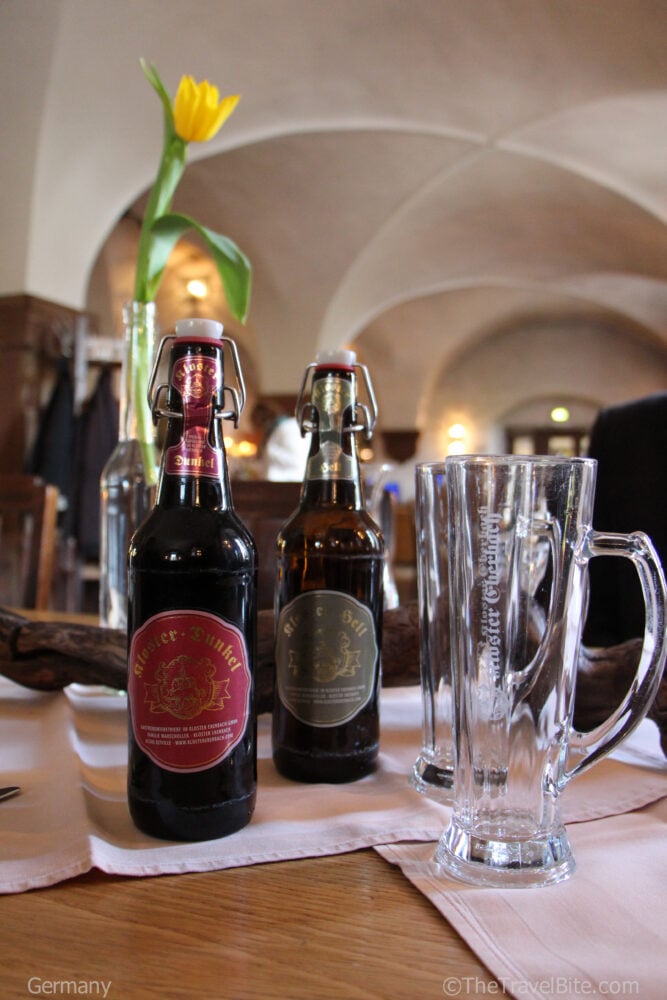
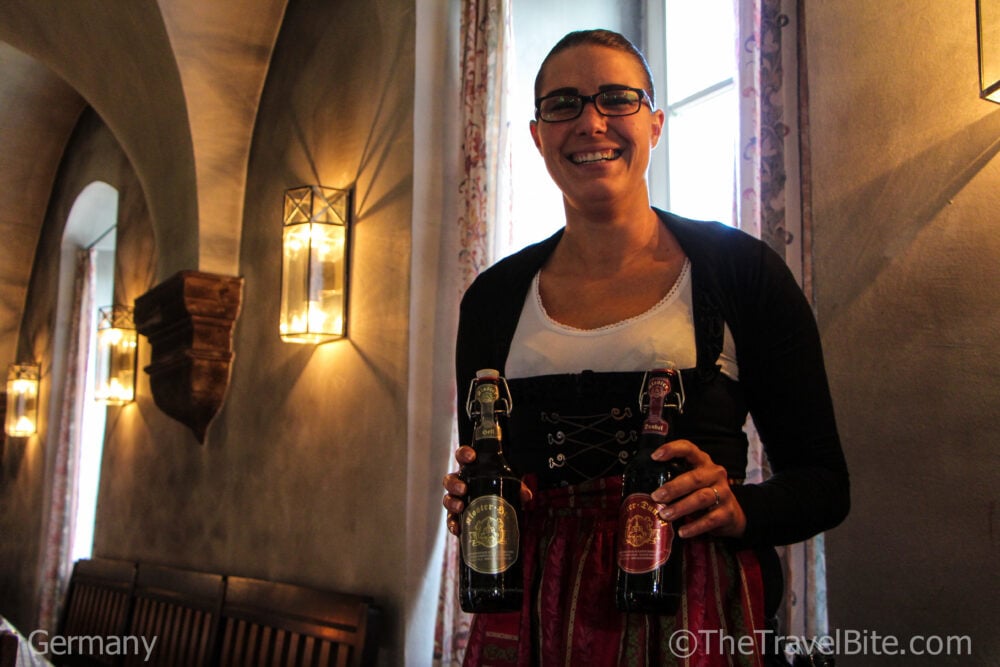
And yes, in addition to wine, they also brew beer! I personally think their crest (featuring that infamous boar) would make a fantastic label for either.
Practical Info: Kloster Eberbach is open to visitors year-round. Plan at least 2 hours here. Website: Kloster-eberbach.de
2. Schloss Johannisberg (Johannisberg Castle)
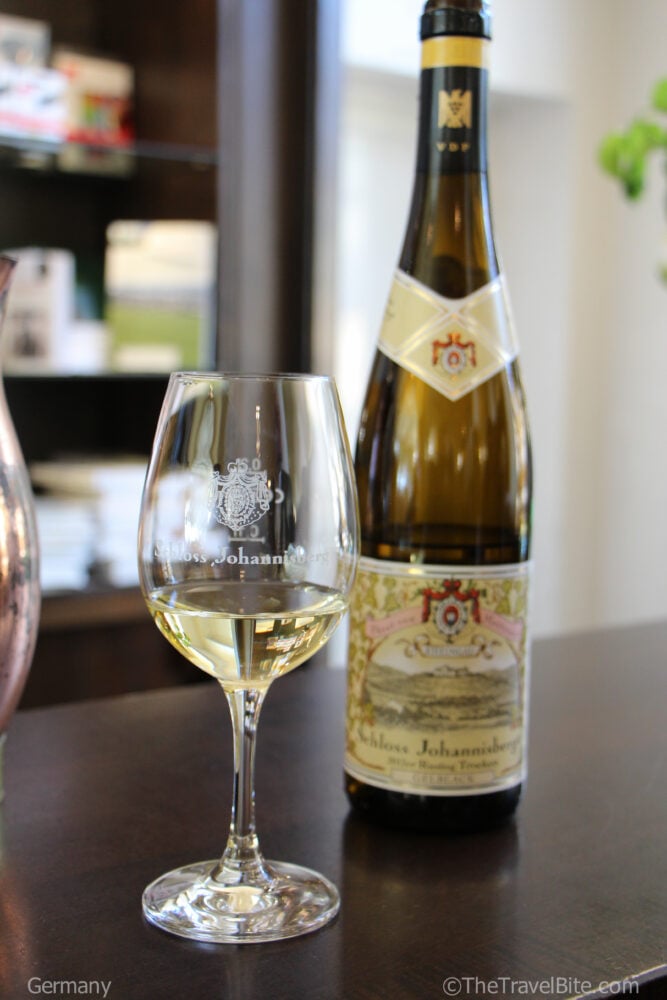
This is where Riesling history was written. Wine has been cultivated at Schloss Johannisberg since 817 AD, making it one of the oldest documented vineyard sites in the world. But the estates’s most remarkable claim to fame came in 1720, when it became the world’s first winery dedicated exclusively to Riesling grapes, earning it the title of he world’s first Riesling estate. And the story of how late-harvest wine was “discovered” here is one of my favorite wine legends ever.
In 1775, the messenger carrying the harvest permit was late. Instead of starting the harvest on time, the estate had to wait. And the grapes kept ripening on the vine, developing what would become the world’s first Spätlese (late-harvest) wine. A messenger’s delay accidentally created an entire category of wine. I find that hilarious and wonderful.
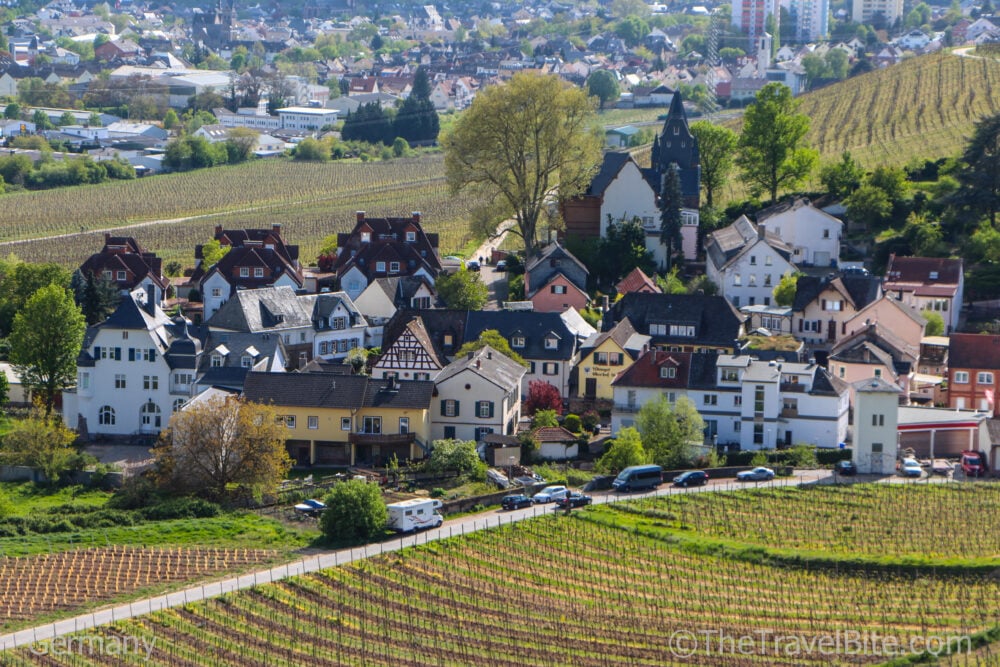
Beyond the history, the tasting room here is lovely, and the views from the estate out over the Rhine River and the surrounding villages are absolutely worth the visit. Grab a glass of Schloss Johannisberger Riesling and find a spot to sit outside. You won’t regret it.
Practical Info: Schloss Johannisberg is privately owned. Public access is limited to events, seasonal tastings, and the estate restaurant. Check their website before visiting to see what’s open during your trip. It’s worth planning ahead. Website: Schloss-johannisberg.de
3. Schloss Vollrads (Vollrads Castle)
Schloss Vollrads carries a bittersweet history that makes you appreciate every sip of wine produced here just a little more. For nearly 800 years, this 14th-century estate was nurtured by the Greiffenclau family, the longest continually family-run wine estate in Germany. Tragically, the last family owner took his life in the 1990s when faced with insurmountable debt. And the bank that inherited it made the remarkable decision to preserve rather than sell, keeping the estate intact for posterity.
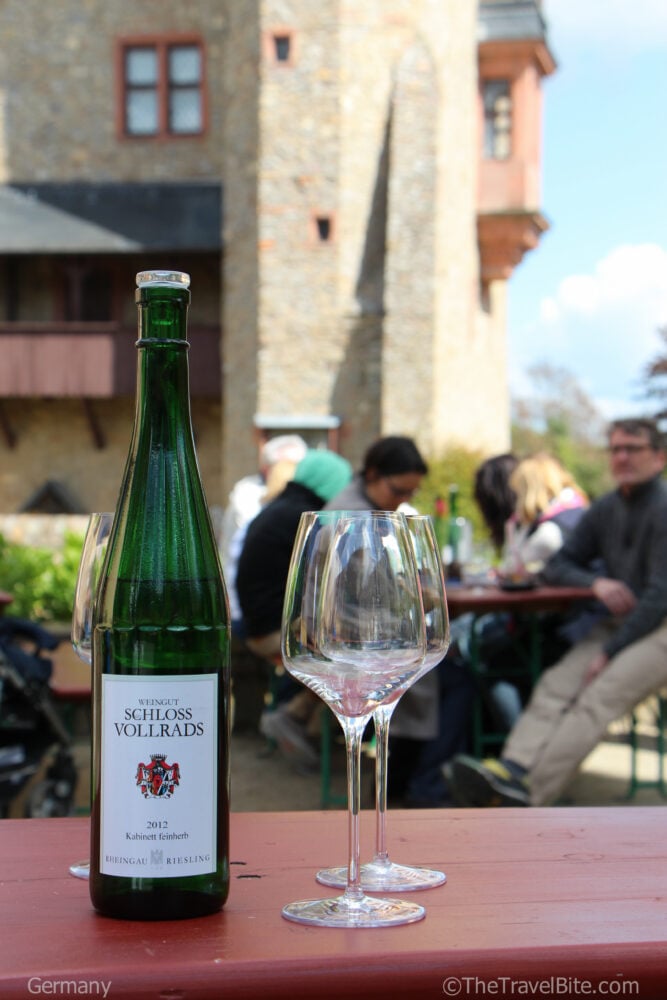
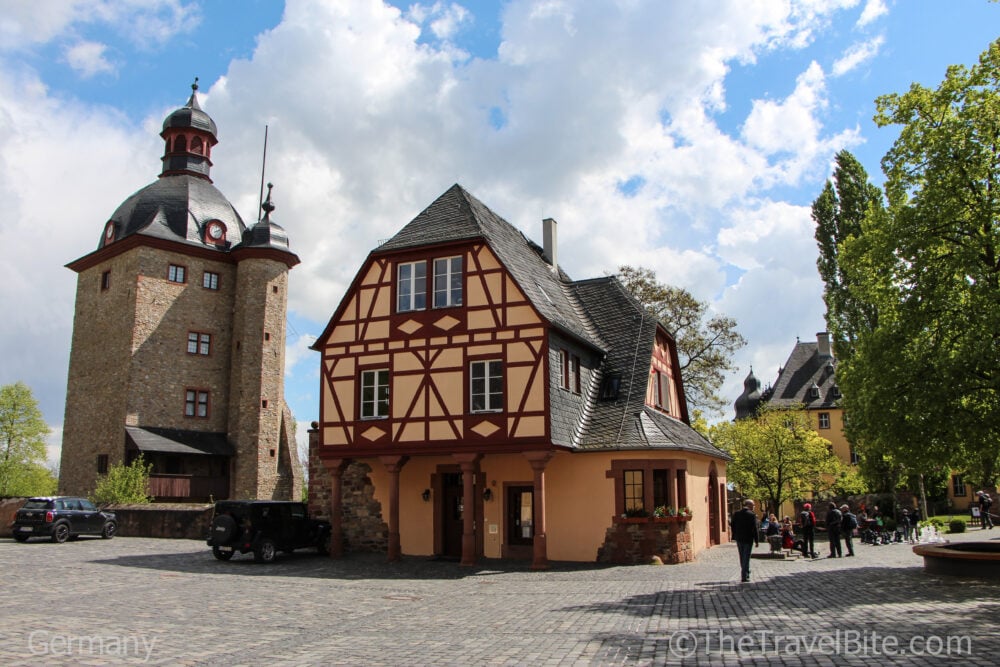
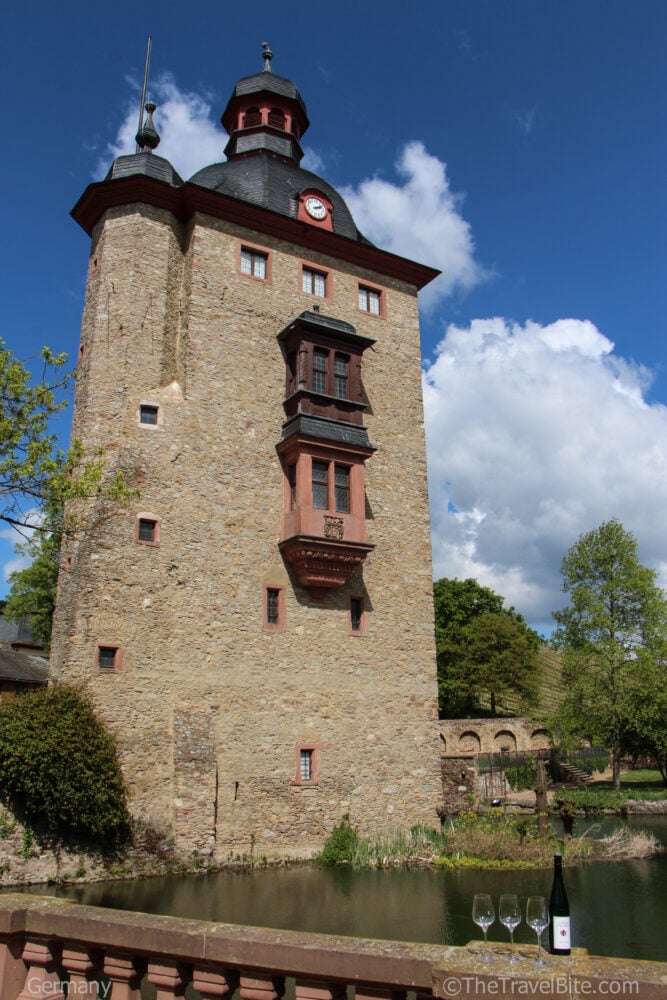
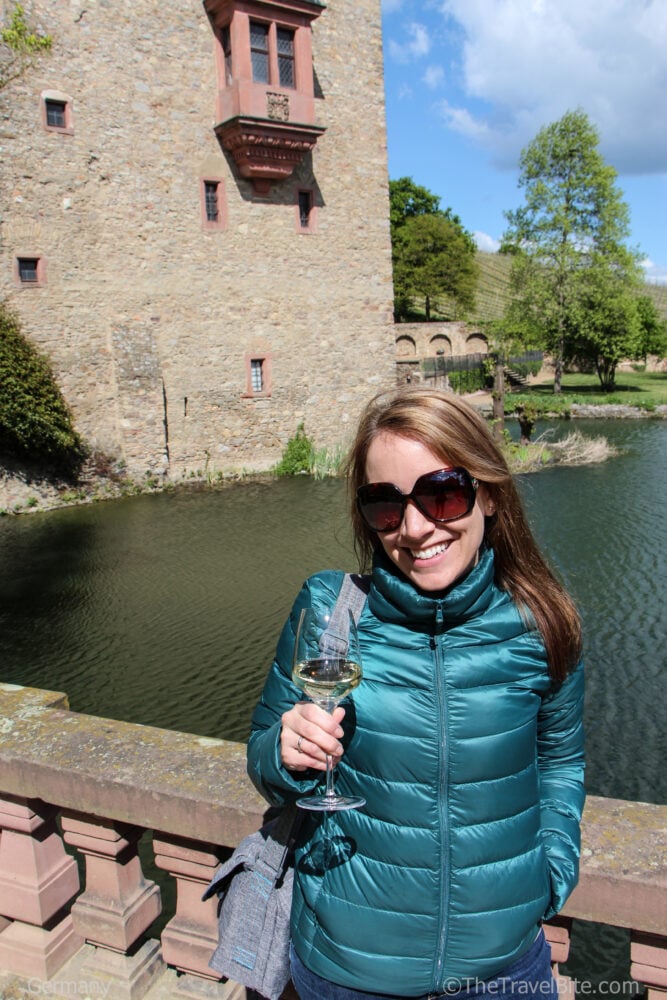
Today, Schloss Vollrads is simply beautiful. It’s a popular wedding venue, and a wonderful place for wine tasting. Their dry Riesling is fabulous, and I love that they seal their bottles with an elegant Vinolok glass stopper instead of a traditional cork. A small touch, but it says a lot about the care that goes into everything they do here.
Practical Info: The estate hosts various wine events throughout the year. Check their calendar before visiting. Website: Schlossvollrads.com
How to Get to the Rheingau Wine Region
Getting to the Rheingau is surprisingly easy, especially if you’re already visiting Frankfurt.
By Car: Frankfurt to the heart of the Rheingau is roughly a 45-minute to 1-hour drive. Having a car gives you the freedom to hop between estates at your own pace. Just designate a driver, or better yet, hire a guide (more on that below).
By Train: Deutsche Bahn’s RheingauLinie connects Frankfurt (via Wiesbaden) to Rüdesheim in about an hour, with stops in Eltville and other wine villages along the way. Trains run hourly, making it very easy to visit without a car.
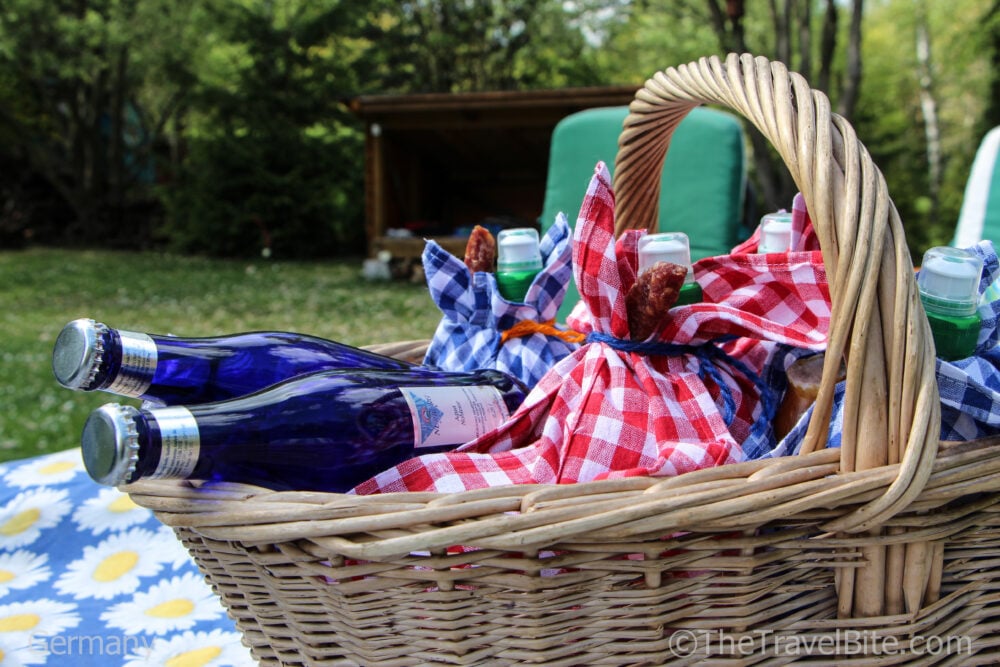
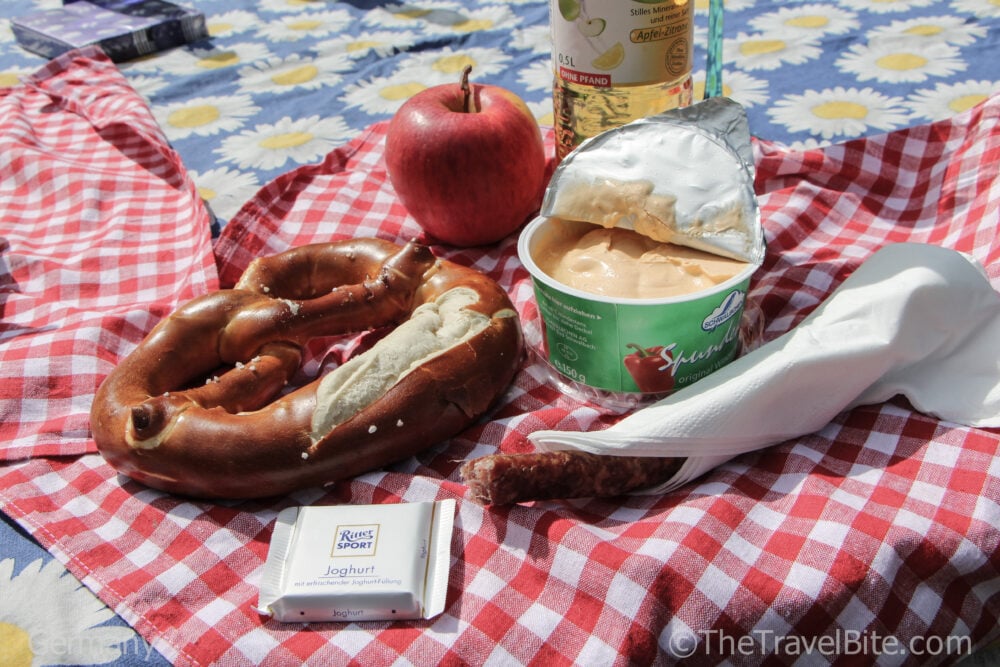
By Guided Tour: This is honestly my top recommendation. When I visited, I toured the region with local guide Walter Schonleber and it was one of the most memorable travel experiences I’ve had in Germany. He’s extraordinarily knowledgeable about the history of every estate, surprisingly generous with his time (he surprised our group with a picnic in the vineyards), and takes care of all the logistics. His name literally means “a beautiful life,” which feels like the right omen for a day spent in wine country. You can learn more and book through his website: Schoenleber-1848.com.
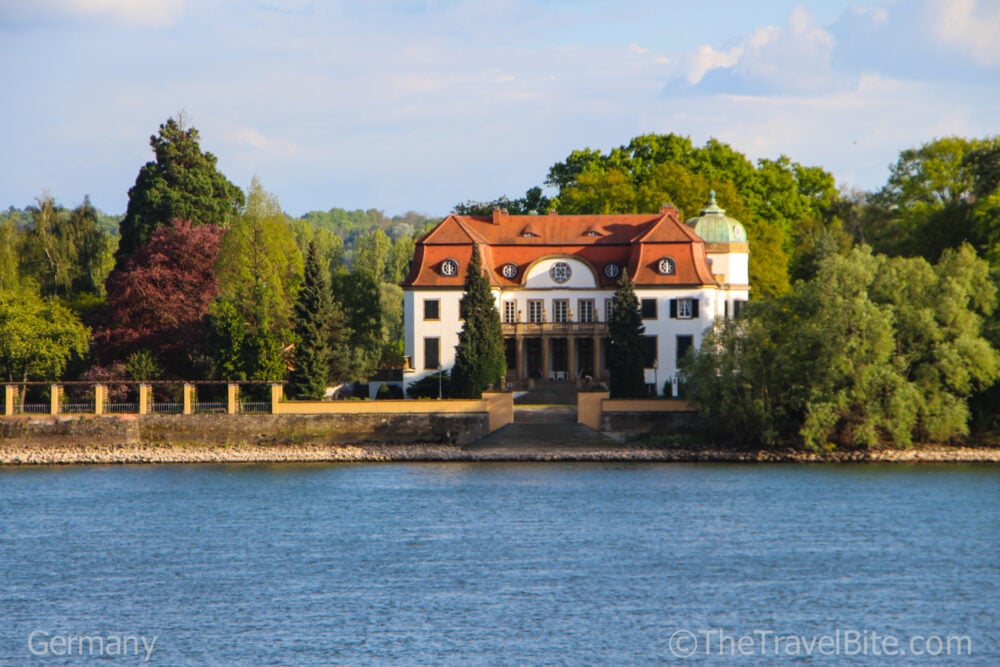
Visit Rheingau Wine Region By River Cruise
One of the most scenic ways to arrive in the Rheingau is by river cruise, and the Rhine is one of Europe’s great cruising rivers. Classic Rhine cruise routes run between Amsterdam and Basel (Switzerland), passing right through the heart of the Rheingau and the UNESCO-designated Middle Rhine Valley. Look for excursions to Kloster Eberbach or other wineries. If you’re interested in planning a Rhine river cruise that includes the Rheingau wine region, Active Voyager is a great resource to help you find the right itinerary.
Best Time to Visit the Rheingau Wine Region
The Rheingau is genuinely worth visiting any time of year, but here’s a quick seasonal breakdown:
- Spring (April–May): The vineyards are coming to life, crowds are smaller, and prices are lower. Perfect for a relaxed visit.
- Summer (June–August): Peak season, with the famous Rheingau Music Festival running at Kloster Eberbach. Warm, lively, and beautiful. Just book ahead.
- Autumn (September–October): Harvest season! This is the most atmospheric time to visit, with grapes being picked and the whole region buzzing with energy.
- Winter (November–January): The Christmas markets in the Rhine villages are magical, and many estates offer cozy indoor tastings. A truly underrated time to visit.
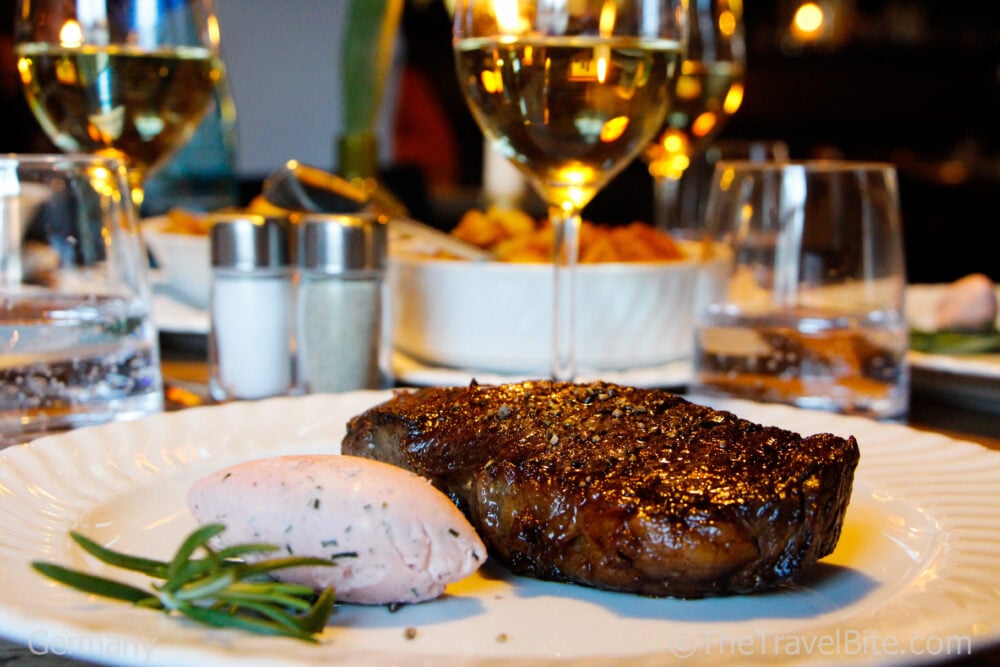
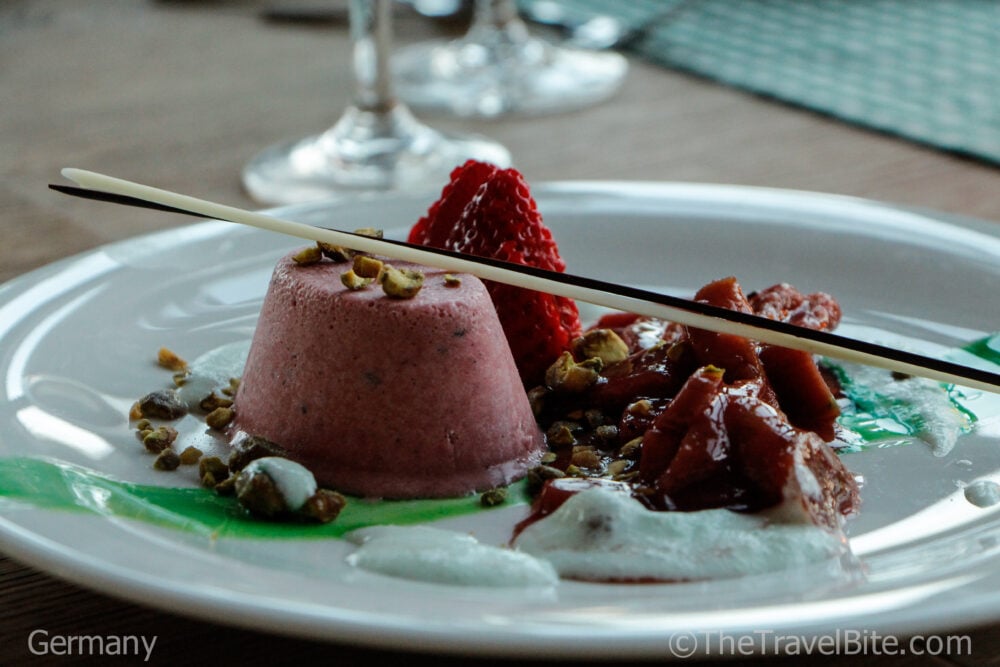
What to Eat in the Rheingau
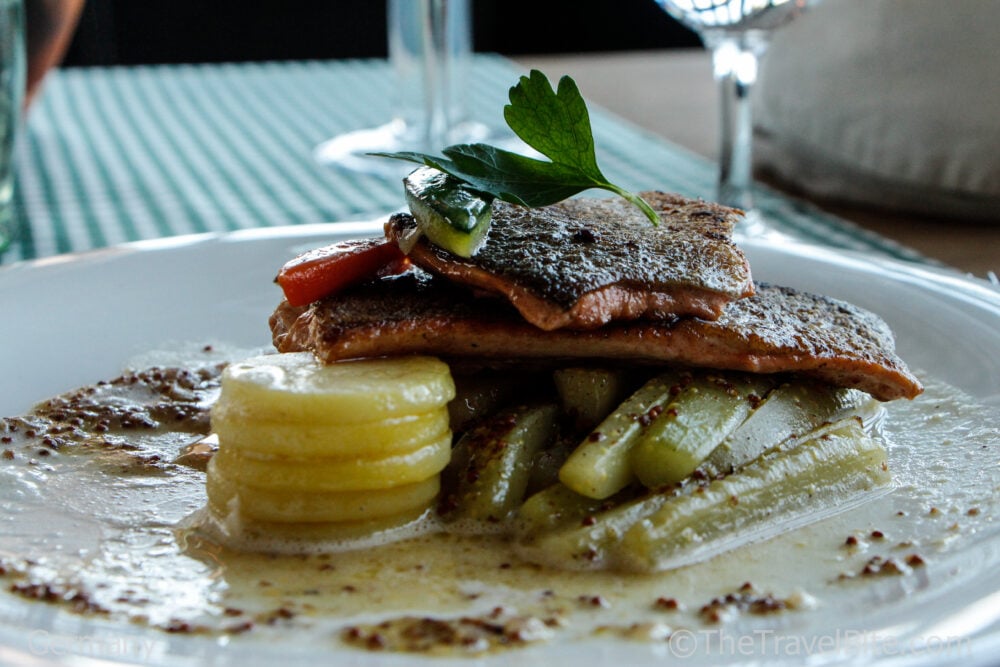
Wine country food in the Rheingau is hearty, honest, and deeply satisfying. Keep an eye out for:
- Spundekäs: a creamy cheese spread with onions and paprika, served with pretzels and a glass of Riesling. This combination is perfection.
- Sauerbraten: slow-braised marinated beef, a German classic that pairs beautifully with a dry Riesling.
- Handkäse : a pungent local sour milk cheese typically served with caraway seeds and onions, not for the faint of heart but very traditional to the region.
The restaurant at Kloster Eberbach (Klosterschänke) is a wonderful lunch spot — I’d highly recommend sitting on the garden patio overlooking the basilica if the weather cooperates.
Frequently Asked Questions About the Rheingau Wine Region
What wine is the Rheingau region known for? The Rheingau is most famous for its Riesling wines, which make up over 78% of the region’s vineyards. The wines are known for their exceptional balance of bright acidity and mineral complexity. The region is also the birthplace of late-harvest Spätlese wines.
How far is the Rheingau from Frankfurt? The Rheingau wine region is approximately 45–60 minutes from Frankfurt by car, or about 1 hour by train via Wiesbaden. It makes a very easy and rewarding day trip.
Is the Rheingau wine region worth visiting? Absolutely — especially if you enjoy history alongside your wine. The combination of medieval monasteries, castle estates, Rhine River views, and world-class Riesling is unlike anything you’ll find in other wine regions. I’d rank it as one of the most underrated wine travel destinations in Europe.
Do I need to book wine tastings in advance? For popular estates like Schloss Johannisberg and Schloss Vollrads, it’s best to book ahead, especially during peak season (May–October) and harvest time (September–October).
The Rheingau wine region snuck up on me. I knew going in that the wine would be excellent, but I didn’t expect to be so moved by the history, the landscape, and the quiet dignity of a place where people have been making wine for over a thousand years. Whether you have a single afternoon or a full week, the Rheingau rewards every hour you give it.
If you go, visit those three estates. Hire a guide if you can. And order the Spundekäs.
Disclosure: Part of my original trip to Germany was sponsored by the German Tourism Board. As always, thoughts, opinions, and enthusiasm for travel, food, and wine are entirely my own.
More Stories About Germany You’ll Love
- German Apple Pancake Recipe
- Vegan Hamburg
- 15 Photos Of German Food Proving It’s Not All Sausage and Beer
- Homemade Museli Recipe

I really wish I had read this article before going to the Rheingau region. I love wine, but left without visiting any wineries. I knew that the are is producing wine, but nothing about these places. Such a pity…
I have only visited one castle and it was impressive, this posts makes me think I need to head back and visit more – particularly if I can do some wine tasting as well!
I absolutely love Germany and hope to go back there some day. On my last trip I was able to explore Munich for a few days. I would really like to explore the wine region and some of the castles. I know that my husband would really enjoy going there. What’s not to like?!
Es ist Zeit, Deutsch zu lernen. (It’s time for me to learn German again!)
Oh my! We are actually going to Germany this summer and I’m happy to add this to my list!
This isn’t a region I know well at all. Since I live in France, visiting Germany should be something I do often… it’s a beautiful country with an amazing history and traditions that have survived. Thanks for sharing the Rheingau region!
Hi Rachelle, I have enjoyed reading your post. Liked all the photos shared and Love to know about the Rheingau Wine Region. Thanks a lot for sharing valuable information with us. Keep Sharing.
If it involves wine, I’m ready to hop on a plane for a visit! I’ve been to Germany a number of times of short visits, but had my first immersion into it with a week long trip around Northern Germany’s UNESCO sites, including a UNESCO protected wine that is thought to be the oldest in the world. The trip really gave me a zest for Germany and I’d love to go back to spend time in the wine regions.