
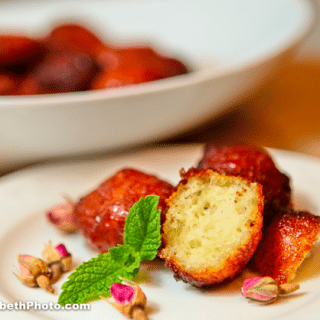
If heaven on earth existed, in my mouth, it would be this. The land of milk and honey. Sinfully sweet and smelling of roses.
I encountered this delightful desert during a dinner at a trendy Indian restaurant, Nirvana Beverly Hills, with other bloggers … so they didn’t mind at all when I whipped out my phone at the dinner table to tweet that I was having some sort of delicious Oh-My-Gawd experience. It was like falling in love for the first time and I wanted to proclaim it to the World. You must be thinking that I’m over-reacting to a simple meal. I admit, it could have been the sensual atmosphere of Nirvana which is candle-lit and oozing not-so-subtle hints of Kama Sutra with their artwork and menu descriptions. Appetizers are called “Foreplay.” Entrees, “Loss of Innocence.” And dessert? “Sensuous Pleasures, Sin committed, but quickly forgotten.” I mean. This is Beverly Hills.
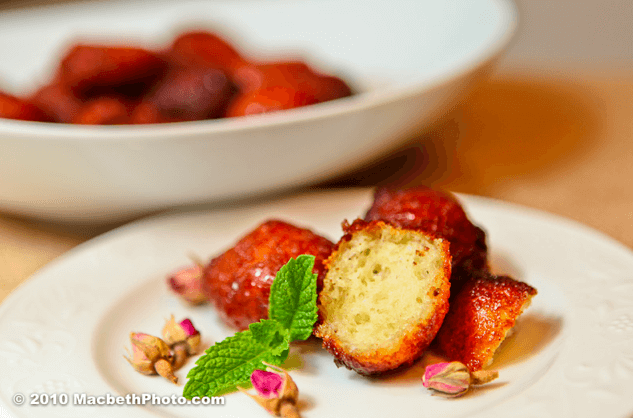
But I do believe that even if I wasn’t under the glittery influence of LA, upon savoring this treat I still would have closed my eyes, left the earth and had a moment. The taste of sweet roses — not the scent of a flower, but its flavor — soaked into something warm and soft and rich. By the time I regained my senses the menus had already been lifted from the table and I didn’t know my new lover’s name.
I tweeted that I was having a sweet honey and rose flavored dessert. Someone immediately responded, “you must be having Gulab Jamun.”
I tried saying that out loud, but it sounded like I was trying to speak with a mouthful. (Try it. Right now. Go ahead. Say … Guuuulaaaab Jaaamuuun. See?) So I just made a mental note of the roses and honey. Later when I went to post about it again, in my insecurity of the language, I described them as honey rose donut holes. Big mistake. HUGE! My South Asian friends quivered at the comparison. “Gulab Jamun are not donut holes!” they proclaimed. But … uhm … they certainly look like donut holes? Fancy rose scented ones at that! Wikipedia describes them as waffle balls. I once called them O.M.G. balls. That didn’t quite sound right either. So let’s just learn how to pronounce it correctly. According to Merriam-Webster Dictionary, it’s /ɡʊˌlɑːb ˈjɑːmən/.
What Is Gulab Jamun?
Gulab jamun is one of the most beloved desserts in South Asian cuisine — served at celebrations, festivals, weddings, and family dinners across India, Pakistan, Bangladesh, and Nepal. The name comes from the Persian and Hindi words for rose (gulab) and a type of berry (jamun), referring to the rose water in the syrup and the small round shape of the dumplings.
At its heart, gulab jamun is a soft, rich milk dumpling that is deep fried until deep golden brown, then soaked in a fragrant sugar syrup flavored with rose water and often cardamom. The outside develops a delicate crust while the inside stays pillowy and soft. The syrup soaks in completely, making each bite intensely sweet, floral, and utterly irresistible.
This particular recipe comes directly from the kitchen of Nirvana Beverly Hills, and it uses heavy cream rather than the more traditional khoya (reduced milk solids) or condensed milk. The result is exceptionally rich and tender — a restaurant-quality version that is absolutely worth making at home.
Ingredient Notes
Dry milk powder: This is the base of the dough and gives gulab jamun its characteristic soft, milky texture. It may look unappetizing in the bag but it works like a charm — every traditional recipe uses it. Full-fat dry milk powder gives the best results.
Heavy cream: This is what makes the Nirvana recipe distinctive. Most home versions use milk or water to bring the dough together, but heavy cream creates an exceptionally rich, tender dumpling. Don’t substitute with anything lighter.
Flour: Just one cup to bind the dough. The ratio of milk powder to flour is intentionally weighted toward the milk powder — this is correct and gives gulab jamun its signature texture.
Baking powder: Helps the dumplings puff slightly as they fry, giving them their soft interior. Make sure yours is fresh — old baking powder won’t give you the lift you need.
Rose water: This is the soul of gulab jamun. It goes into the sugar syrup and perfumes every bite. You can find rose water in the baking or international food aisle of most grocery stores, in Middle Eastern or South Asian grocery stores, or online. The Nirvana recipe also includes a method for making your own from scratch using fresh rose petals — I’ve included it below the main recipe.
Sugar: The syrup uses a significant amount of sugar, which is intentional. Gulab jamun is meant to be deeply, unapologetically sweet. The syrup is what transforms the fried dumplings from good to extraordinary.
Oil for frying: Use a neutral oil with a high smoke point — vegetable oil, canola, or sunflower all work well. You’ll need enough to deep fry — about 3 pints in a wok or heavy skillet.
Tips For Making Gulab Jamun
Let the dough rest. After mixing, the recipe calls for letting the dough sit for 10 to 15 minutes. This allows the milk powder to fully absorb the cream and makes the dough easier to roll into smooth balls.
Roll carefully. Take your time rolling each ball between your palms until perfectly smooth with no cracks. Any cracks will cause the dumplings to break apart in the oil. If the dough is sticking, dust your palms lightly with flour.
The oil temperature is everything. Learn from my first attempt — do not heat the oil on high. The dumplings need to fry slowly and evenly so the outside doesn’t burn before the inside cooks through. Heat the oil over medium heat until a small piece of dough dropped in sizzles gently. You’re looking for a consistent, steady bubble rather than a violent fry. The dumplings should take a full 3 to 5 minutes to reach a rich mahogany color — if they’re browning faster than that, your oil is too hot.
Keep the syrup warm. The sugar syrup should be at a low, warm simmer when you add the fried dumplings. Hot syrup soaks in more readily than cold. If your syrup has cooled while you were frying, gently reheat it before adding the gulab jamun.
Better the next day. The recipe notes this and it’s absolutely true — gulab jamun that have had time to fully absorb the syrup overnight are noticeably better than ones eaten the same day. Plan ahead if you can. They keep in the refrigerator for up to a week, getting better with each day.
How to to make Gulab Jamun step-by-step
Start with some honey, powdered milk, and roses.
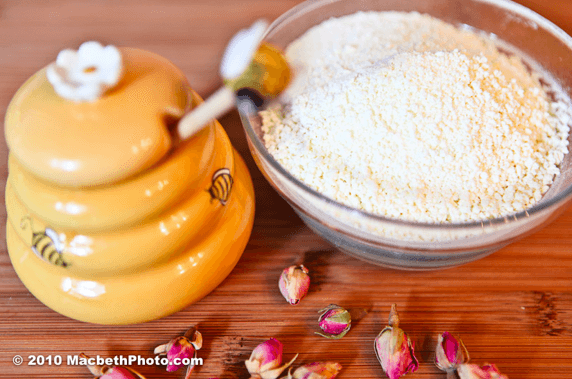
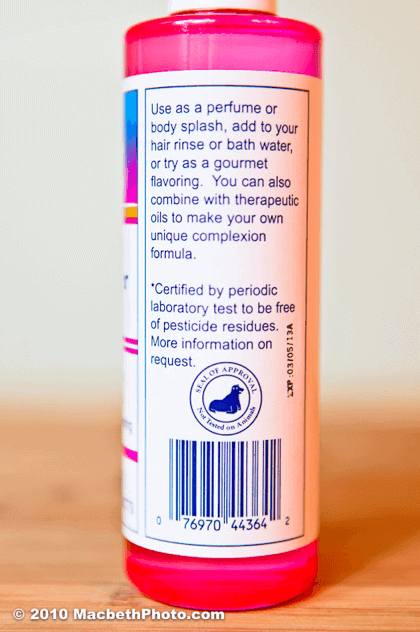
I actually used the roses to make tea. Nirvana did give me a recipe for making rose water at home (posted below). But I found it at my local grocer in the spice section as a natural gourmet flavoring … or perfume?
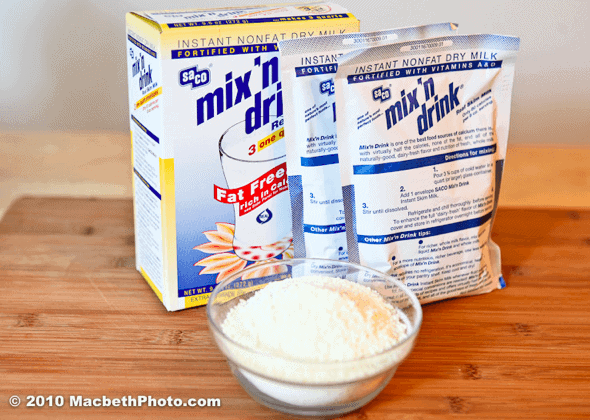
The dry milk I was a little iffy about. One of my chef friends suggested using all whole ingredients (i.e. nothing powdered or dried). So I looked up other recipes online for gulab jamun and all used powdered milk. So I decided to stick to the recipe. Doesn’t look appetizing … but works like a charm!
Add a little baking powder …
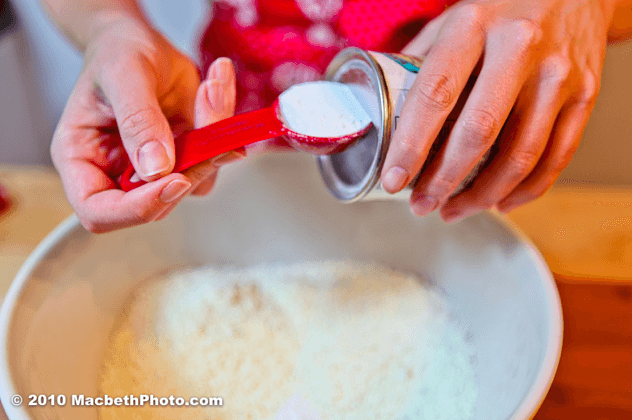
As if the powdered milk wasn’t enough … add to that 2 1/2 cups of heavy cream.
Yeah … these donuts …I mean …. gulab jamun, are rich and creamy little cakes.
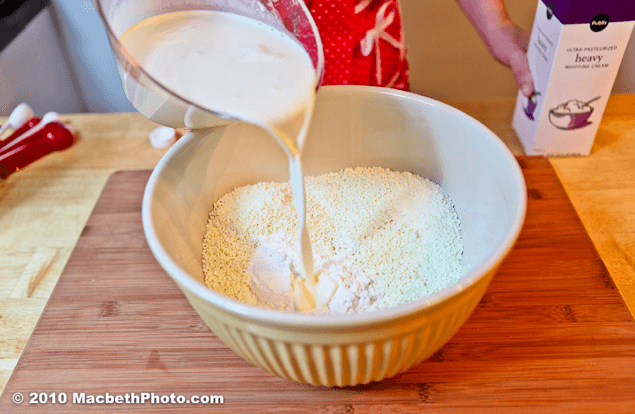
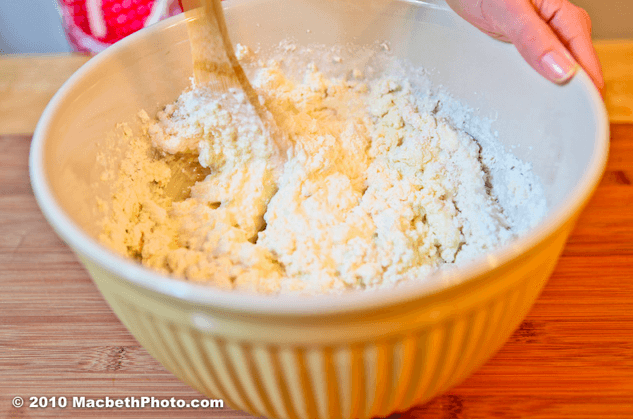
Mix together with a wooden spoon. (It gets a little sticky.)
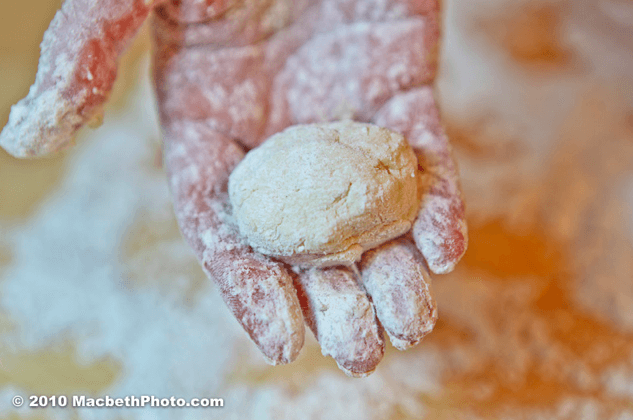
Cover your hands with flour and roll into 1 inch balls.
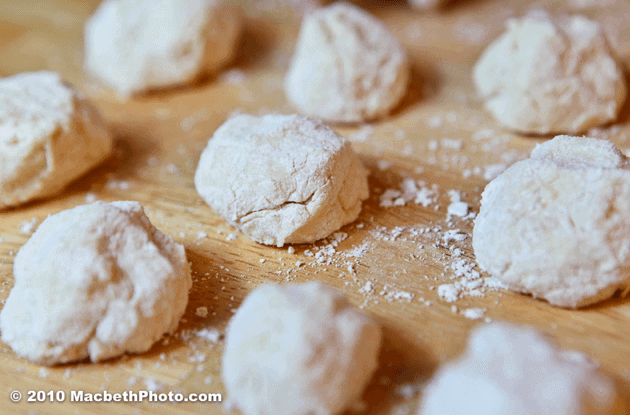
Confession: here’s where I went wrong the first time around.
I’m a runner, so I don’t cook/eat/prepare fried foods. Ever. I don’t have a deep fryer. I’m also the kind of cook that sometimes just throws from the hip and says, “let’s try it!” without properly researching.
Google is at my fingertips. I should have looked up “heating” and “boiling points” of oil.
But instead I followed the advice of Julia Child, “The only real stumbling block is fear of failure. In cooking you’ve got to have a ‘What the hell?’ attitude.”
So, “what the heck!” Let’s pour some oil in a pan and turn the temperature up to high!
(By the way, I don’t recommend this!)
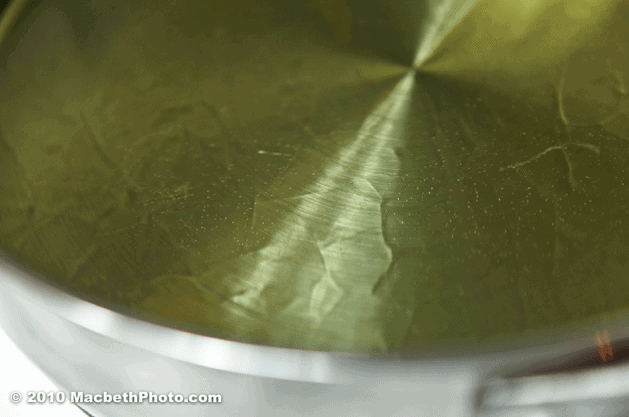
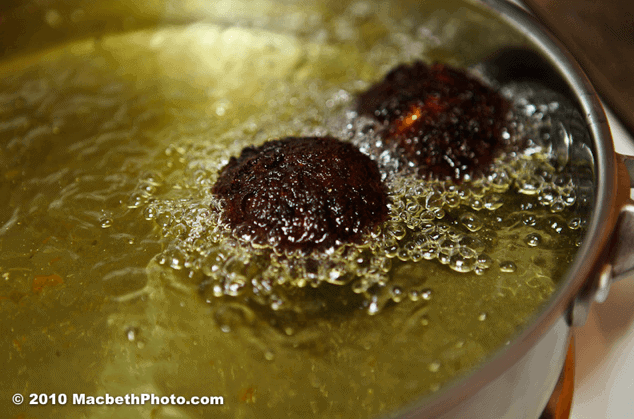
And the first one goes in …
(See … that oil doesn’t look hot, does it?)
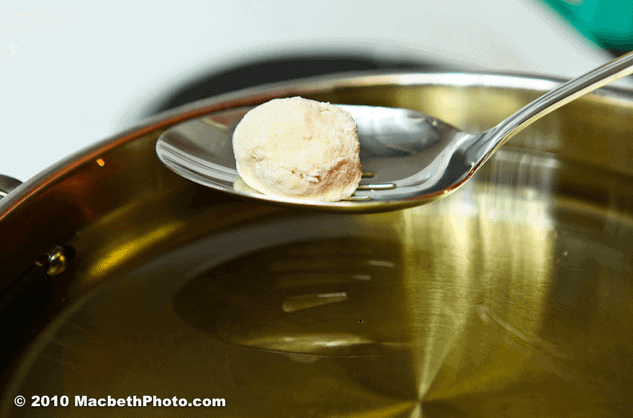
Pop. Crack. Sizzle …
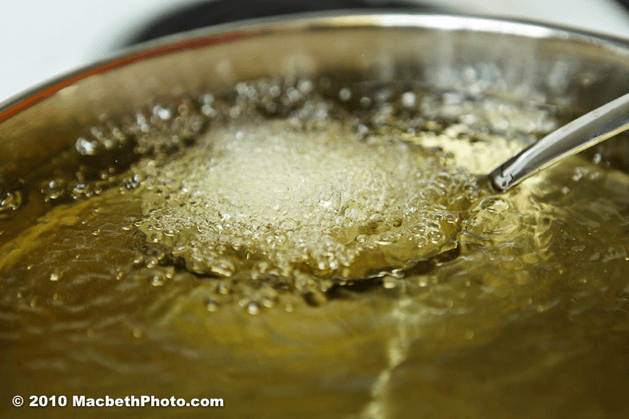
Insta-Burn!
This happened in all of 3 seconds. Seriously. The recipe calls for them to reach a “rich mahogany color.” But somehow I don’t think this fits that description. Especially since it happened so fast that I doubt the inside cooked. So … we turned the heat to medium and waited a bit. Learn from my mistake.
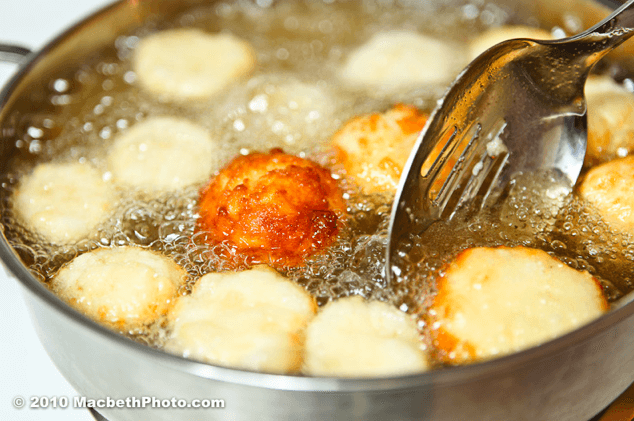
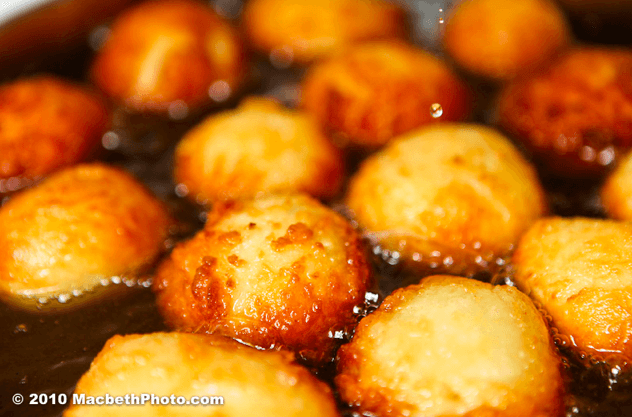
After the oil was at a sufficient “cook-instead-of-burn” temperature , we started getting some golden brown results.
PS … my whole house now smells like fried gulab jamun from the burn experiment.

Meanwhile … The syrup is being made.
This is similar to a simple syrup used in drink making … only with rose water and honey. Bring sugar and water to a boil, then add 2 tablespoons of rose water. I also added two tablespoons of honey after it cooled.

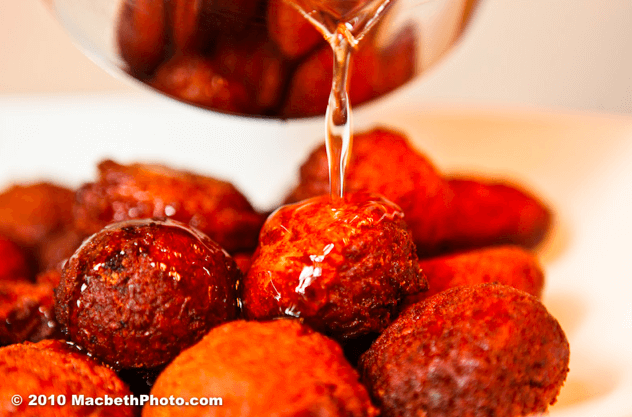
Pour the sugar water over the gulab jamun and let it soak in.
Tips For Making Gulab Jamun
Let the dough rest. After mixing, the recipe calls for letting the dough sit for 10 to 15 minutes. This allows the milk powder to fully absorb the cream and makes the dough easier to roll into smooth balls.
Roll carefully. Take your time rolling each ball between your palms until perfectly smooth with no cracks. Any cracks will cause the dumplings to break apart in the oil. If the dough is sticking, dust your palms lightly with flour.
The oil temperature is everything. Learn from my first attempt — do not heat the oil on high. The dumplings need to fry slowly and evenly so the outside doesn’t burn before the inside cooks through. Heat the oil over medium heat until a small piece of dough dropped in sizzles gently. You’re looking for a consistent, steady bubble rather than a violent fry. The dumplings should take a full 3 to 5 minutes to reach a rich mahogany color — if they’re browning faster than that, your oil is too hot.
Keep the syrup warm. The sugar syrup should be at a low, warm simmer when you add the fried dumplings. Hot syrup soaks in more readily than cold. If your syrup has cooled while you were frying, gently reheat it before adding the gulab jamun.
Better the next day. The recipe notes this and it’s absolutely true — gulab jamun that have had time to fully absorb the syrup overnight are noticeably better than ones eaten the same day. Plan ahead if you can. They keep in the refrigerator for up to a week, getting better with each day.
Gulab Jamun
Ingredients
Sugar Syrup Ingredients:
- 2 pounds suger
- 2 quarts plus 1 pint water
- 2 tablespoons rose water
- 2 tablespoons honey
Dough Ingredients:
- 3 cups dry milk powder
- 1 cup all-purpose flour
- 3 tablespoons baking powder
- 2 1/2 cups heavy cream
- 3 pints neutral oil for deep frying
Instructions
- Make the sugar syrup first. In a heavy saucepan, bring the sugar and water to a boil, then reduce to medium heat and cook for about 20 minutes until slightly thickened. Stir in the rose water. Keep the syrup warm at a low simmer while you prepare the dough.
- In a large bowl, mix the dry milk powder, flour, and baking powder together. Add the heavy cream and mix with a wooden spoon until a stiff batter forms. The dough will be slightly sticky.
- Let the dough rest for 10 to 15 minutes.
- Dust your palms with flour and roll the dough into smooth balls about 1 inch in diameter, slightly smaller than a golf ball. Roll carefully to ensure there are no cracks on the surface.
- In a wok or heavy skillet, heat the oil over medium heat until a small piece of dough dropped in sizzles gently. Do not let the oil get too hot — medium heat is essential.
- Carefully lower the dumplings into the oil in batches, making sure not to crowd the pan. Gently turn them with a spoon as they begin to take on color.
- After about 3 minutes, reduce the heat slightly and continue turning until the dumplings reach a rich, deep mahogany color — about 5 minutes total. Turn the heat up to high for the final 2 minutes to firm the crust.
- Drain on paper towels, then transfer to a large bowl and pour the warm rose syrup over them. Let them rest until the syrup reaches room temperature.
- They can be eaten now but will taste even better the following day once fully soaked. Store in the refrigerator for up to one week.
Notes
How to make rose water from scratch: Wash 5 large roses thoroughly. Remove all petals, reserving a few for garnish, and place in a large ceramic jar. Pour 2 quarts of cool (not iced) water over the petals and leave in a dark place for at least 4 hours. Strain and discard petals.

Oh that looks good! Thanks for showing us what it would look like if we were to have the heat too high. Most blogs would not have gone to that extra length, but you were quite thorough =). I hope they were as good as they looked.