Bologna is the Italian city I recommend most to friends who’ve already done Rome, Florence, and Venice, and after years of sending them my notes, I finally put everything into one Bologna travel guide. It has the history, art, and architecture of Italy’s big-name cities, but with a fraction of the crowds and a lived-in, local feel that’s hard to find elsewhere. Students fill the piazzas, porticoes shade nearly every street, and some of the best food in the country is waiting around every corner.
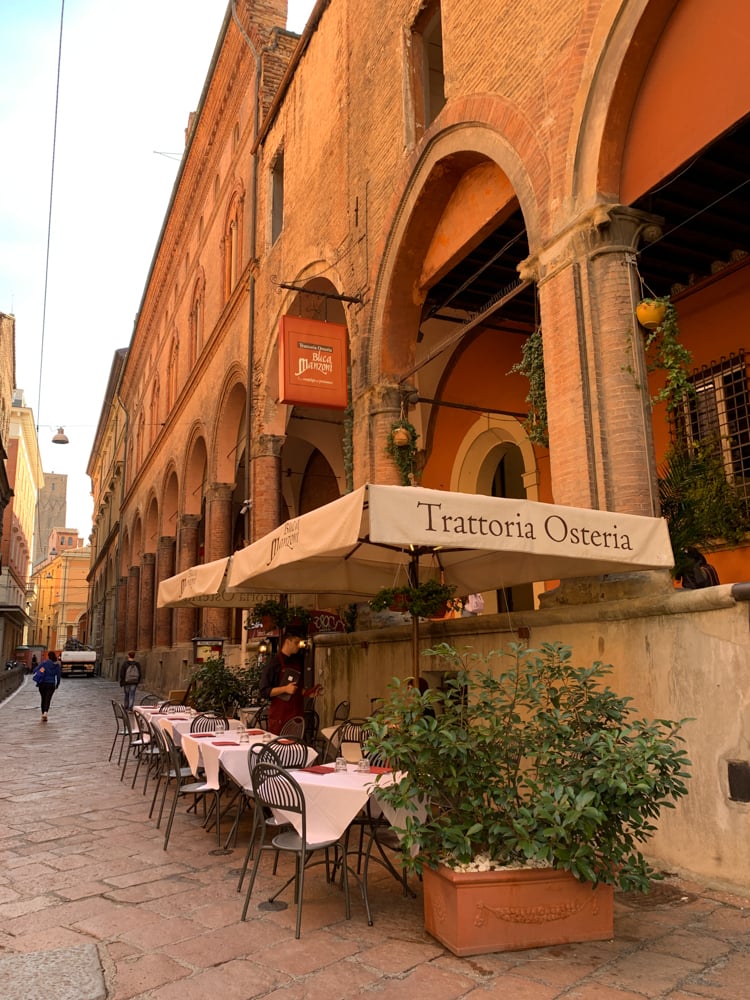
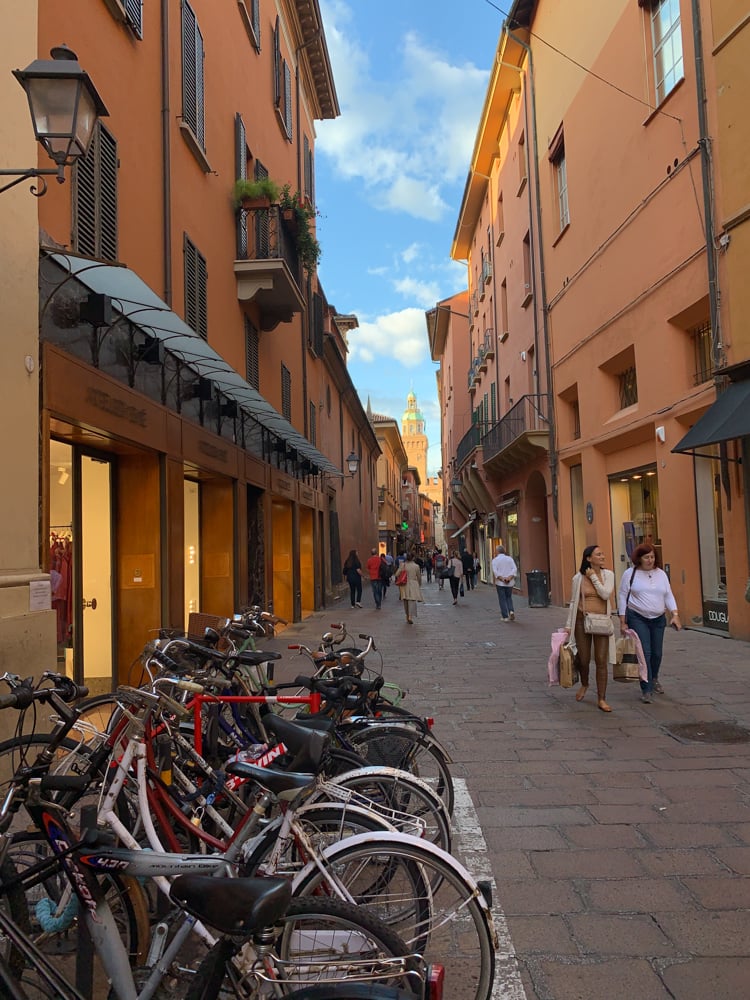
I’ve spent several summers in Bologna, and this Bologna travel guide covers everything I’d tell you over dinner: the best things to do in Bologna, where to stay, how to get there, how to get around once you arrive, and the day trips worth adding if you have extra time. For everything you’ll want to eat along the way, see my complete Bologna food guide.
Bologna at a Glance
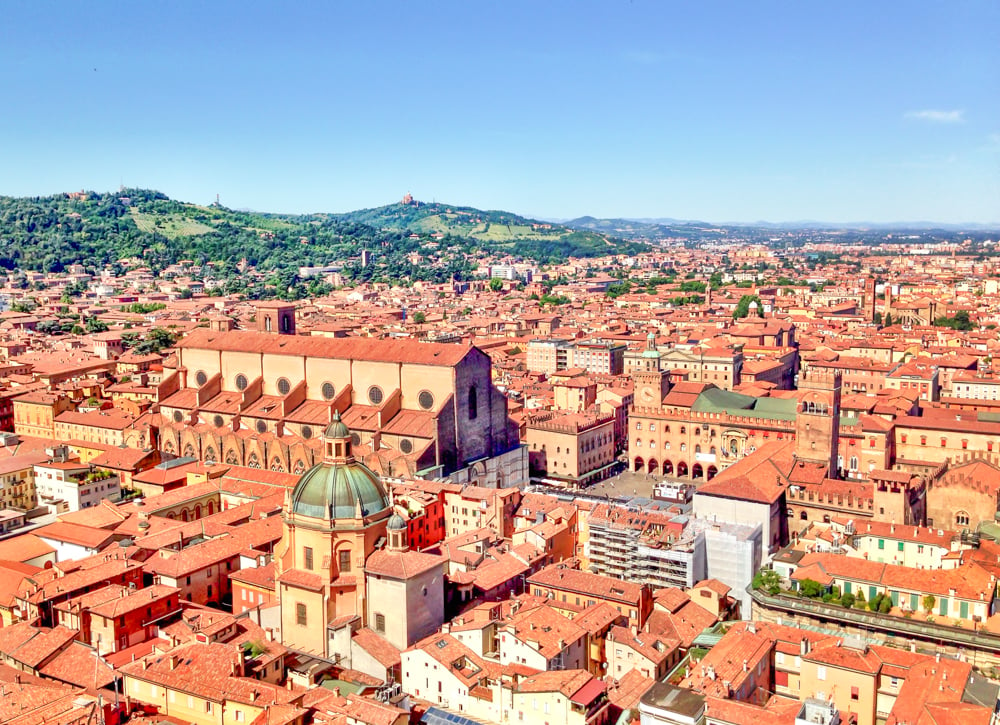
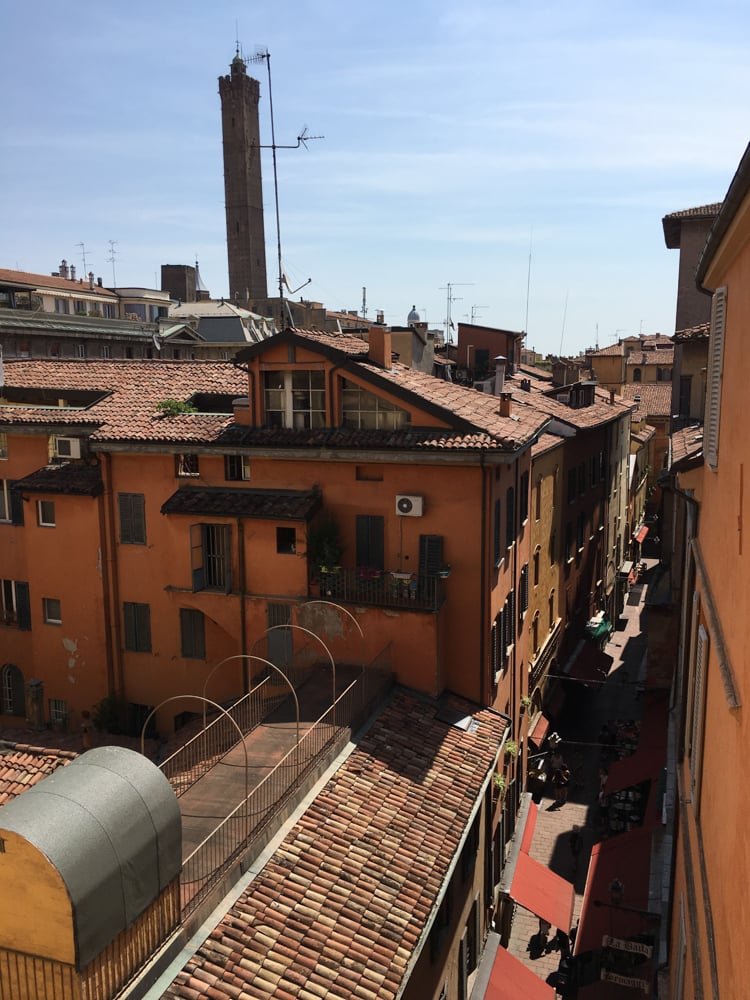
Bologna is the capital of the Emilia Romagna region in northern Italy, about 35 minutes from Florence by high-speed train. And it’s an easy city to plan around, which is why I recommend it so often to friends. But before diving into the rest of this Bologna travel guide, it helps to know the city’s three nicknames, because together they sum it up nicely. There’s La Dotta, “the learned one,” is for its university, founded in 1088 and the oldest in continuous operation in the Western world. La Rossa, “the red one,” is for its terracotta rooftops and red brick buildings. And La Grassa, “the fat one,” is for its legendary food.
Things to Do in Bologna
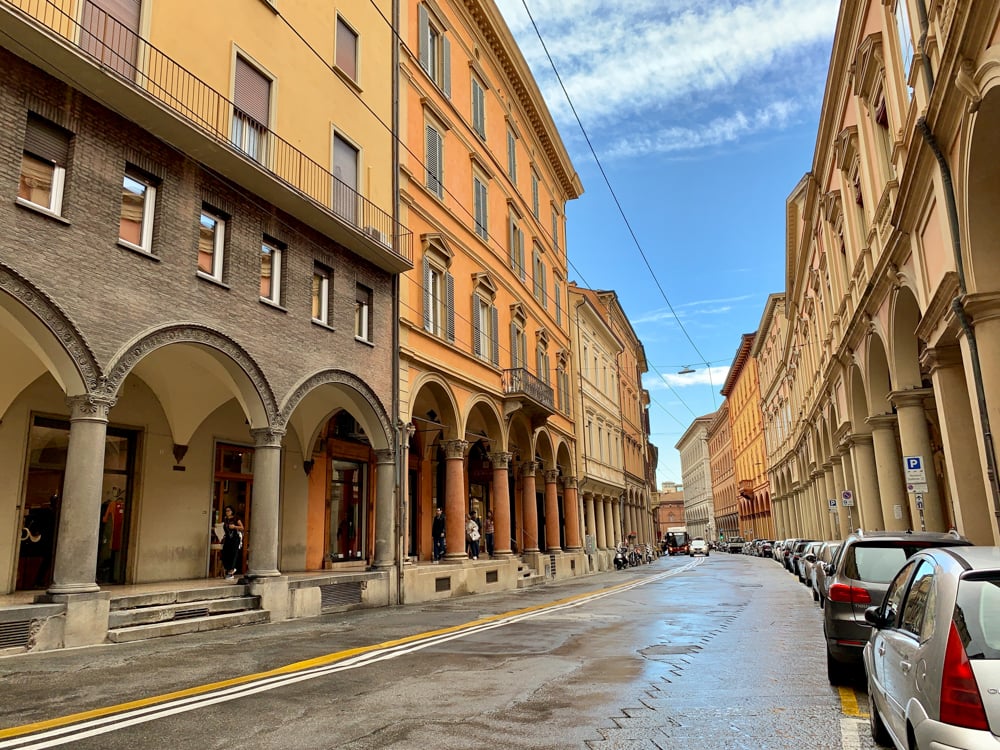
Bologna’s historic center is compact and easy to explore on foot, and you could happily spend a day just wandering under the porticoes. These are the sights I’d put at the top of any Bologna travel guide, and the ones I’d put at the top of your list.
Walk the Porticoes
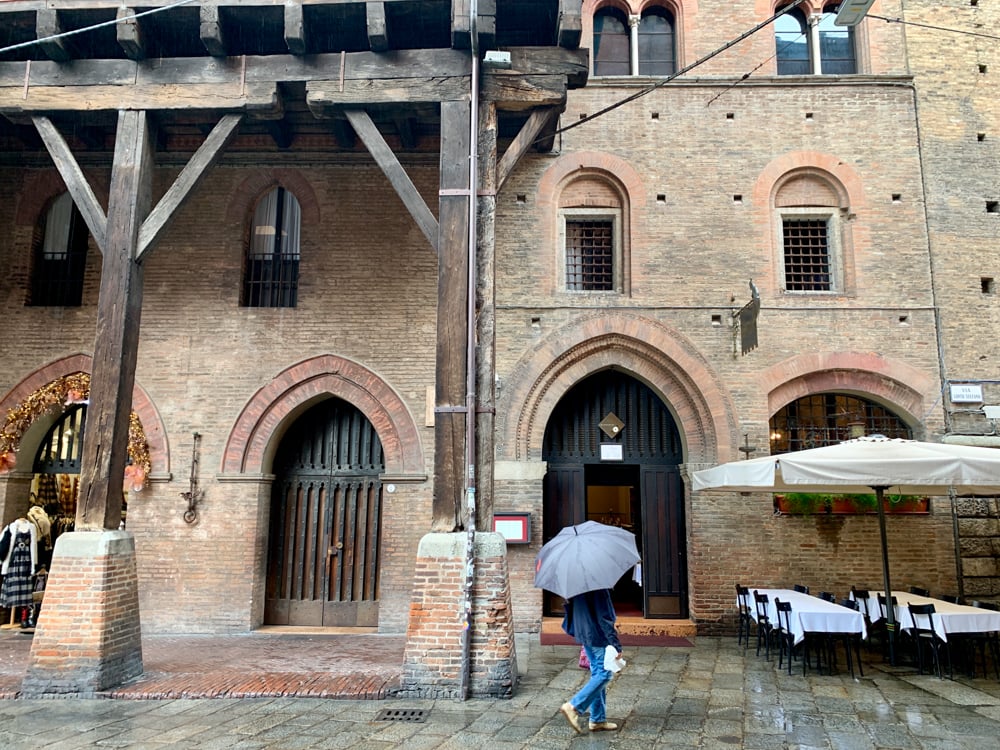
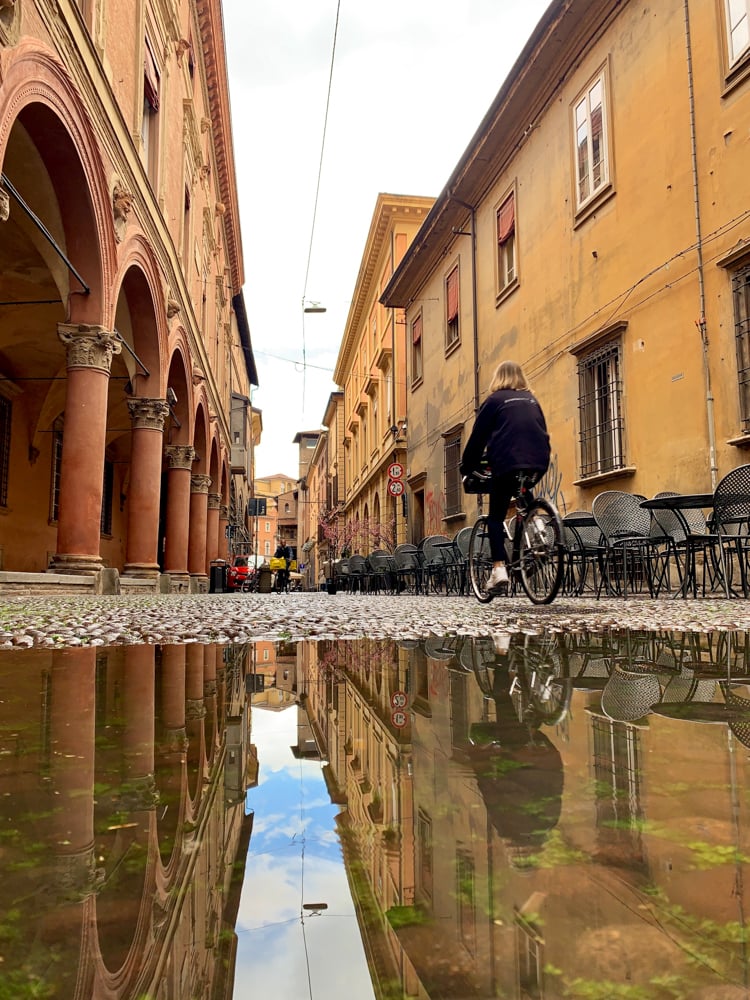
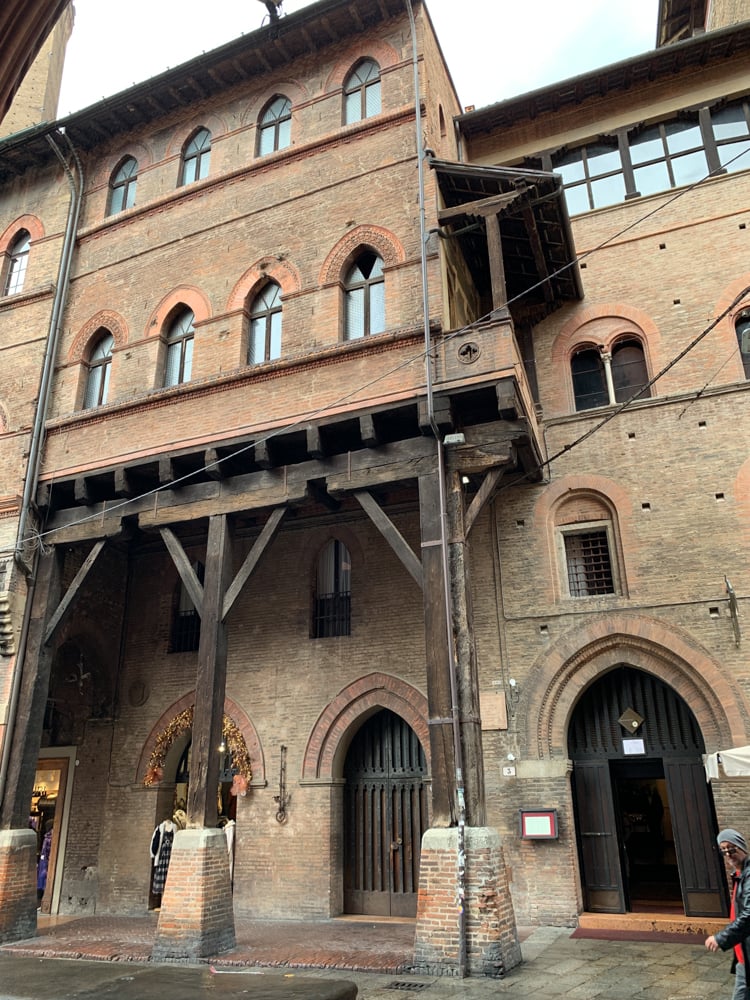
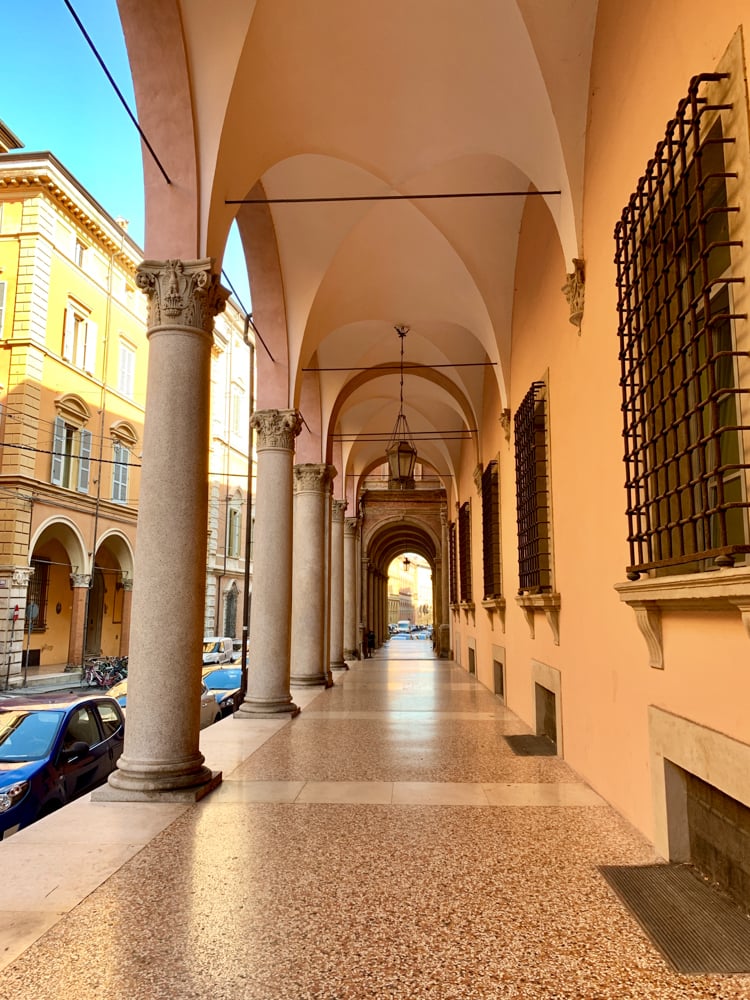
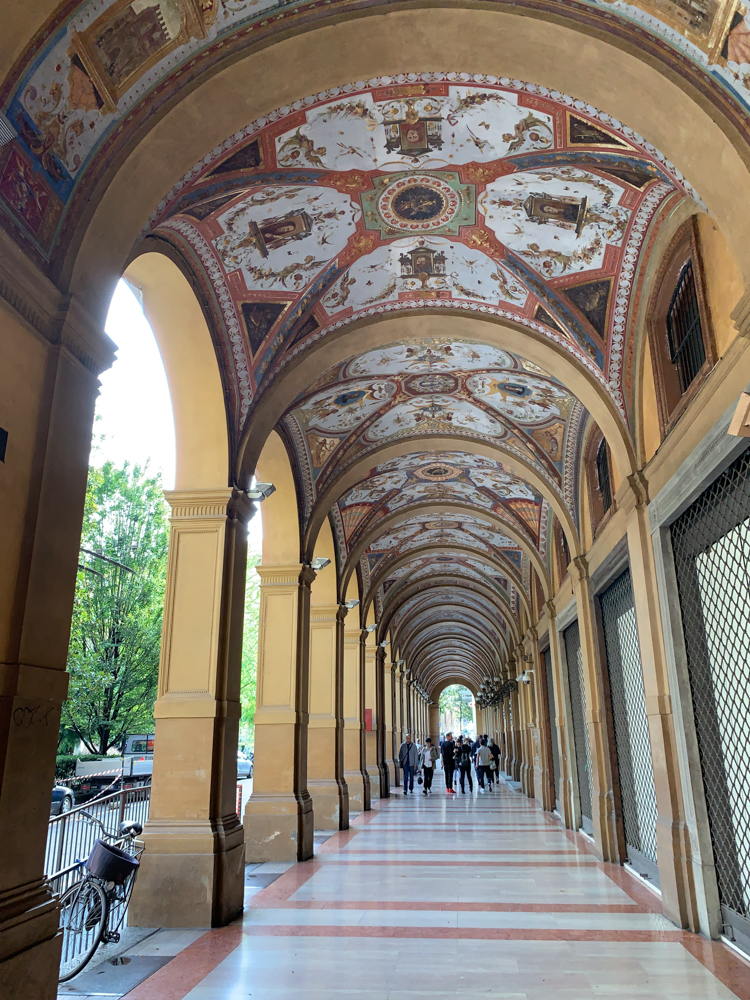
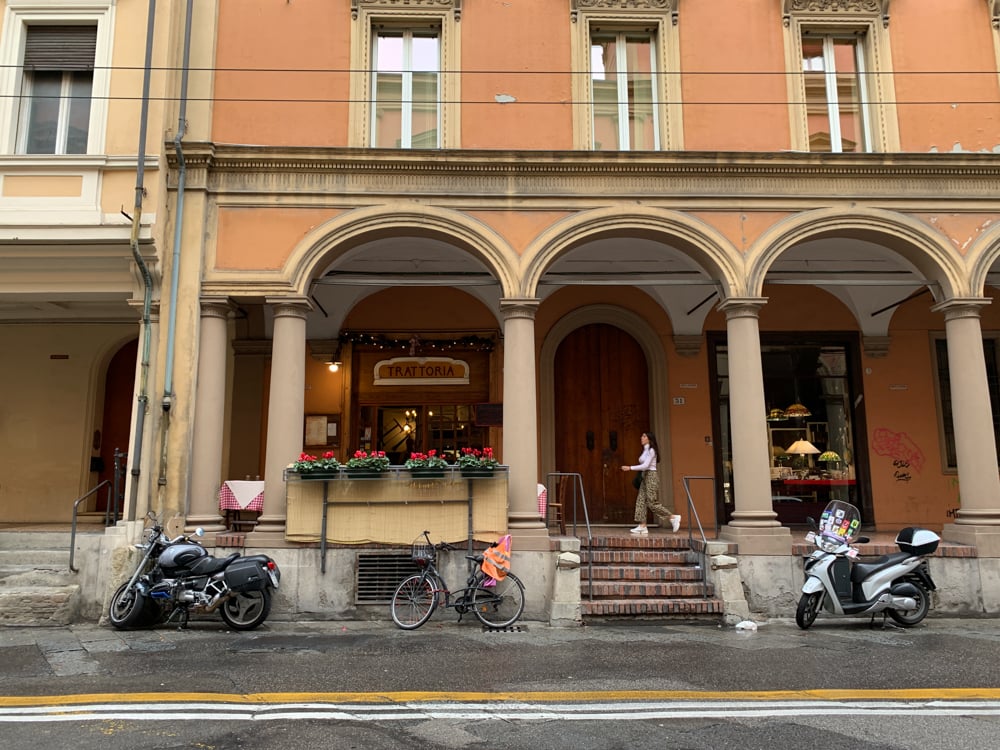
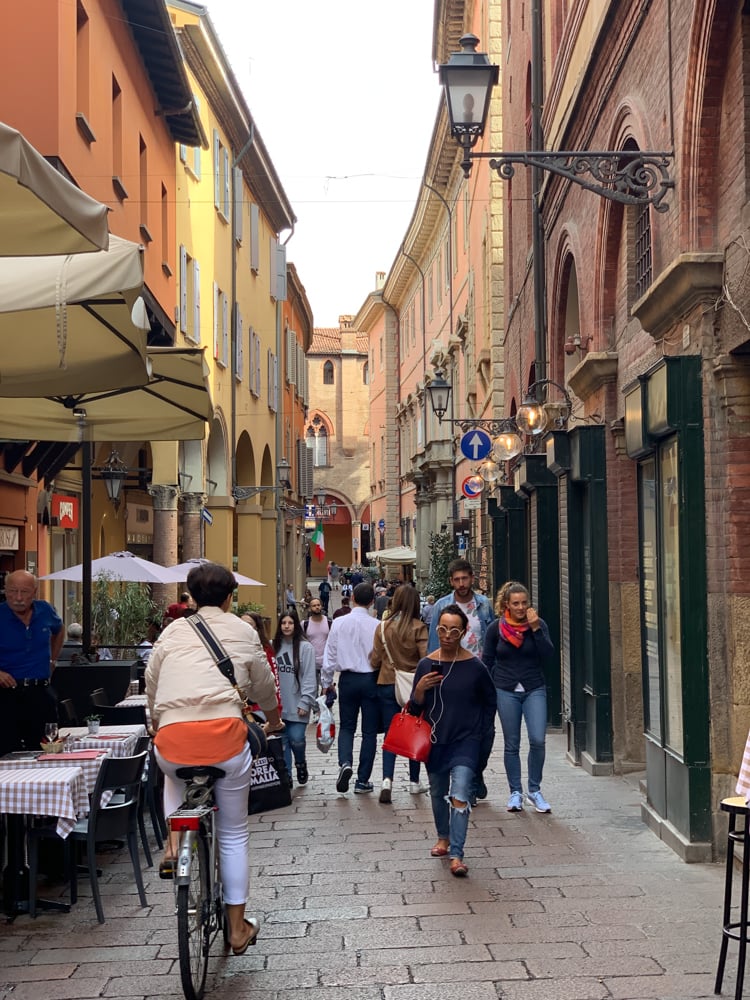
Bologna has more than 60 kilometers of covered porticoes, more than any other city in the world, and in 2021 they were named a UNESCO World Heritage Site. They were originally built to add living space above the street, and today they keep you shaded in summer and dry in the rain. Look up as you walk: some have painted ceilings, some are held up by ancient wooden beams, and each street has its own character.
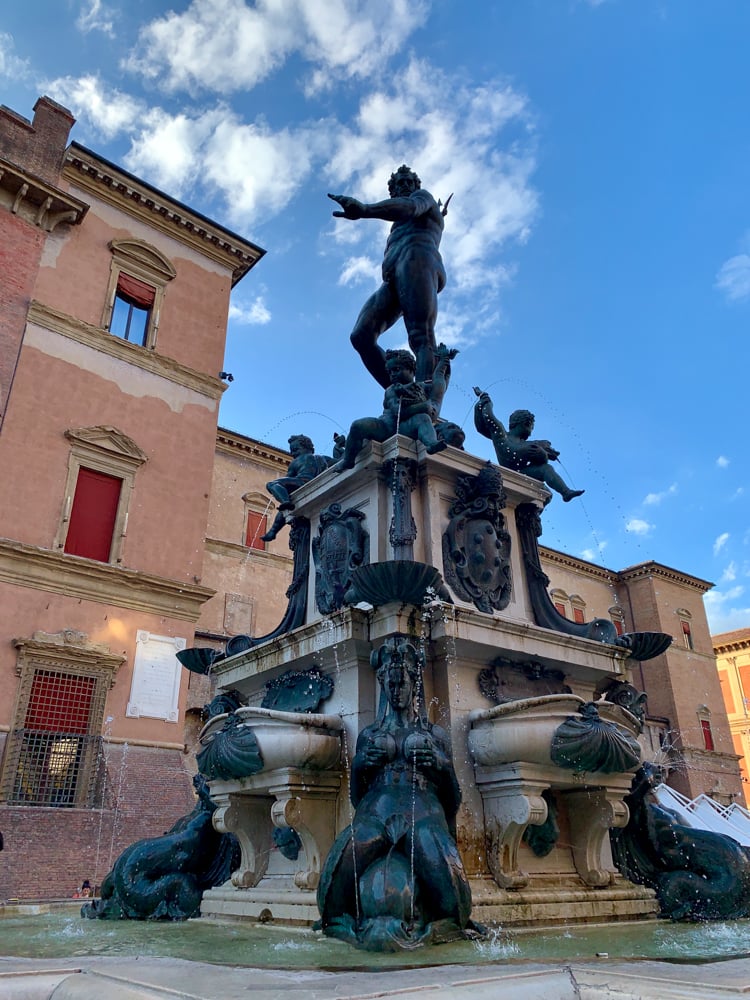
Piazza Maggiore and the Fountain of Neptune
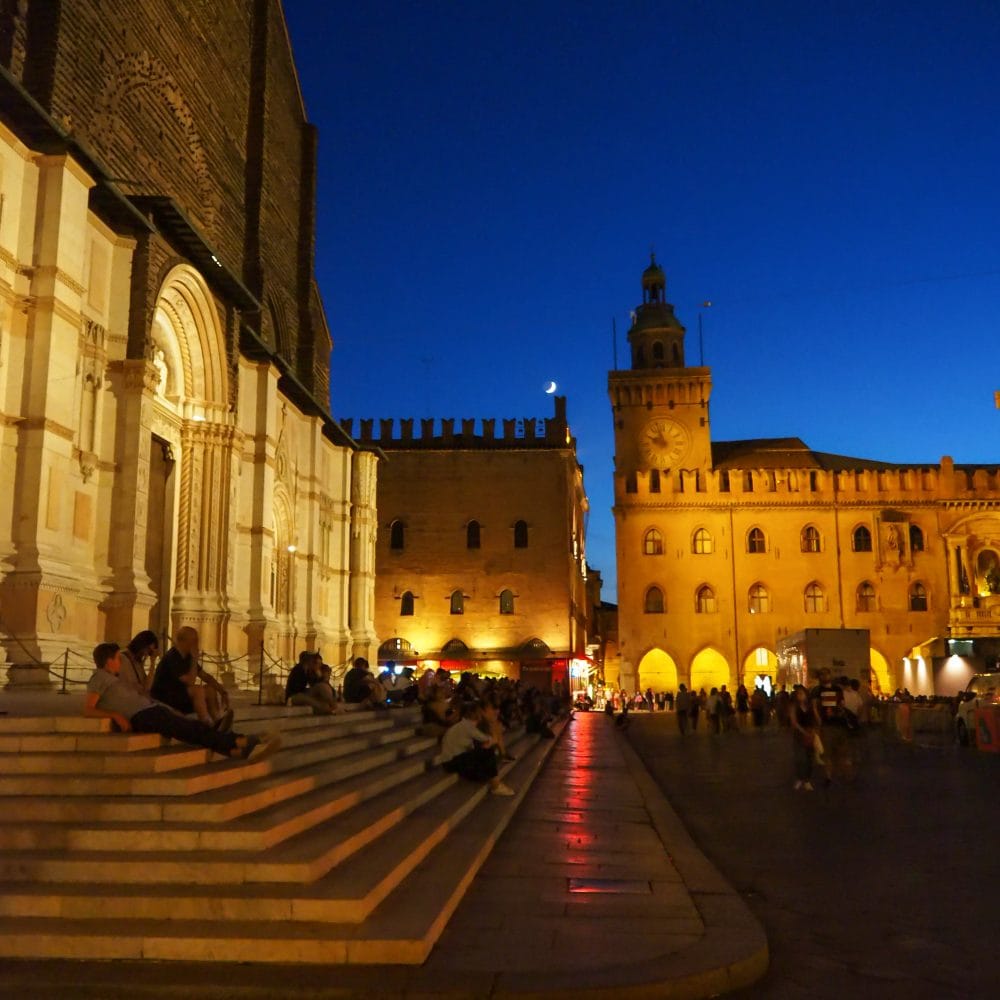
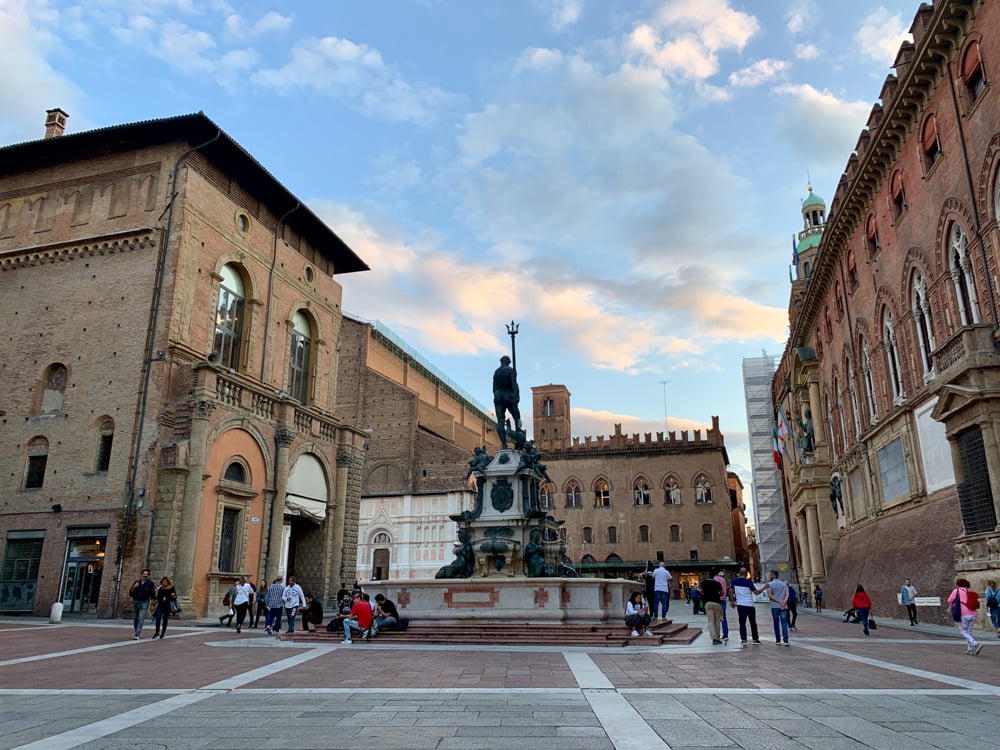
Piazza Maggiore is the heart of Bologna, and it’s where you’ll naturally end up again and again. It’s surrounded by the Basilica di San Petronio, Palazzo d’Accursio (the city hall), and Palazzo del Podestà. Just around the corner is the Fountain of Neptune, a bronze masterpiece by the Renaissance sculptor Giambologna. In the evening, the piazza fills with locals sitting on the basilica steps, and in late summer it often hosts outdoor film screenings.
Basilica di San Petronio
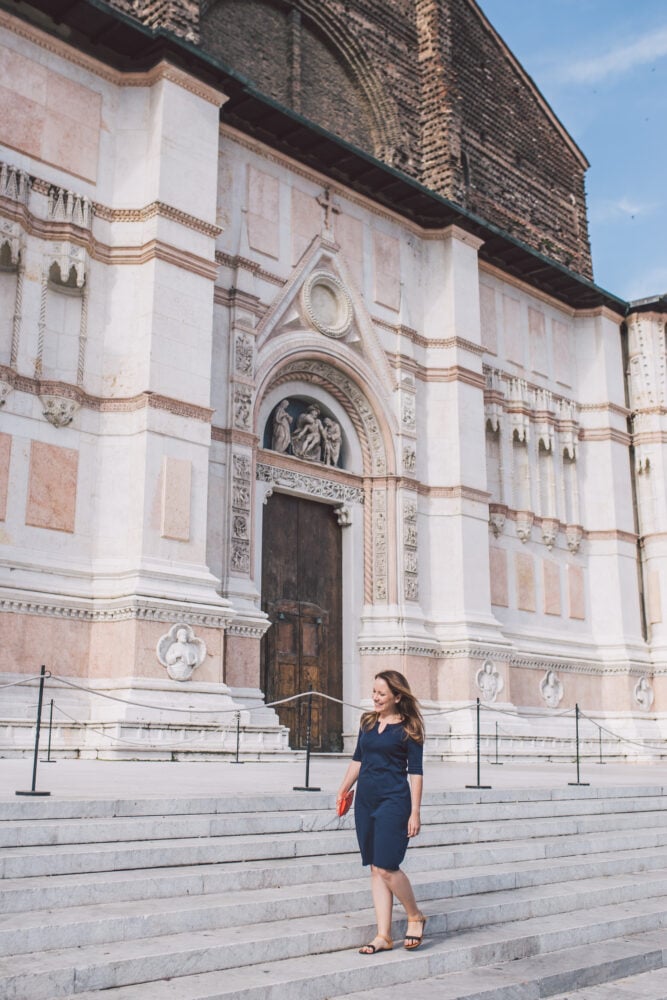
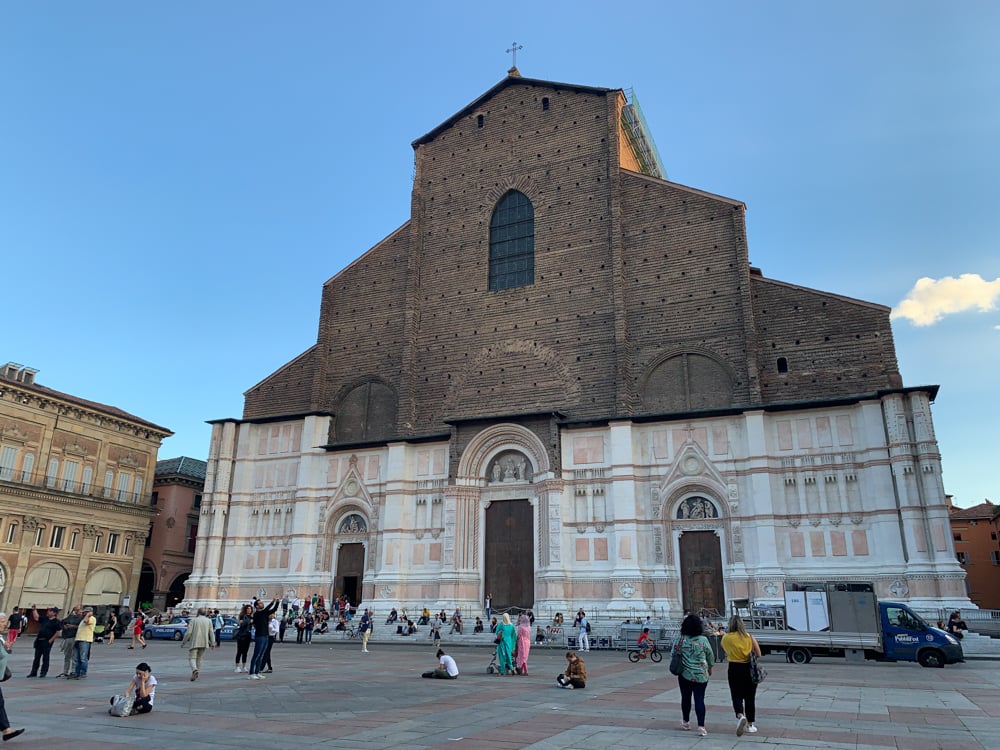
This massive Gothic basilica dominates Piazza Maggiore, and it’s one of the largest churches in the world. Its facade was never finished, which is why the top half is still bare brick. What I found most fascinating is the meridian line set into the floor, installed in 1655 by the astronomer Giovanni Cassini while he was teaching at the university. A small hole in the ceiling lets a beam of sunlight fall on the line at noon, marking the day of the year, and it’s one of the largest astronomical instruments in the world. | basilicadisanpetronio.org
The Two Towers (Le Due Torri)
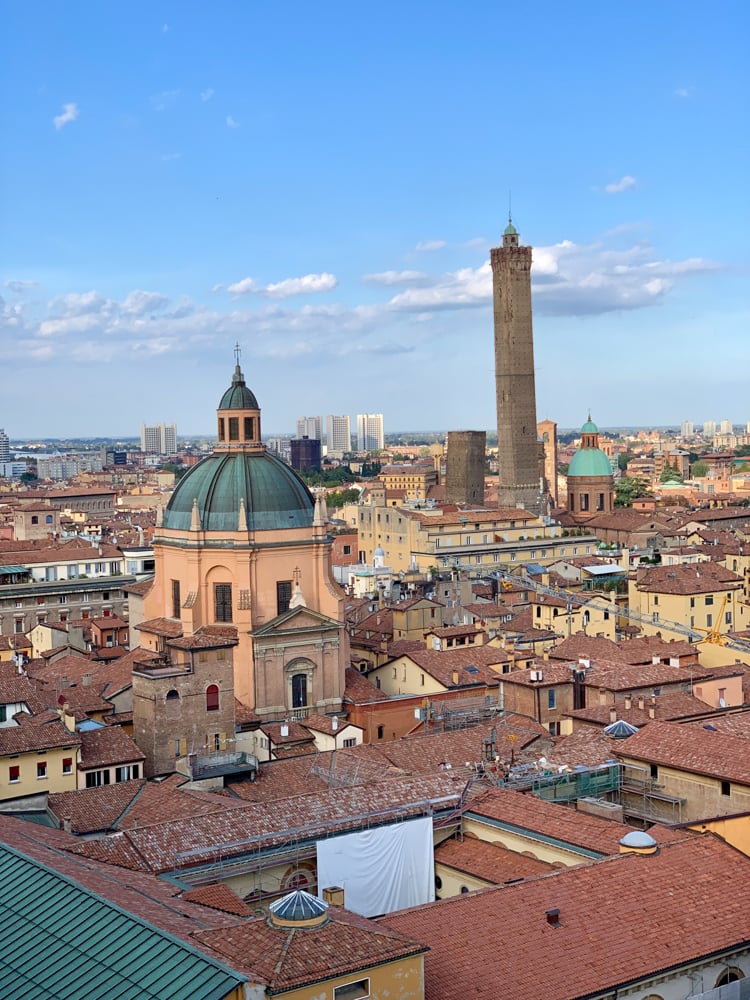
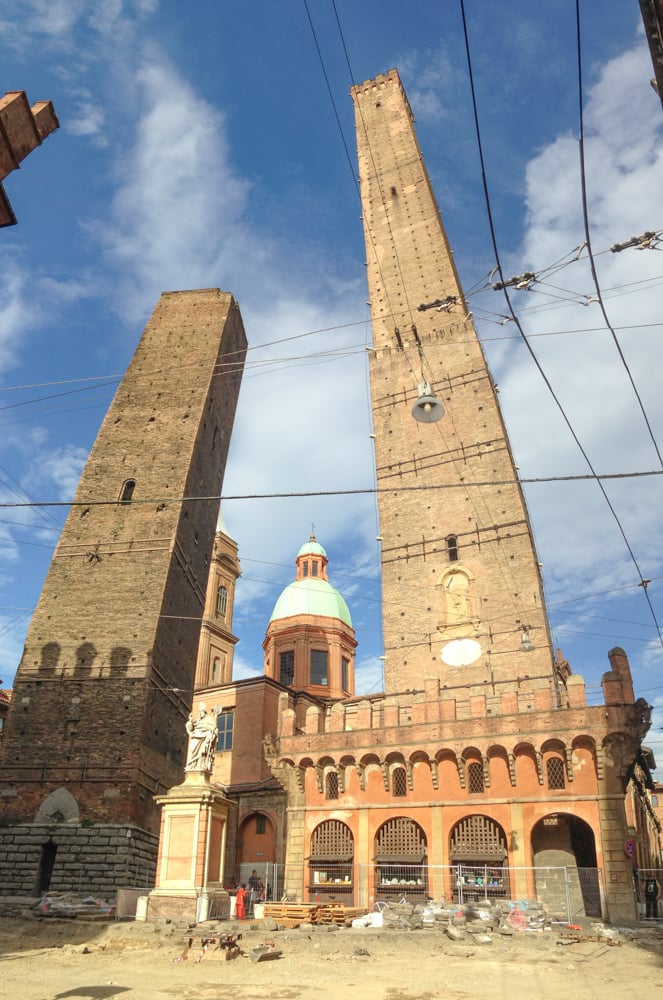
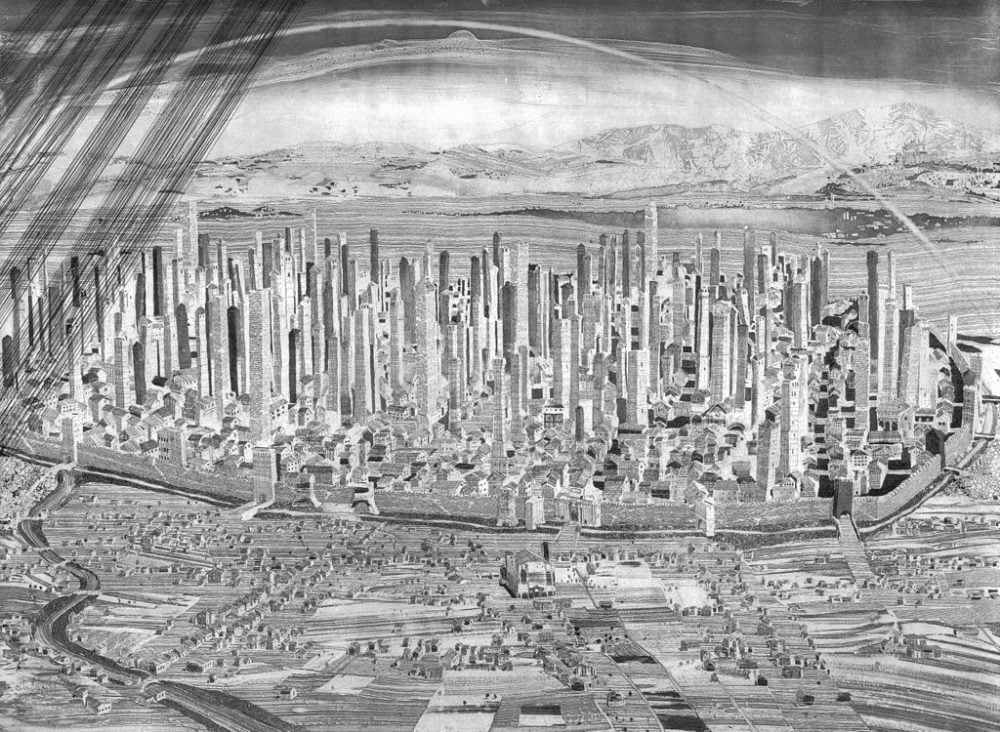
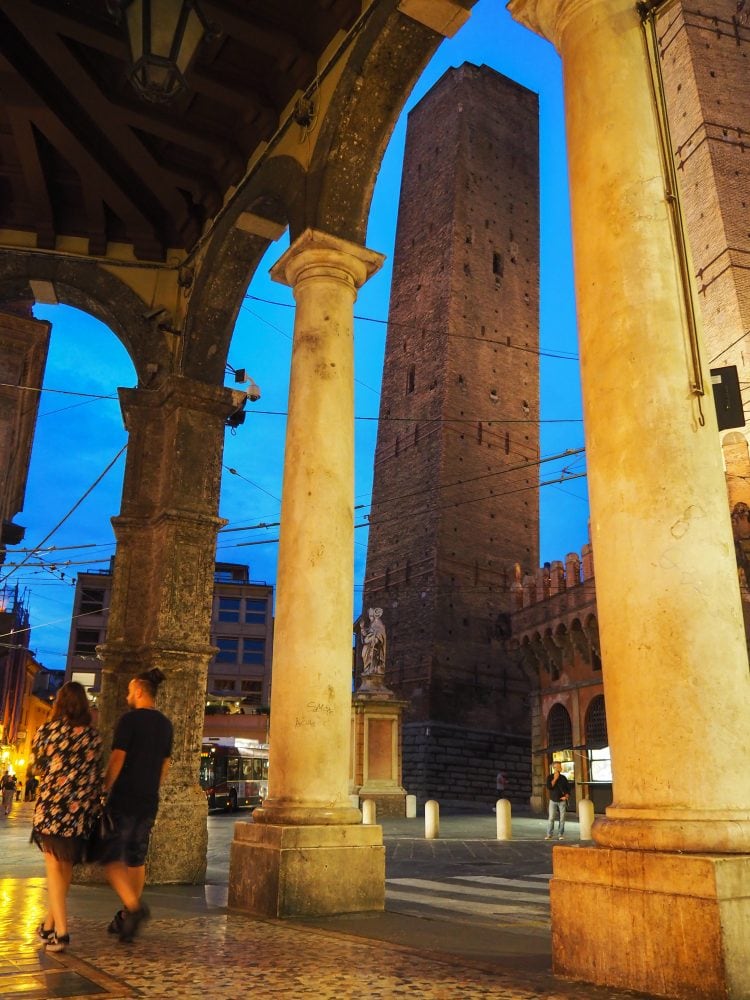
In the Middle Ages, wealthy Bolognese families competed to build the tallest towers, and at one point more than 100 of them rose over the city. About 20 remain today, and the most famous are the Asinelli and Garisenda, which lean side by side in Piazza di Porta Ravegnana and have become the symbol of Bologna.
Before you plan your visit, know that both towers are currently closed to the public. In October 2023, the city sealed off the area after monitoring showed the heavily leaning Garisenda was at risk, and a major stabilization project is underway, using techniques similar to those that saved the Leaning Tower of Pisa. The Asinelli, normally open for climbing its 498 steps, is expected to stay closed until that work is complete, and there’s no official reopening date. You can still admire both towers from the street, and they’re especially beautiful at twilight.
Climb the Clock Tower for the Best View
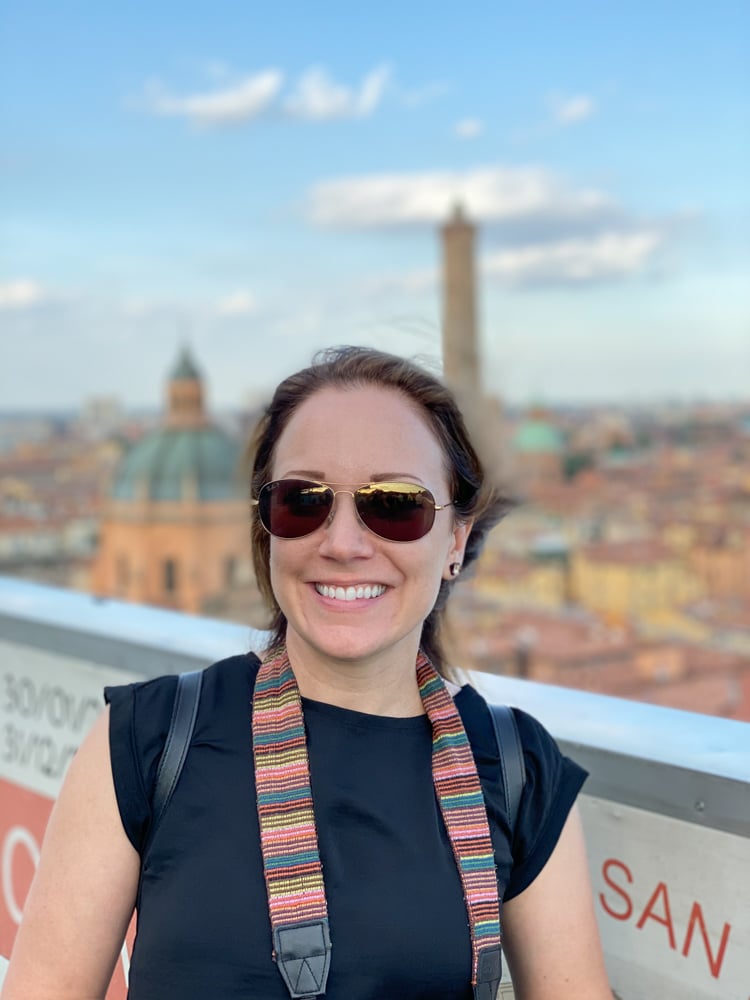
With the Two Towers closed, the best view over Bologna’s red rooftops is from the Torre dell’Orologio, the Clock Tower on Palazzo d’Accursio in Piazza Maggiore. The visit takes you through the palace’s courtyards and grand staircases, past the clock’s inner workings, and out onto two panoramic terraces with 360-degree views across the historic center and the hills beyond. Your ticket also includes the Municipal Art Collections inside the palace. Reservations are required and can be made through Bologna Welcome.
Basilica di Santo Stefano (The Seven Churches)
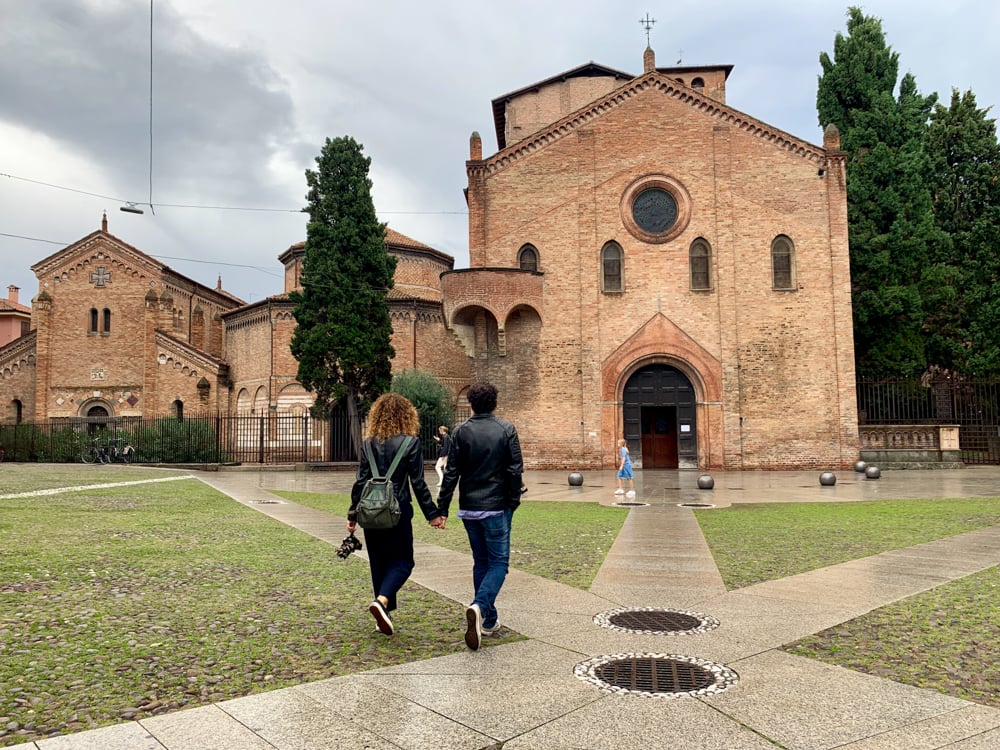
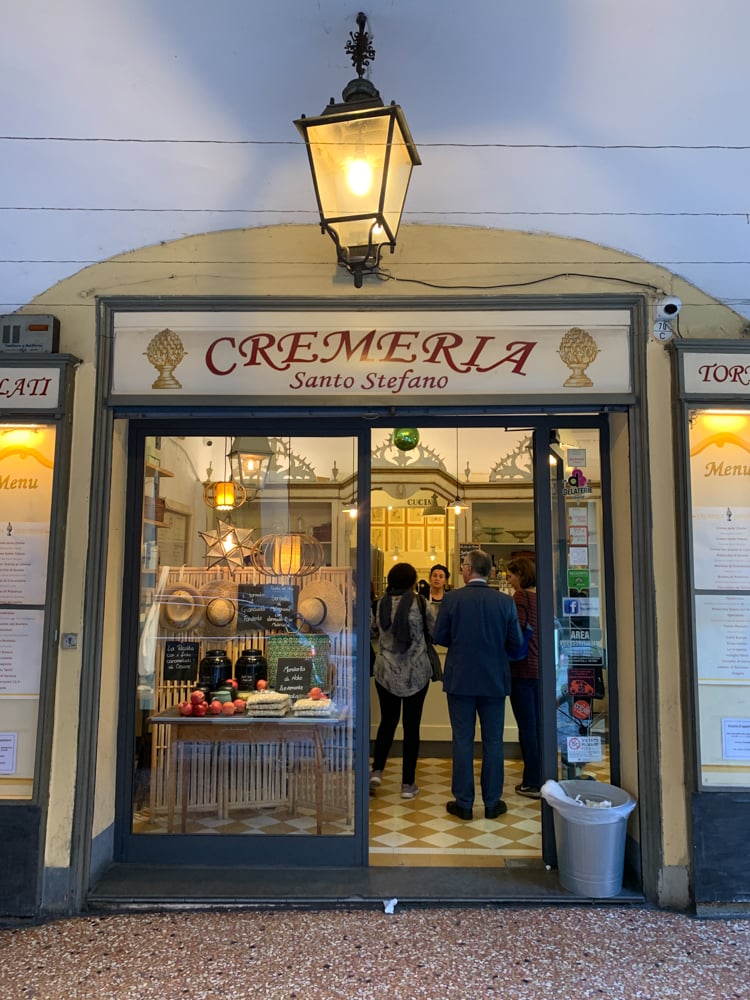
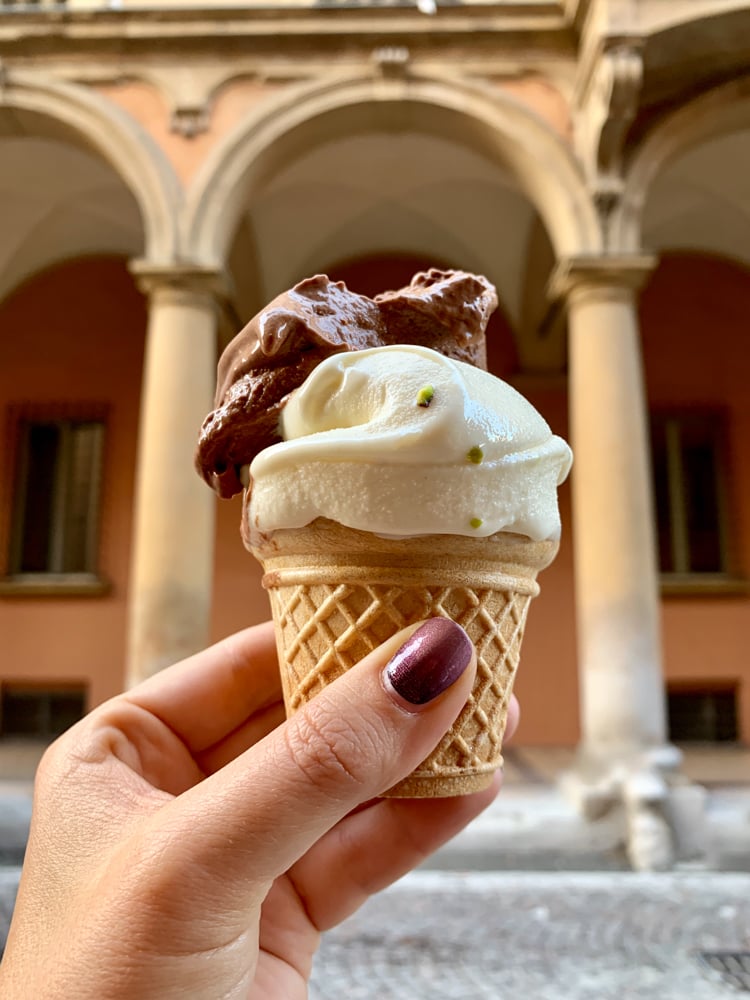
Santo Stefano is one of the most atmospheric places in Bologna. It’s a complex of interconnected churches, chapels, and cloisters built over many centuries, which is why locals call it Sette Chiese, the Seven Churches. Step inside and you’ll find quiet courtyards and ancient stonework that feel worlds away from the city outside. The piazza in front is lovely at sunset, and Cremeria Santo Stefano, one of the city’s best gelaterie, is just down the street.
Archiginnasio and the Anatomical Theatre
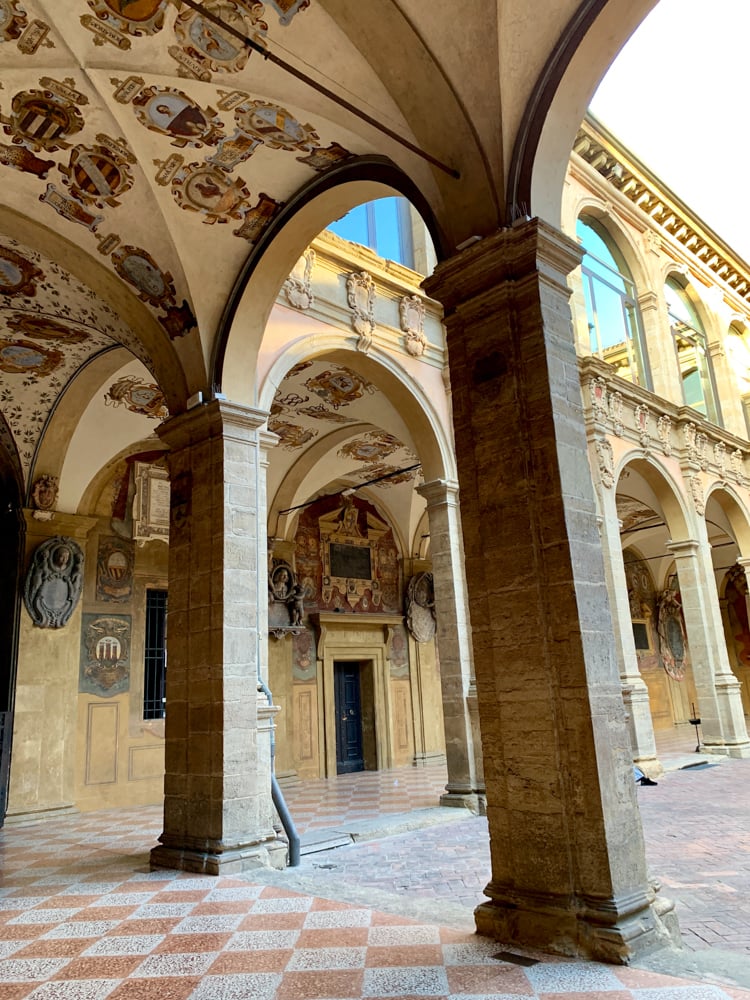
The Archiginnasio was the main building of the University of Bologna for centuries, and walking through it is a highlight of any visit. The walls and ceilings are covered with thousands of painted coats of arms belonging to former students and professors. Upstairs, the Anatomical Theatre is a remarkable 17th-century lecture hall carved entirely from wood, where medical students once watched anatomy lessons. The building also houses the Archiginnasio Municipal Library. | archiginnasio.it
Walk Up to the Sanctuary of San Luca
The Sanctuary of the Madonna di San Luca sits on a hilltop overlooking Bologna, and getting there is part of the experience. The path climbs about 3.8 kilometers under 666 arches, the longest continuous portico in the world. Some say the number of arches and the path’s winding, snakelike shape represent the Madonna triumphing over the devil. It’s a real workout, so wear good shoes and bring water. At the top, you’ll be rewarded with sweeping views of the city and the countryside. If walking up isn’t your thing, you can take a taxi or the seasonal San Luca Express tourist train from the city center. I’ve taken a taxi up, and walked down before too, and then stopped for a scoop at Gelateria Islanda on Via Saragozza.
Wander the Quadrilatero
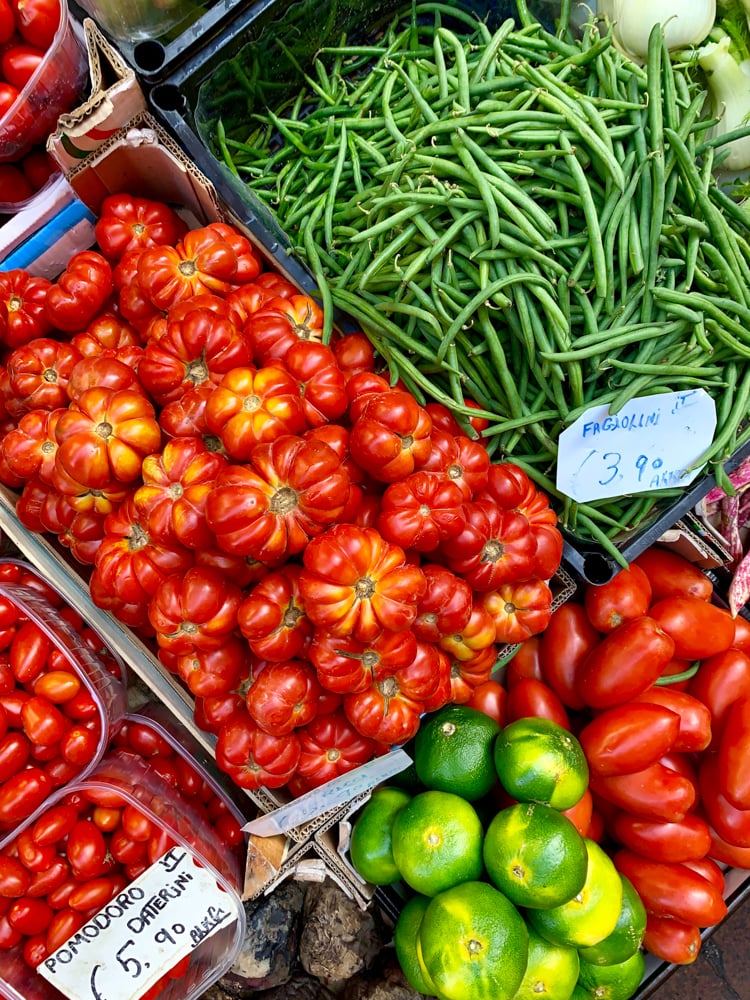
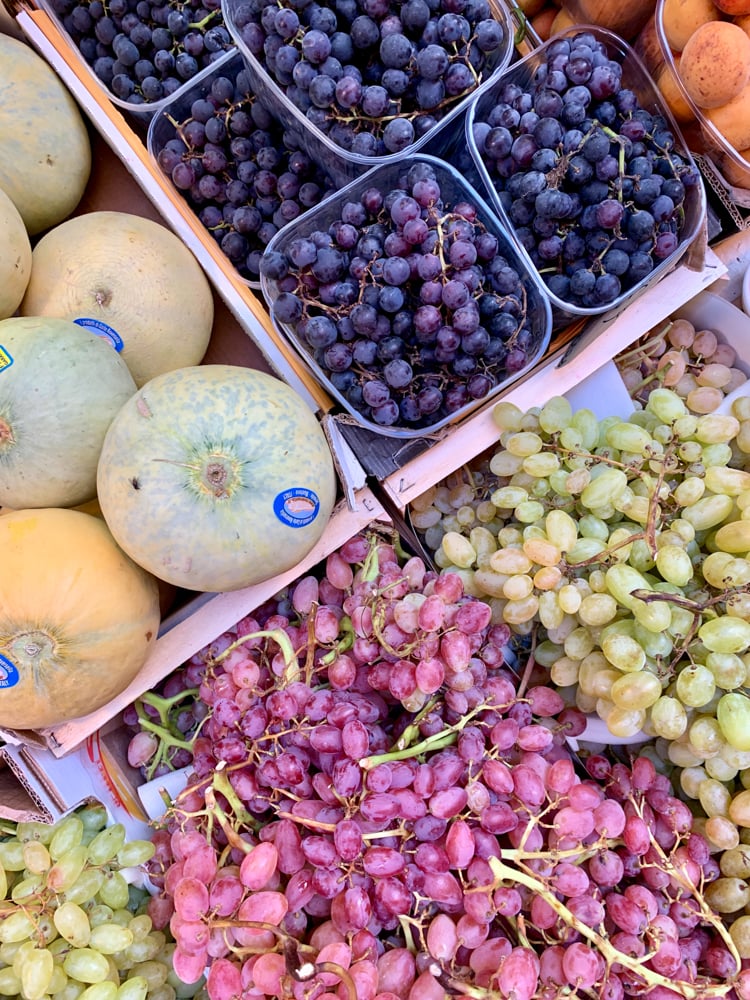
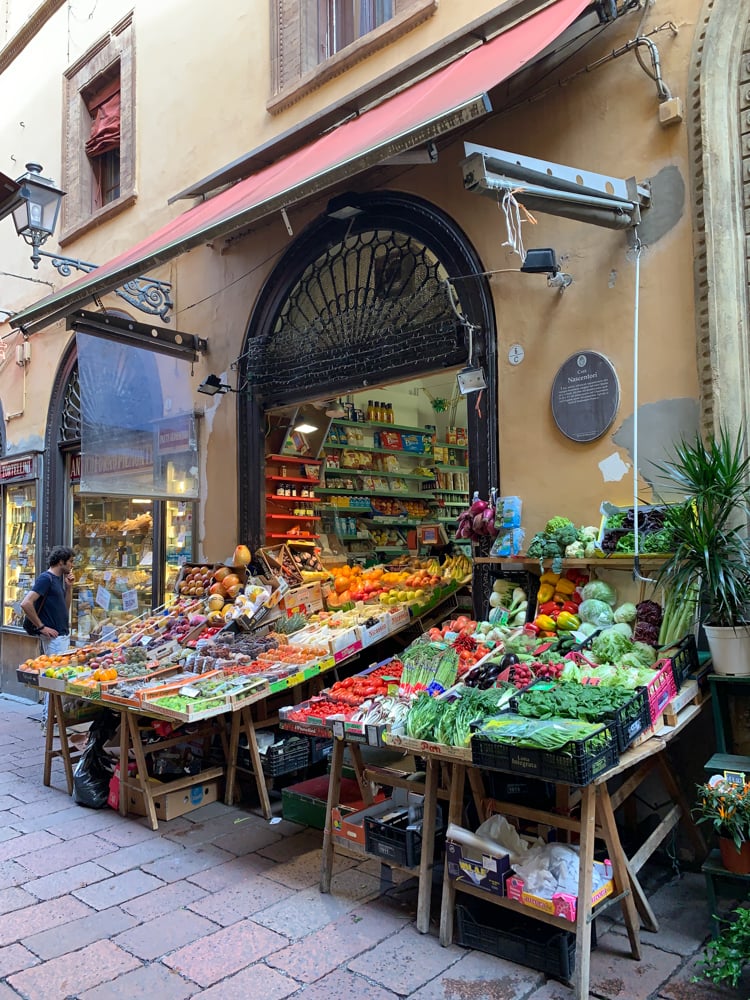
The Quadrilatero is Bologna’s medieval market district, a grid of narrow streets just east of Piazza Maggiore filled with produce stands, delis, and fishmongers. It’s lively, colorful, and one of the best places in the city for grabbing a drink and people watching. I cover it in more detail in my Bologna food guide, along with the city’s other food markets.
Find the Little Window on Via Piella
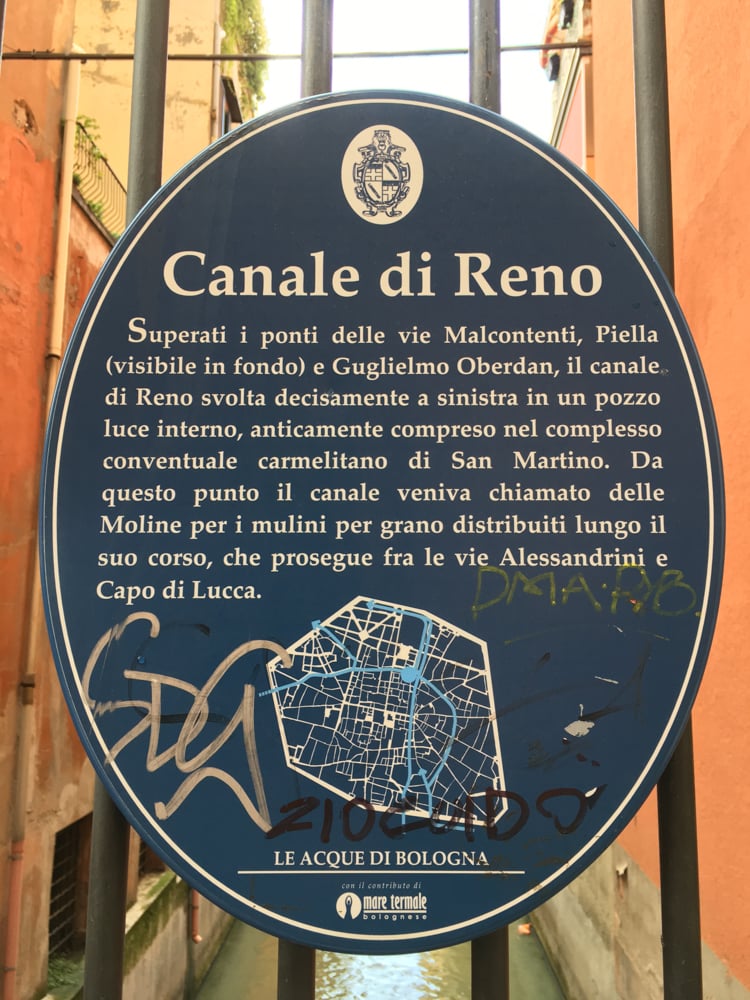
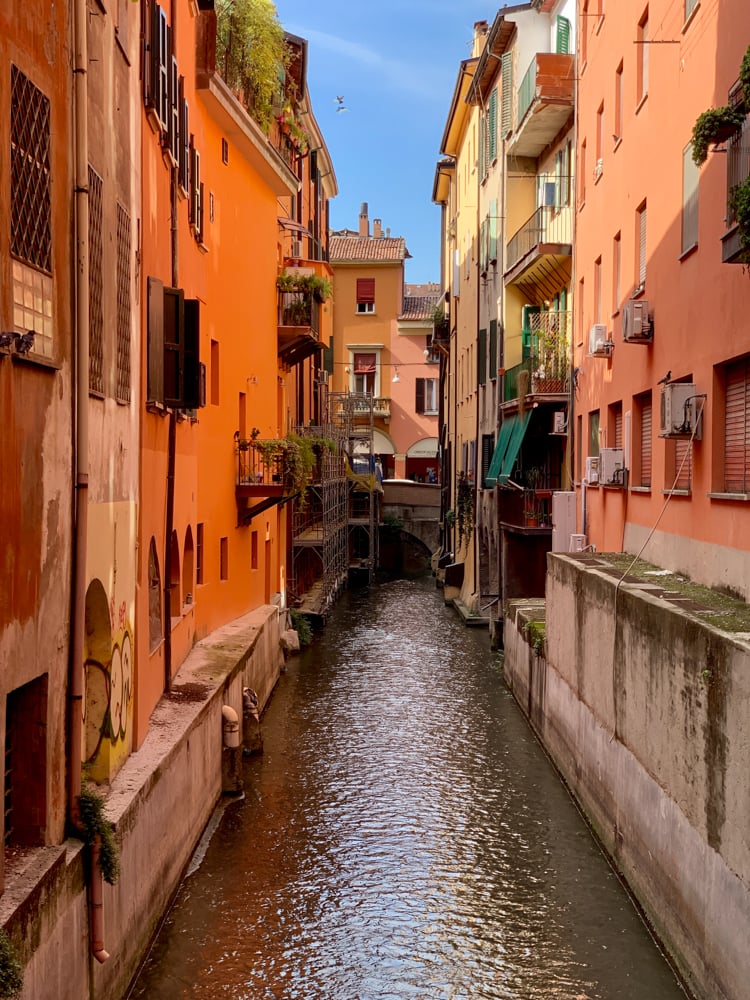
Bologna was once crisscrossed by canals, and most of them now run underground. On Via Piella, a small window in a wall opens onto one of the few canals still visible, the Canale delle Moline, lined with old houses. Locals call it “Little Venice.” It takes all of 30 seconds, but it’s a fun hidden spot and a favorite with photographers.
Visit the Carpigiani Gelato Museum
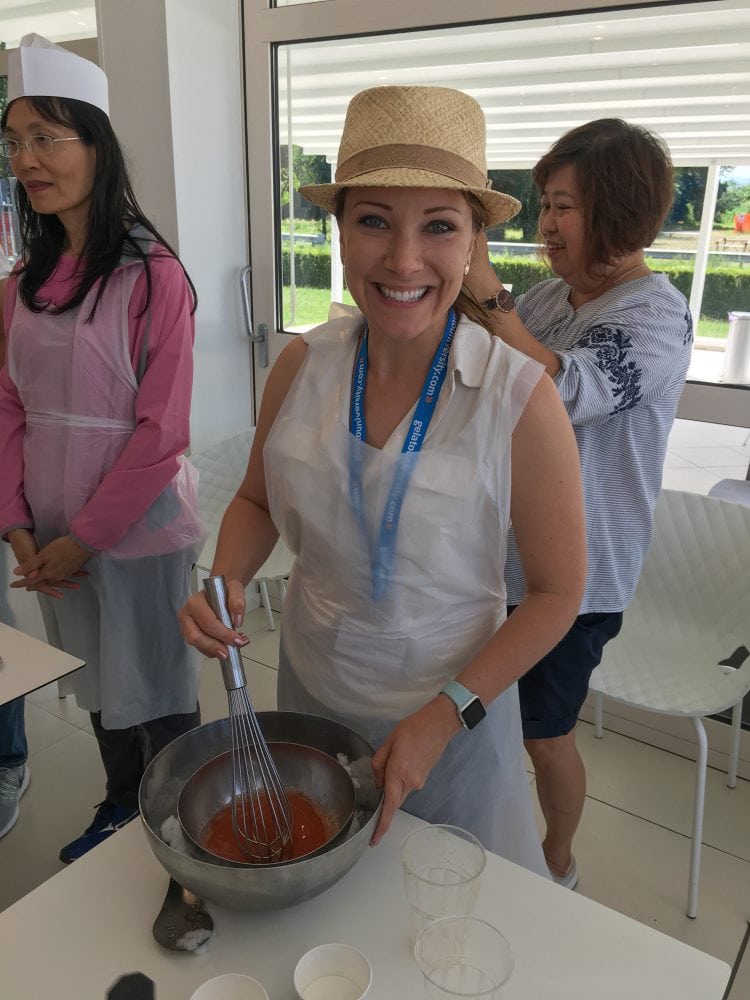
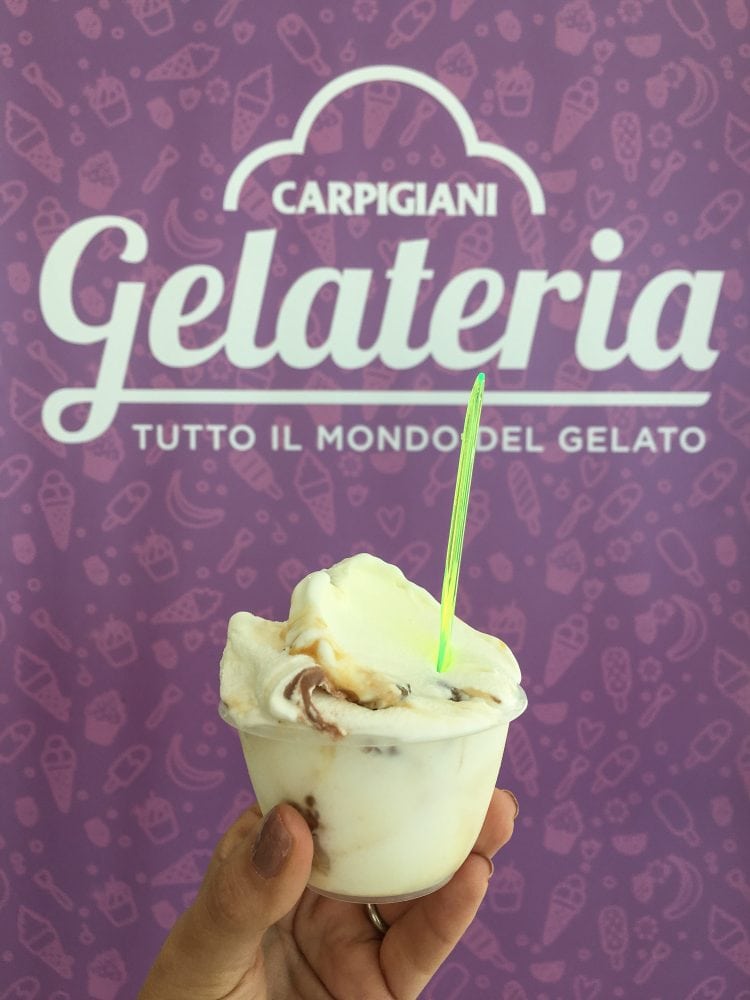
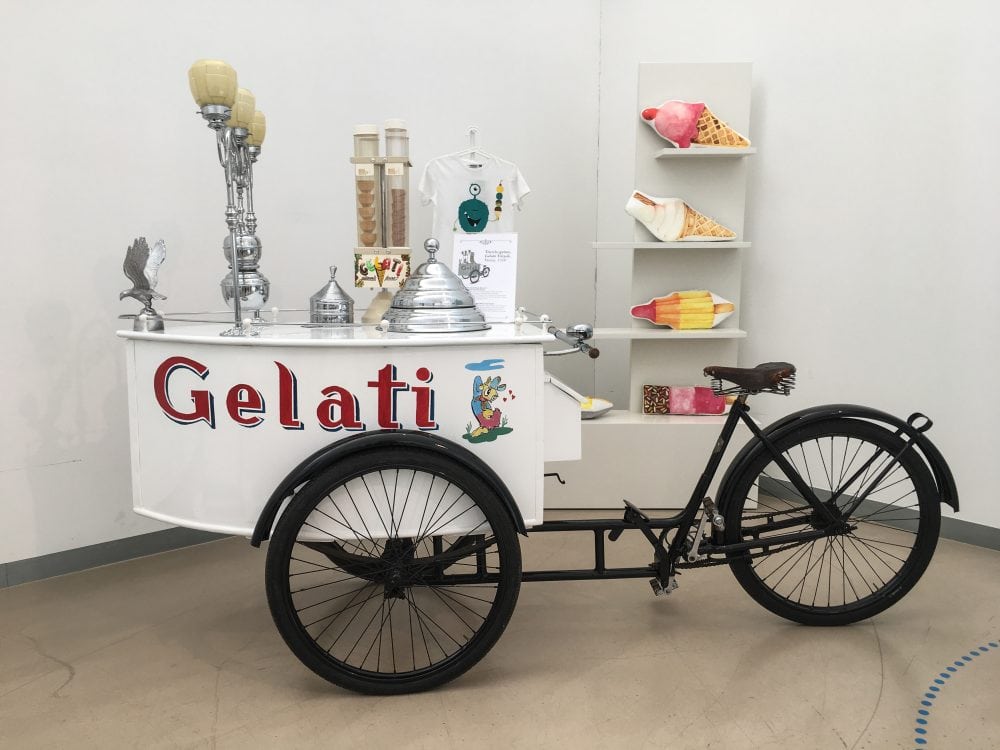
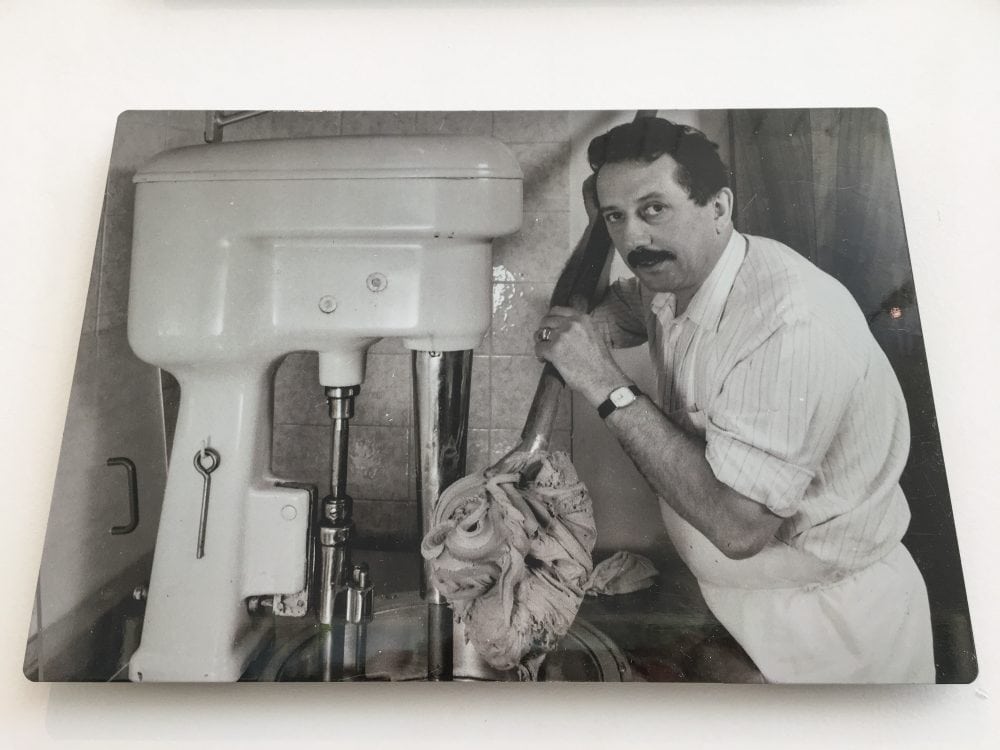
If you love gelato as much as I do, the Carpigiani Gelato Museum just outside the city is worth the trip. Housed at the headquarters of the famous gelato machine company, it traces the history of frozen desserts with vintage gelato carts and some of the earliest gelato machines, and guided visits include a tasting. You can also book a hands-on gelato making workshop. Reservations are required, so email booking@gelatomuseum.com or book through the museum’s websiteahead of time.
To get there, take bus 87 from the Piazza XX Settembre stop near Bologna Centrale to the Magli stop, right in front of the museum. The ride takes about 35 minutes, and buses run every 30 minutes Tuesday through Friday and hourly on Saturday. Buy an extra-urban ticket at a TPER ticket office or tabacchi shop before you board, since tickets aren’t sold on the bus. You can find more details in my guide to the best gelato in Bologna.

Where to Stay in Bologna
If there’s one piece of advice in this Bologna travel guide I’d underline, it’s this: for a first visit, stay in the historic center, ideally within walking distance of Piazza Maggiore. Nearly everything you’ll want to see is within a 20-minute walk, and you’ll be surrounded by cafés, restaurants, and porticoes. Here are a few neighborhoods to know:
- Centro Storico (near Piazza Maggiore): The most convenient area for first-time visitors, with sights, restaurants, and shops all steps away.
- University Quarter: Lively and youthful, with lots of inexpensive restaurants and bars. It’s a fun area, but it can be noisy at night.
- Santo Stefano: Elegant, quieter, and still central, with beautiful streets and easy access to the historic center.
- Near Bologna Centrale: Practical if you’re taking day trips by train, with a pleasant walk into the center along Via dell’Indipendenza.
Hotel Corona d’Oro
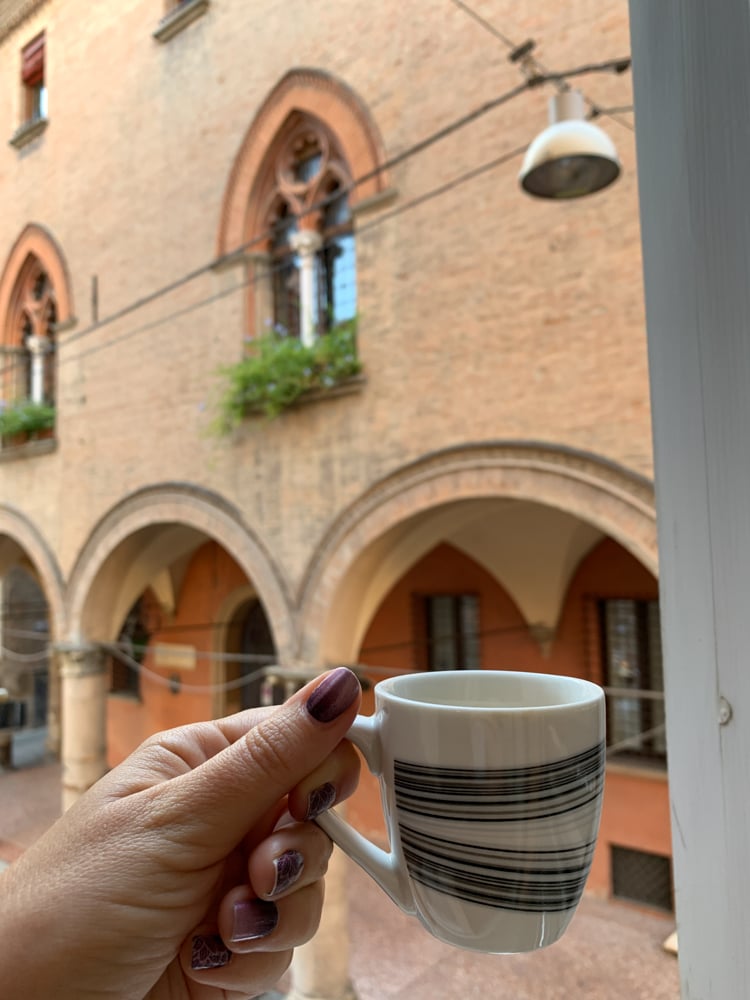
For a small luxury boutique hotel on a quiet street in the center, I recommend Hotel Corona d’Oro. It’s housed in a historic building a few minutes’ walk from both Piazza Maggiore and the Two Towers, and the street is in a traffic-free zone, so it’s peaceful at night. It’s also right next to Caffè Terzi, one of Bologna’s best spots for your morning coffee.
Address: Via Oberdan, 12, 40126 Bologna | hco.it
Grand Hotel Majestic già Baglioni
When it comes to location and old-world glamour, it’s hard to beat the Grand Hotel Majestic già Baglioni. It’s Bologna’s only five-star luxury hotel, set in an 18th-century palazzo on Via dell’Indipendenza, a short walk from Piazza Maggiore. Its restaurant, I Carracci, is known for its frescoed ceilings and refined take on Emilian cuisine, and the hotel is a member of The Leading Hotels of the World.
Address: Via dell’Indipendenza, 8, 40121 Bologna | grandhotelmajestic.duetorrihotels.com
Apartment Stays with Halldis
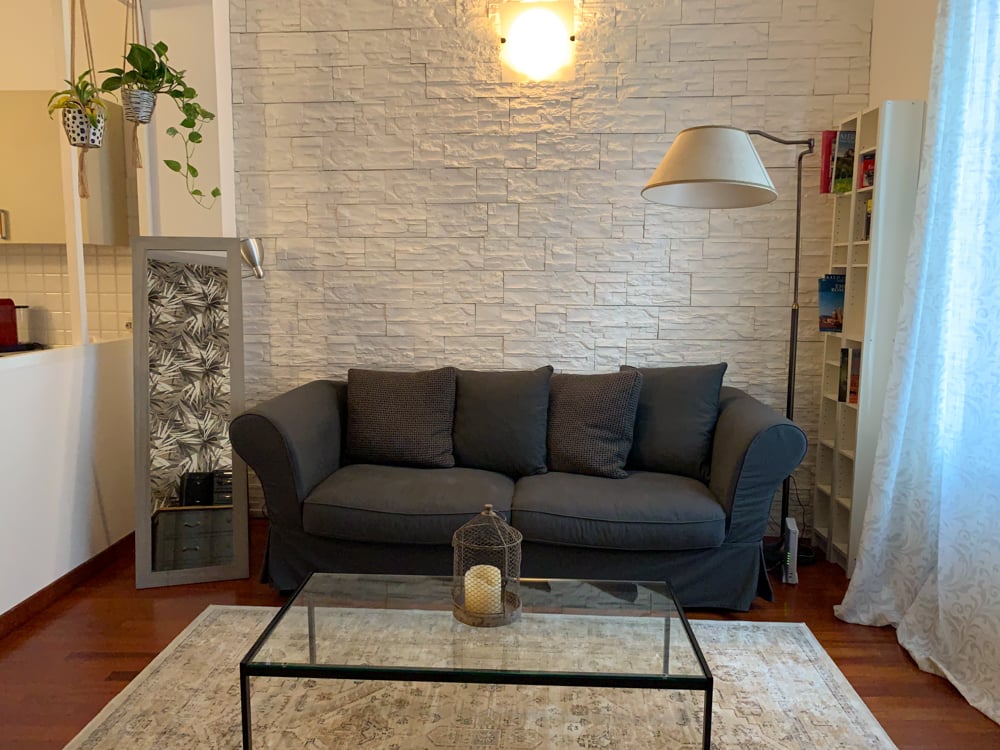
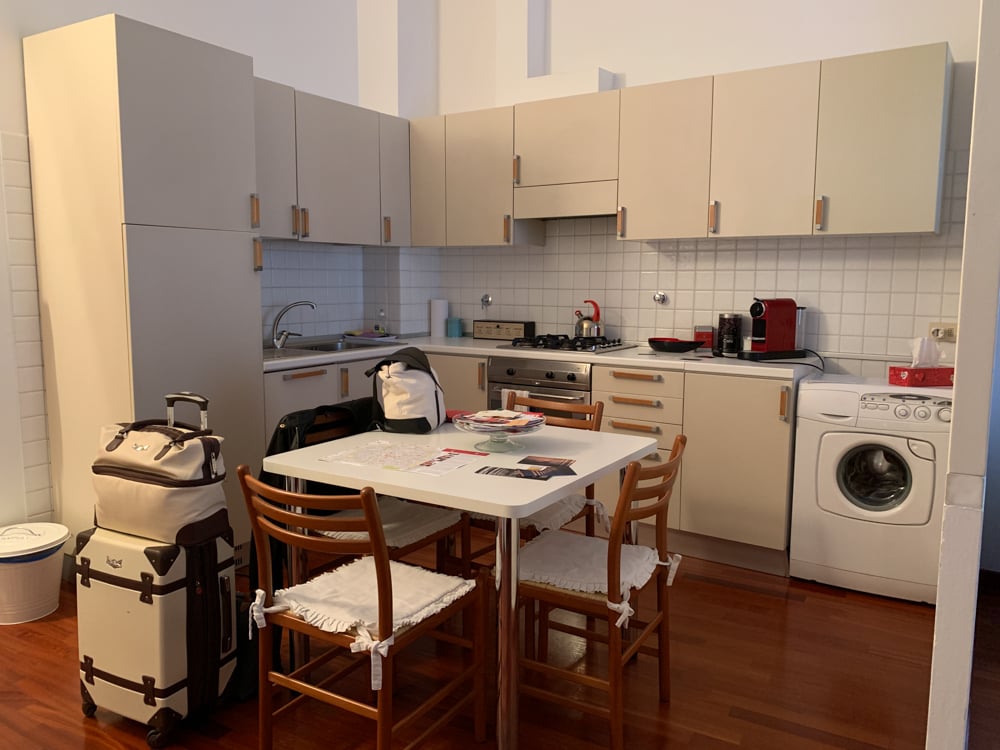
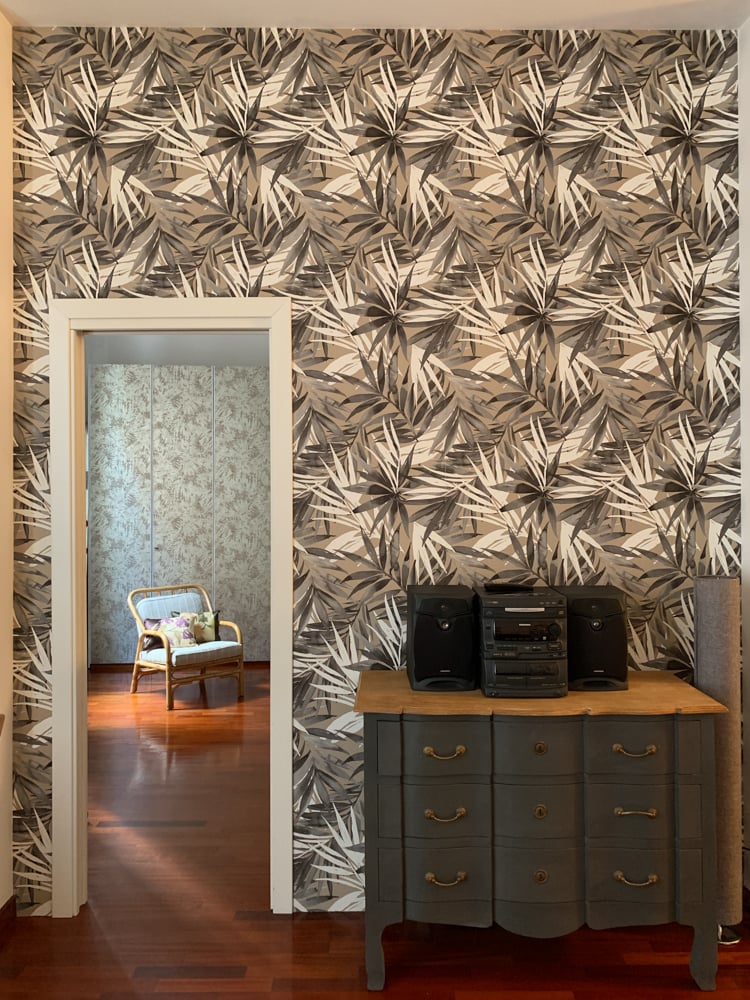
To live like a local, rent an apartment in the center through Halldis, which offers everything from studios to multi-bedroom apartments. The best part of an apartment stay is that you can cook with your market finds. Some of my favorite Bologna memories are of shopping the Quadrilatero in the morning and making lunch with fresh pasta, mortadella, and Parmigiano Reggiano. | Halldis.com
Want help planning your trip? As a Fora travel advisor specializing in culinary travel, I can help you book hotels in Bologna, often with added perks like breakfast, room upgrades, and hotel credits. Contact me here.
How to Get to Bologna
Getting to Bologna is easier than many travelers expect, and it’s one of the reasons this Bologna travel guide recommends the city as a base for exploring northern Italy.
Flying into Bologna
Bologna Guglielmo Marconi Airport (BLQ) is about 6 kilometers from the city center. From the US, you’ll likely connect through a major European hub or through Rome or Milan.
The fastest way into town is the Marconi Express, an elevated monorail that runs from the airport to Bologna Centrale train station in about seven minutes. It runs daily from about 5:40 am to midnight, and tickets are about €12.80 one way. You can tap in with a contactless credit card. From Bologna Centrale, the historic center is a 10 to 15 minute walk, or a short bus or taxi ride. Taxis from the airport are also available outside arrivals and take 15 to 25 minutes to the center.
Taking the Train to Bologna
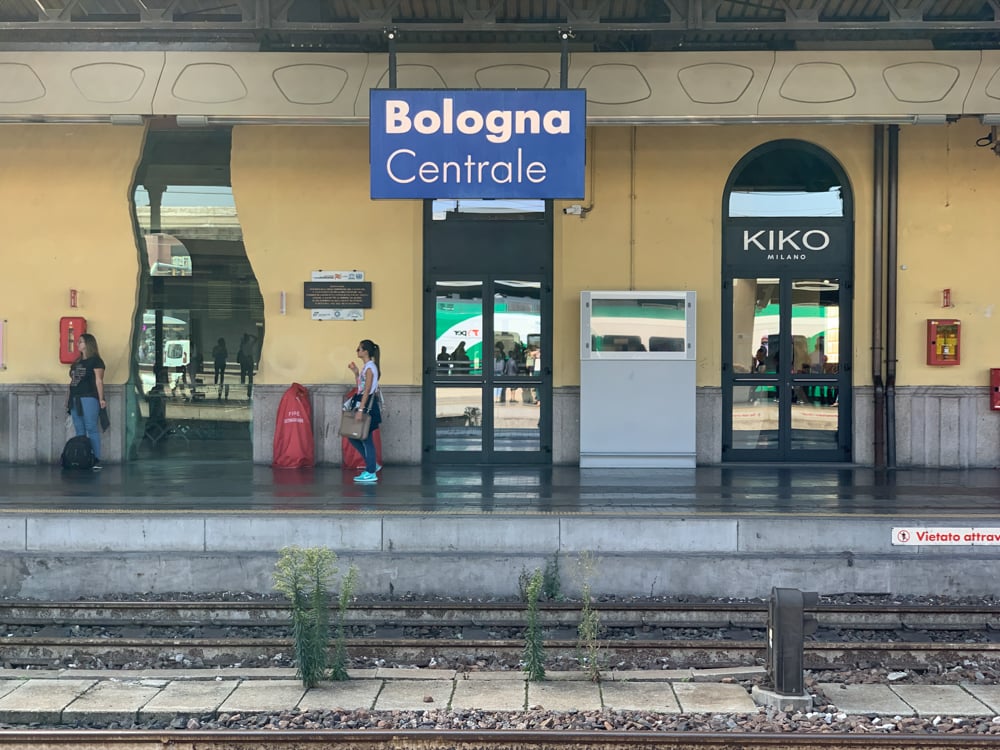
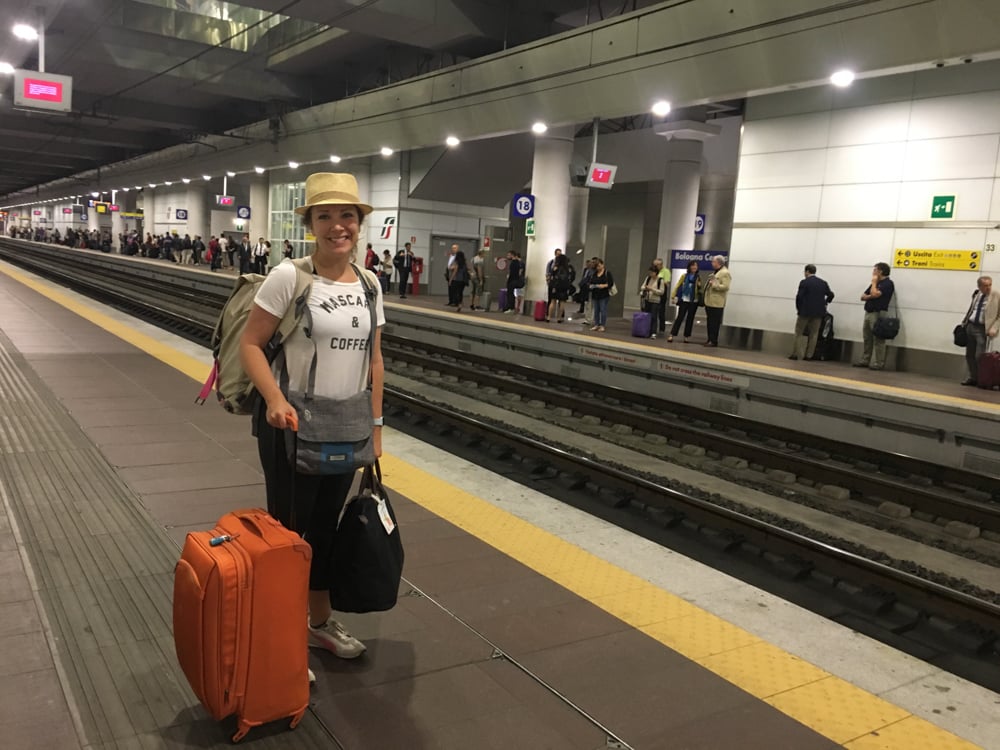
Bologna is one of Italy’s major rail hubs, so it’s easy to reach by high-speed train from other Italian cities. Both Trenitalia (Frecciarossa) and Italo run frequent service. Approximate travel times are 35 to 40 minutes from Florence, about 1 hour from Milan, about 1.5 hours from Venice, and about 2 to 2.5 hours from Rome. If you fly into Milan or Rome, you can take the train straight from the city to Bologna.
Italian train stations have changed a lot since my first visit. Signs and announcements are now in both Italian and English, making them much easier for visitors to navigate.
Getting Around Bologna
Bologna’s historic center is compact and mostly flat, so you’ll spend most of your time on foot, and the porticoes keep you covered whether it’s scorching sun or rain. For longer distances, TPER runs the city buses. You can buy tickets at tabacchi shops or through the Roger app, or simply tap a contactless credit card when you board.
Taxis in Bologna aren’t usually hailed on the street, so head to a taxi stand, call one of the two main companies, CoTaBo (+39 051 372727) or CAT (+39 051 4590), or book through an app like appTaxi or itTaxi. The Uber app works here too, just not the way it does in the US. Standard Uber rideshare doesn’t exist in Italy, but depending on availability you can request a regular licensed taxi at the metered fare, or Uber Black, a pricier private car service.
I don’t recommend renting a car in Bologna at all. Much of the historic center is a ZTL (limited traffic zone), where cameras automatically fine unauthorized vehicles, and most day trips are easier by train anyway. Modena, Parma, Ferrara, Ravenna, and Florence are all a quick train ride away, and each is easy to explore on foot once you arrive. The exception is food producers in the countryside. For balsamic vinegar tastings or visits to Parmigiano Reggiano cheesemakers, book a tour that includes transportation, or hire a private driver or guide.
Day Trips from Bologna
Bologna’s central location makes it an ideal base for exploring Emilia Romagna and beyond. Most of these towns are a short train ride away and easy to explore on foot, so you can be back in Bologna in time for aperitivo.
Modena
Just 30 minutes from Bologna by train, Modena is a must for food lovers. It’s the home of Aceto Balsamico Tradizionale di Modena, and I’ve taken private tours of several acetaie, the family-run balsamic vinegar houses where barrels of different woods and sizes are passed down through generations. Tasting a tradizionale that’s been aging for 25 years or more is an experience you won’t forget. Since most producers are in the countryside, book a private tour that includes transportation.
On my most recent trip, Pete and I spent the day in Modena visiting the Ferrari Museum and having lunch at Franceschetta58, the casual sister restaurant of Massimo Bottura’s three-Michelin-starred Osteria Francescana. It’s set in a converted tire workshop just outside the historic center, and Chef Francesco Vincenzi puts a playful, modern spin on Emilian classics. The Emilia Burger and the tortellini in Parmigiano cream are the dishes to order. It’s much easier to book than Osteria Francescana, and the prices are far more accessible, so it’s a great way to experience Bottura’s cooking. In town, don’t miss Piazza Grande, the Romanesque cathedral, and the Ghirlandina bell tower, which together form a UNESCO World Heritage Site, and the covered Mercato Albinelli for local produce, cheese, and cured meats.
Parma
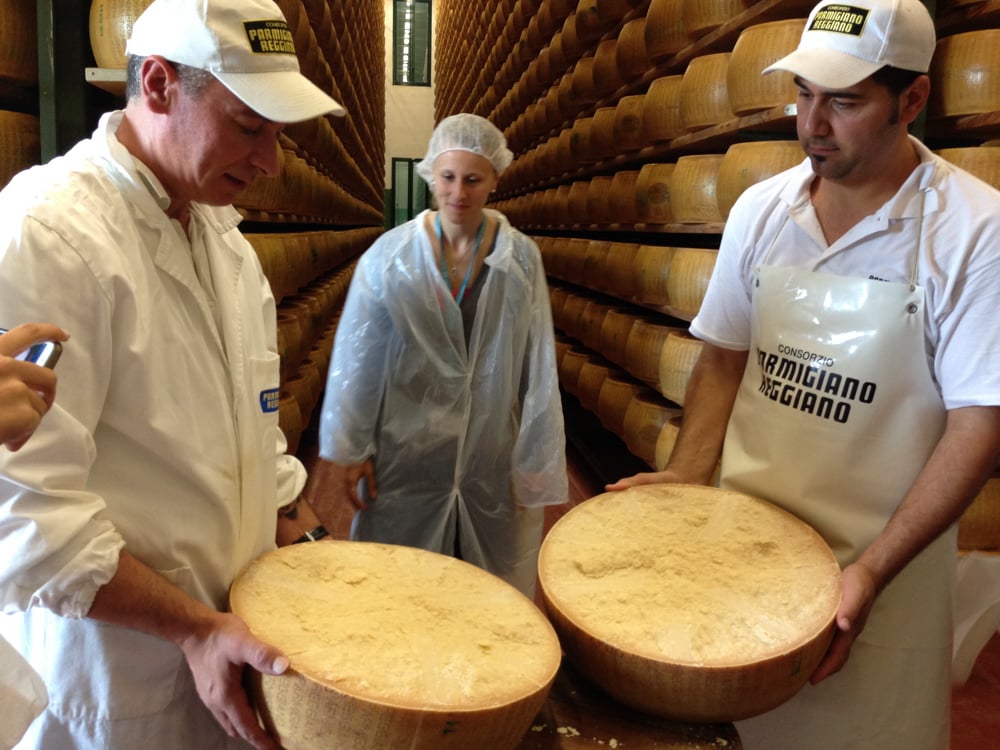
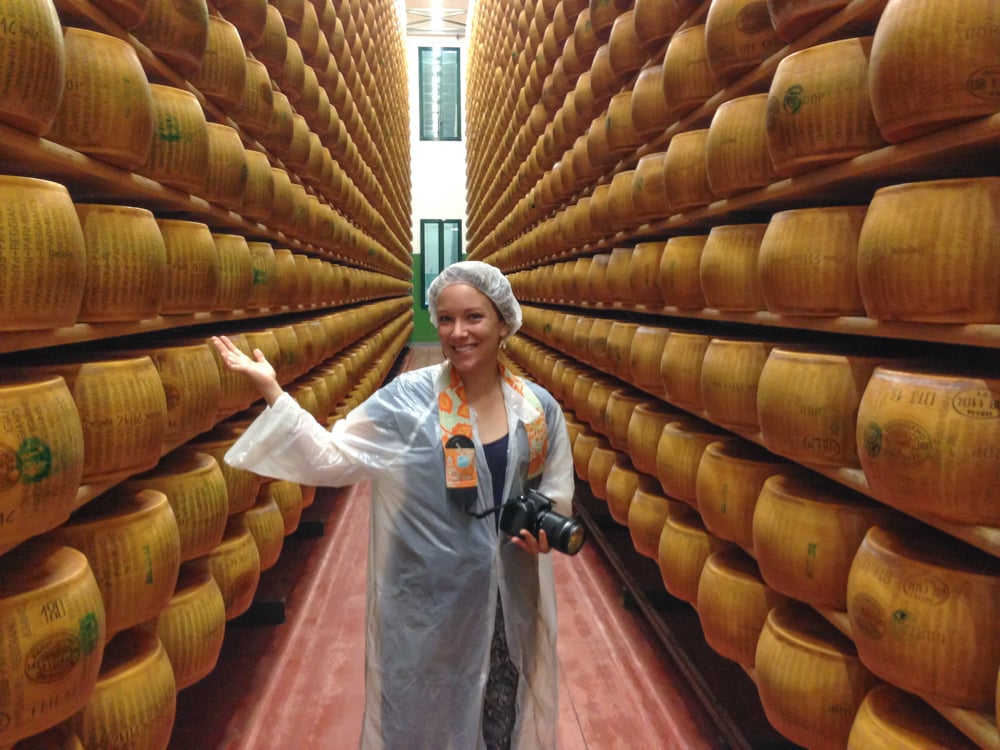
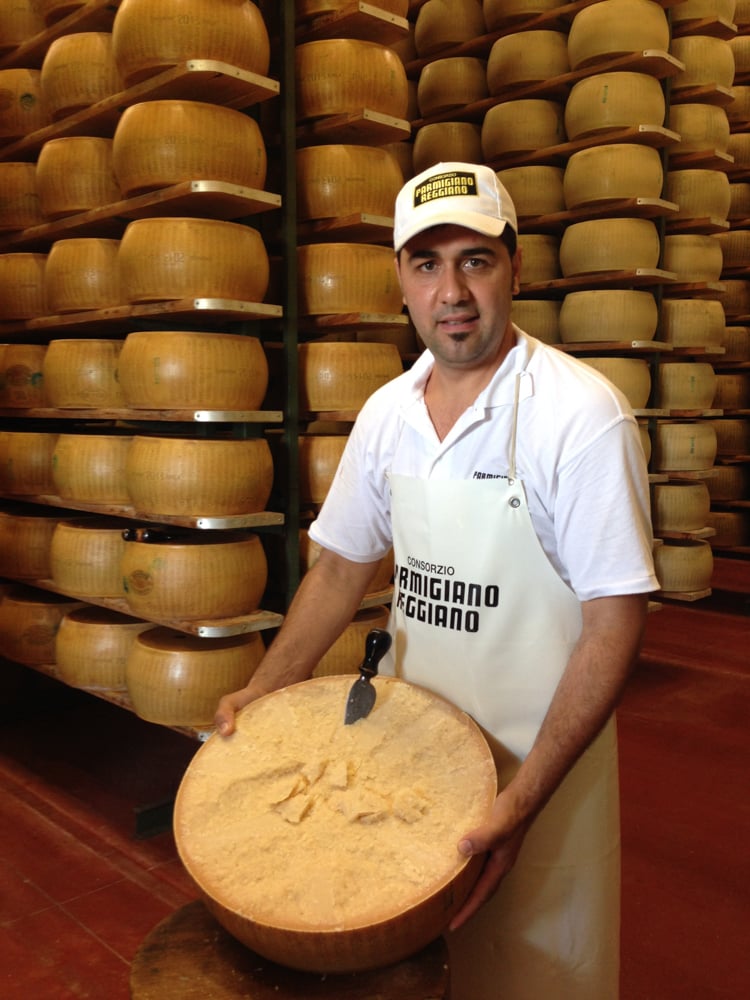
About an hour from Bologna by train, Parma is the heart of Italy’s food valley and a UNESCO City of Gastronomy. This is where Parmigiano Reggiano and Prosciutto di Parma come from, and visiting a cheesemaker is one of my favorite food experiences in Italy. I’ve taken private tours to watch the cheesemakers turn fresh milk into massive golden wheels, then walk through aging rooms stacked floor to ceiling with Parmigiano Reggiano. Go early, since the cheese is made first thing in the morning, and book a private tour with transportation, since the dairies are out in the countryside. Plan to stay for lunch afterward, which I highly recommend. Order a plate of torta fritta with cured meats, or anolini in brodo, Parma’s own stuffed pasta in broth. If you have time in the city, the pink marble Baptistery and frescoed cathedral are well worth a visit.
Ravenna
Ravenna is about an hour and a half from Bologna by train, and it’s home to some of the most dazzling early Christian and Byzantine mosaics in the world. Eight of the city’s monuments are UNESCO World Heritage Sites, including the Basilica of San Vitale and the tiny Mausoleum of Galla Placidia, whose star-covered ceiling glows deep blue. Ravenna is also where Dante is buried, and his tomb is a short stroll from the center. You can see the highlights on a day trip, but I’ve stayed overnight in Ravenna twice, once for a conference and once for a weekend getaway while I was living in Bologna for a month, and I’d recommend it. The town is lovely in the evening once the day-trippers leave, and it’s easy to walk between the sites. Since you’re in Romagna, grab a piadina for lunch, where it’s made best.
Ferrara
Just 30 minutes from Bologna by train, Ferrara is a relaxed, walkable Renaissance city and a UNESCO World Heritage Site. The centerpiece is Castello Estense, a moated castle built by the powerful Este family, right in the middle of town. Ferrara is also one of Italy’s most bike-friendly cities, and renting a bike to ride along the nearly 9 kilometers of Renaissance walls is a wonderful way to spend an afternoon. The food here is distinct from Bologna’s, so look for cappellacci di zucca, pumpkin-filled pasta with butter and sage, and coppia ferrarese, the city’s twisted bread.
Florence
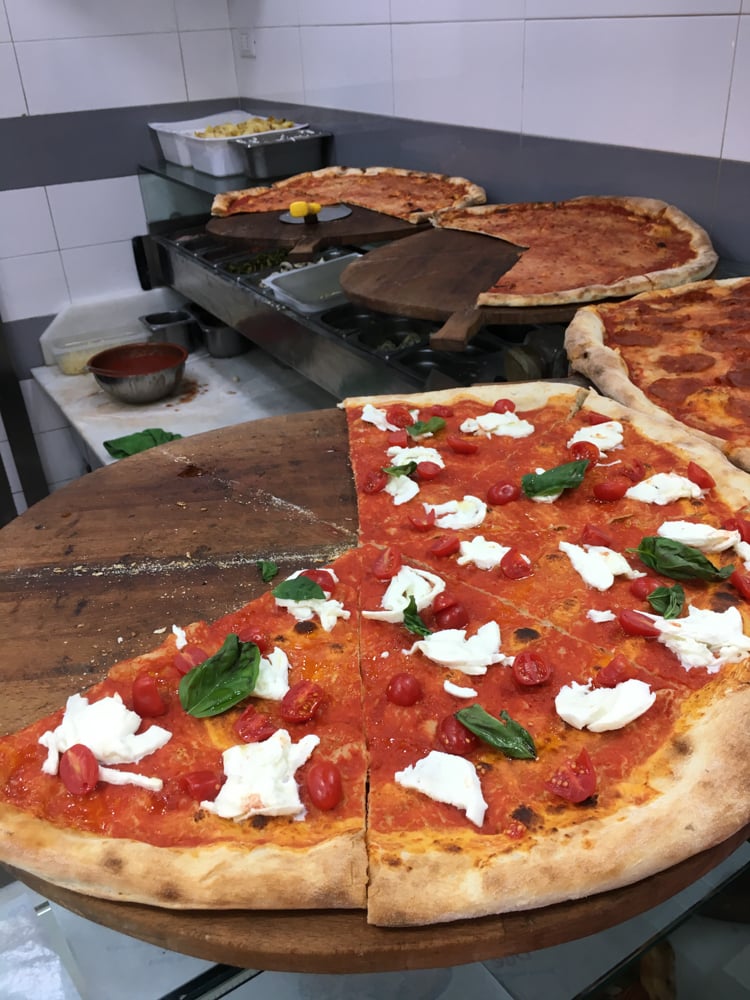
Florence is only 35 to 40 minutes from Bologna by high-speed train, and I’ve taken this day trip several times to visit the museums and meet friends for lunch. The train is fast and easy, with frequent departures throughout the day, so there’s no need to pack up and change hotels. With one day, focus on the Duomo, the Ponte Vecchio, and either the Uffizi Gallery or Michelangelo’s David at the Accademia. Book museum tickets in advance, since walk-up lines can be long. For lunch, head to the Mercato Centrale or try a lampredotto sandwich, a classic Florentine street food.
When to Visit Bologna
- Spring (April to June): Mild weather and blooming gardens make spring one of the best times to visit.
- Summer (July and August): Hot and humid, but lively, with outdoor events in Piazza Maggiore. Though keep in mind that most shops and family-run restaurants close for most of August.
- Fall (September to November): A wonderful time for food lovers, with porcini mushrooms, truffles, and harvest festivals throughout the region.
- Winter (December to February): Cooler and quieter, with fewer tourists, festive markets, and comforting bowls of tortellini in brodo.
Bologna Travel Guide Tips: Before You Go
A little planning goes a long way in Bologna, and these are the last tips I’d add to any Bologna travel guide. Visits to the Clock Tower are timed and require a reservation, so book yours before you arrive. If you plan to see several sights, the Bologna Welcome Card can save you money, and it includes free entry to the Clock Tower. Pack comfortable walking shoes, especially if you’re tackling the portico walk to San Luca, and bring something to cover your shoulders and knees for visiting churches. Cards are widely accepted, but it’s handy to carry a little cash for small cafés and market stalls.
Most importantly, plan your days around Italian meal times. Lunch runs from about 12:30 to 2:30 pm, and dinner usually starts around 7:30 or 8 pm, so sightsee in between and save room for aperitivo. For what to eat and where to eat it, read my complete Bologna food guide, and for a self-guided gelato walk, see my guide to the best gelato in Bologna. And to bring the flavors home, browse my collection of Italian recipes.
Last updated September 2026.

Leave a Reply