
One of the things I loved about the food in Jordan was the mezze — small shareable appetizers similar to Spanish tapas. At the beginning of most dinners, there would be a whole tableful of these dishes, from hummus and labneh with pita to falafel and roasted vegetables. And scattered among the mezze were small bowls of Jordanian spices, two of which were completely new to me: sumac and zaatar.
Sumac is a tart, burgundy-colored berry that’s dried and ground into a spice. It has an almost lemon-like flavor that adds a bright zing to dishes. You can find it at Trader Joe’s or on Amazon.
Zaatar (or za’atar) is a Middle Eastern spice blend that typically combines thyme, toasted sesame seeds, and sumac. What makes the Jordanian version distinct is its balance — slightly more thyme-forward than Lebanese blends, which tend to use the wild zaatar herb, and less oily than versions served in some other parts of the Middle East. It’s honestly one of the only spices I could eat straight by the teaspoon — it hits every flavor note at once.
In Jordan, we’d have zaatar on warm pita bread for breakfast alongside yogurt and honey. It also goes beautifully on hummus, roast chicken, fish, and even popcorn. Since I ran out of the za’atar I brought home from my trip, I started making my own — and this simple four-ingredient blend has become a pantry staple.
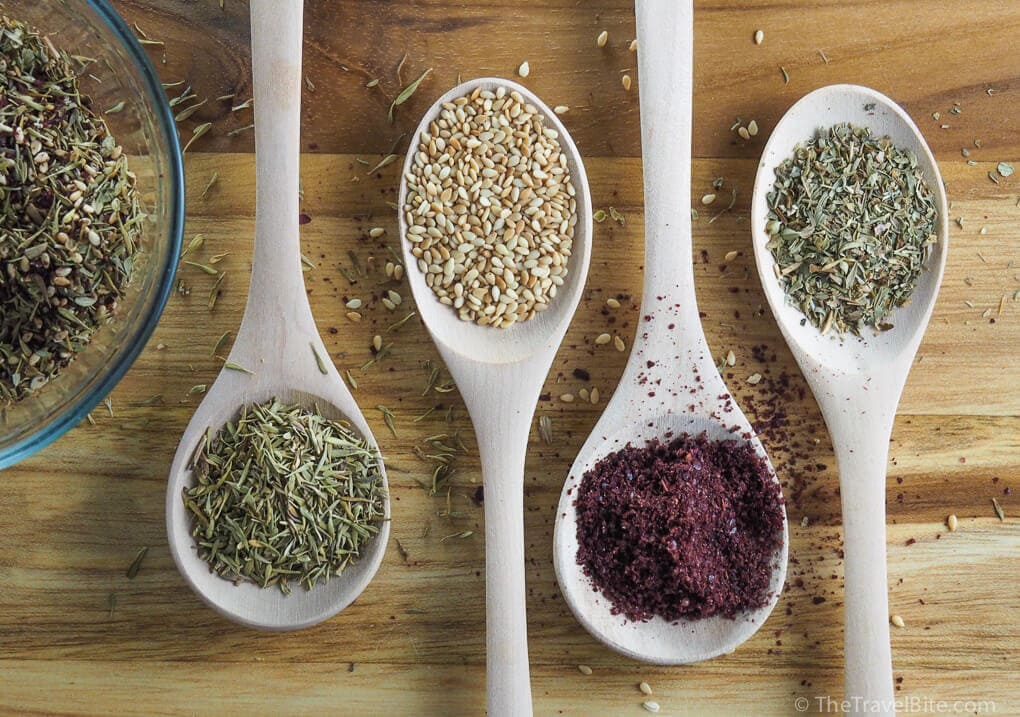
What Is Zaatar?
Zaatar is a Middle Eastern spice blend made from thyme, toasted sesame seeds, and sumac. The name actually refers to both the spice mix and a wild herb (similar to oregano or thyme) that grows across the Levant region. While the exact recipe varies by country and family, the Jordanian version is typically herb-forward with a nutty, tangy finish from the sesame and sumac. It’s used as a seasoning, a dip (mixed with olive oil), and a breakfast staple across Jordan, Lebanon, Palestine, and Syria.
Ways to Use Zaatar
Once you have a jar of this on hand, you’ll find yourself reaching for it constantly. Here are some of our favorite ways to use it:
- Zaatar and olive oil with pita – Mix a spoonful with good olive oil and use it as a dip. This is the classic Jordanian breakfast.
- On hummus – Sprinkle generously over homemade hummus before serving.
- Roast chicken – Rub zaatar with olive oil under and over the skin before roasting.
- Yogurt dip – Stir into plain yogurt with a drizzle of olive oil for an easy mezze.
- Roasted vegetables – Toss with olive oil and zaatar before roasting cauliflower, carrots, or potatoes.
- On eggs – Sprinkle over fried or scrambled eggs in the morning.
- Popcorn – Toss freshly popped popcorn with butter and zaatar for an addictive snack.
- Flatbread (Manaqeesh) – Spread a zaatar and olive oil paste on flatbread dough and bake. It’s one of the most popular street foods in Jordan.
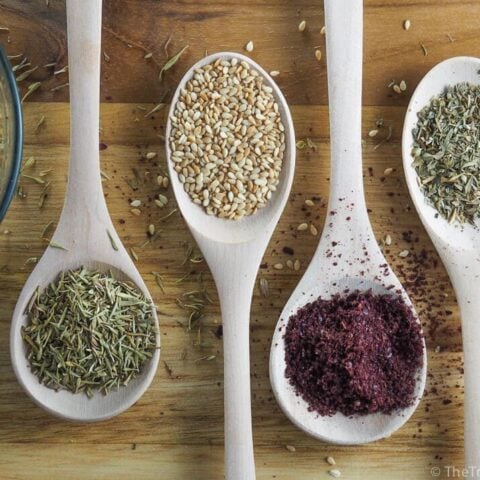
Zaatar Spice Blend
Ingredients
- 2 tsp sesame seeds
- 2 tsp sumac
- 2 tsp oregano
- 2 tsp thyme
Instructions
- Add the sesame seeds to a small sauté pan and dry toast them (no oil) on medium heat. Toast the sesame seeds until they're a golden color and fragrant, stirring frequently so they toast evenly and don't burn.
- Next, mix all of your spices together in a large bowl.
- Pour into a plastic quart-sized bag or mason jar for storage.
- Sprinkle on hummus, yogurt, chicken, fish, even popcorn! Enjoy!
Notes
Feel free to double or triple the recipe amounts if you're making a big batch.
Nutrition Information:
Yield: 10 Serving Size: 1Amount Per Serving: Calories: 5Total Fat: 0gSaturated Fat: 0gTrans Fat: 0gUnsaturated Fat: 0gCholesterol: 0mgSodium: 16mgCarbohydrates: 1gFiber: 0gSugar: 0gProtein: 0g
Nutritional information provided is only an estimate.
Zaatar Spice Blend
Ingredients
- 2 tsp sesame seeds
- 2 tsp sumac
- 2 tsp oregano
- 2 tsp thyme
Instructions
- Add the sesame seeds to a small sauté pan and dry toast them (no oil) on medium heat. Toast the sesame seeds until they're a golden color and fragrant, stirring frequently so they toast evenly and don't burn.
- Next, mix all of your spices together in a large bowl.
- Pour into a plastic quart-sized bag or mason jar for storage.
- Sprinkle on hummus, yogurt, chicken, fish, even popcorn! Enjoy!
Notes
Feel free to double or triple the recipe amounts if you're making a big batch.
Nutrition Information:
Yield: 10 Serving Size: 1Amount Per Serving: Calories: 5Total Fat: 0gSaturated Fat: 0gTrans Fat: 0gUnsaturated Fat: 0gCholesterol: 0mgSodium: 16mgCarbohydrates: 1gFiber: 0gSugar: 0gProtein: 0g
Nutritional information provided is only an estimate.

Za’atar blend is versatile indeed, but I am a bit lazy when it comes to makes a fresh batch at home. I prefer store-bought and always thought these contained what the labelling proclaimed — real zaatar herb and other high-quality ingredients. True zaatar herb is a rare find in the US, even in mixes bought from ethnic food stores.
Try shopping for pure quality zaatar, premium grade zaatar herb or zero-filling za’atar. If I can recommend, buy from the same online store as I do, http://www.eatzaatar.com. Their blends contain the three mainstay spices, with 30% of zaatar herb grown in Lebanon and quality sumac as well.